

Pakistan, Saudi Arabia sign agreement to counter corruption, facilitate mutual legal aid

Saudi Arabia's President of the Oversight and Anti-Corruption Authority, Mazin bin Ibrahim Al-Kahmous (left) and National Accountability Bureau Chairman, Lt. General (Rtd) Nazir Ahmed, sign agreement in Islamabad. (PID)
Short Url
Updated 10 October 2025
Follow

Pakistan, Saudi Arabia sign agreement to counter corruption, facilitate mutual legal aid

  • Both nations will exchange information to recover proceeds of crime, extend technical support to each other
  • The development comes amid growing cooperation between the countries, particularly in defense, trade and economy

KARACHI: Pakistan and Saudi Arabia have signed an agreement to strengthen cooperation between both sides to counter corruption, money laundering and facilitate mutual legal assistance, Pakistan’s National Accountability Bureau (NAB) said on Thursday.

The agreement was signed by Mazin bin Ibrahim Al-Kahmous, president of Saudi Oversight and Anti-Corruption Authority (Nazaha) and NAB Chairman Nazir Ahmed during the inaugural session of Asset Recovery Interagency Network for Middle East and North Africa (MENA) region in Jeddah.

Under this memorandum of understanding (MoU), both agencies have agreed to strengthen collaboration through the exchange of information related to corruption and money laundering. Asset-tracing and recovery of proceeds of crime is also a common area of interest.

“The MoU envisions mutual cooperation in matters related to mutual legal assistance (MLA), and extending technical support for the preparation of MLA requests prior to their submission through diplomatic channels,” Pakistan’s NAB said in a statement.

The Nazaha president lauded NAB efforts in global drive against corruption, especially the reforms that have yielded unprecedented recoveries of 6.4 trillion Pakistani rupees or $23 billion in a short span of time, according to NAB. He particularly praised Chairman NAB’s address to the MENA ARIN forum that objectively covered the challenges faced by all states in curbing corruption.

The development comes amid growing cooperation between the two countries, particularly in defense, trade and economy. The two countries signed a ‘Strategic Mutual Defense Agreement’ during Prime Minister Shehbaz Sharif’s visit to Riyadh last month, pledging that aggression against one would be treated as an attack on both. This week, a Saudi business delegation of arrived in Pakistan to explore opportunities in various sectors.

NAB chief Ahmed lauded the Saudi leadership in taking successive anti-corruption initiatives that have rejuvenated regional anti-corruption efforts. He particularly praised the recent landmark defense agreement between the two countries that will further augment the brotherly ties between the two countries.

Pakistan and Saudi Arabia have close religious, cultural, diplomatic and strategic ties, particularly in trade and defense. The Kingdom is home to over two million Pakistani expatriates, who are the largest source of remittances to the South Asian country.

Saudi Arabia has also provided substantial support to Pakistan during its prolonged economic challenges in recent years, including oil cargoes on deferred payments as well as external financing and assistance with International Monetary Fund loan programs.
Under floodlights after Tarawih prayers, late-night Ramadan volleyball lights up Islamabad

Updated 5 sec ago
Follow

Under floodlights after Tarawih prayers, late-night Ramadan volleyball lights up Islamabad

  • Players and spectators gather after Tarawih prayers and matches run until 3am
  • Teams travel from across Islamabad and nearby towns to take part in the tournament

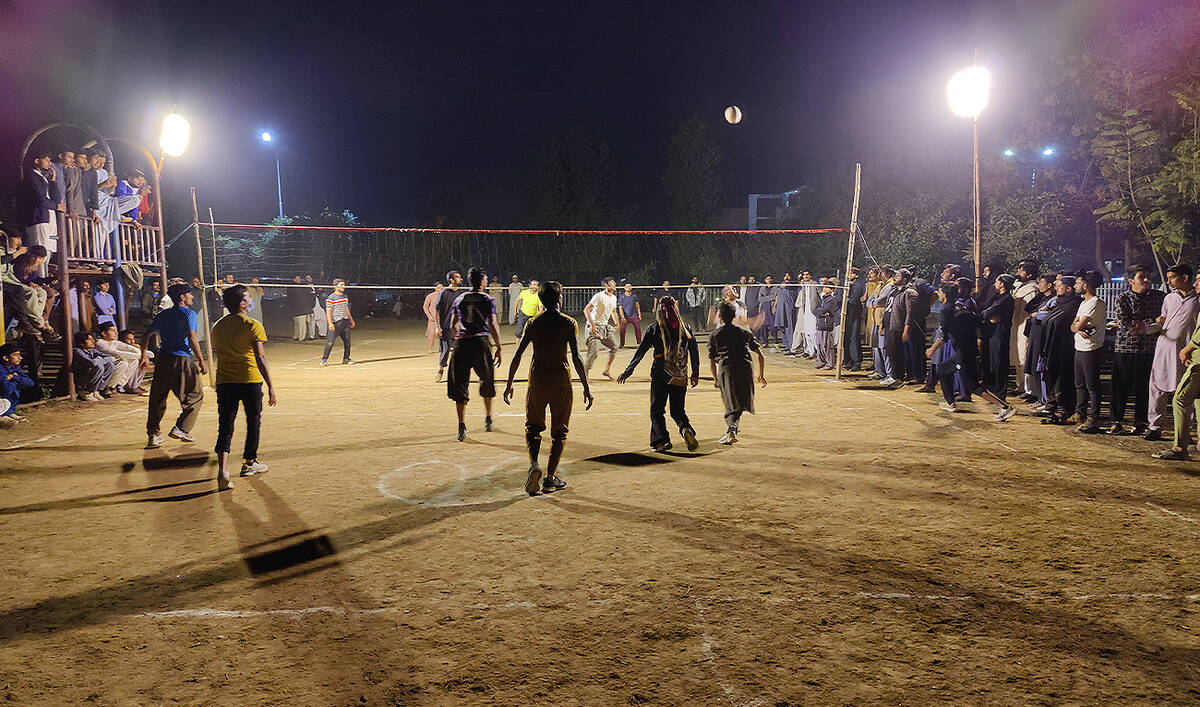
ISLAMABAD: Soon after the Tarawih prayers end each night in Ramadan, a playground in Islamabad’s D-17 sector comes alive under bright floodlights.

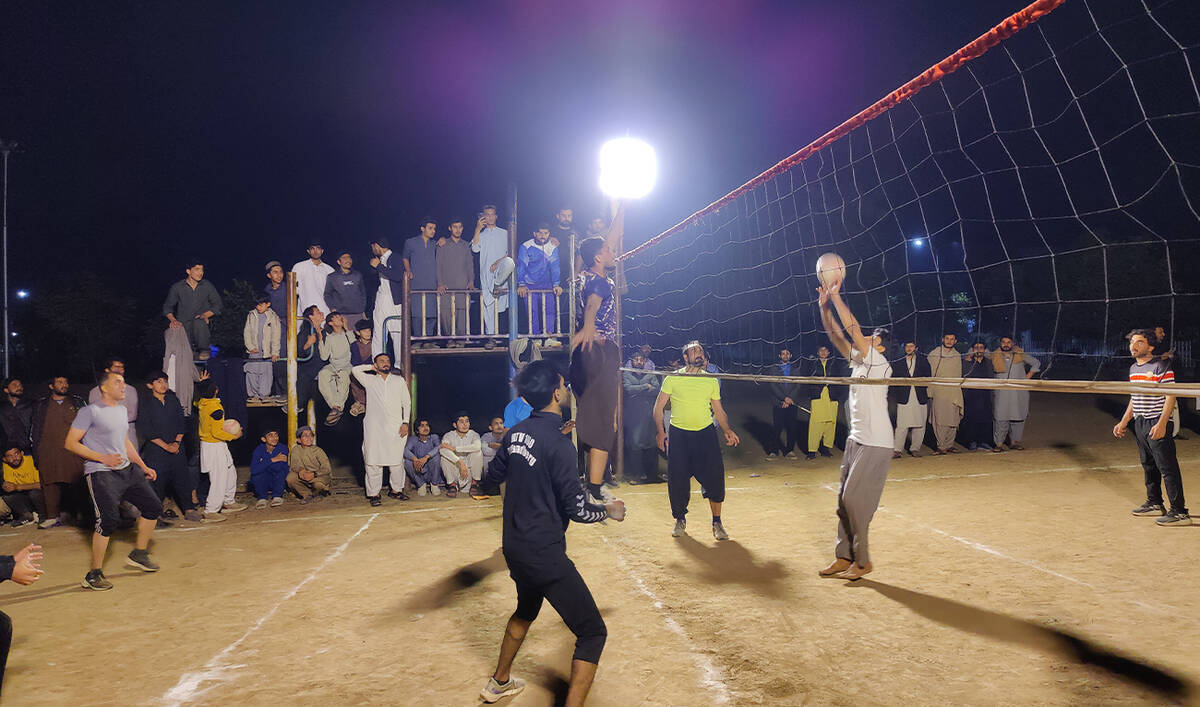
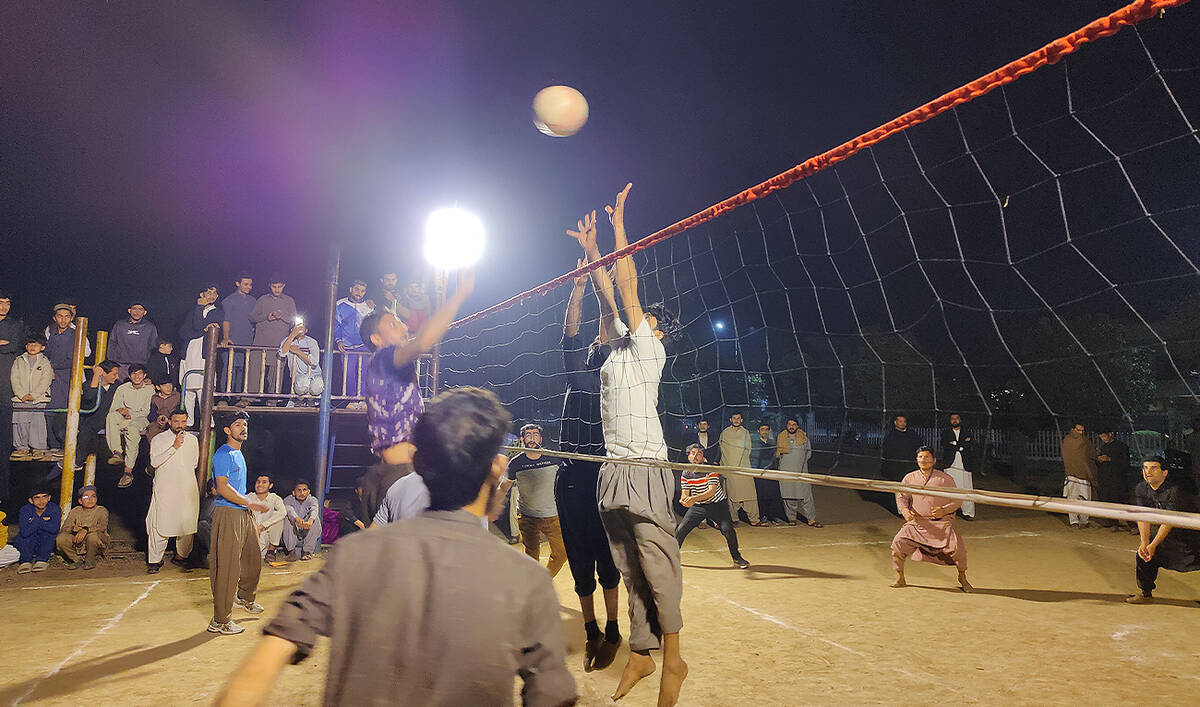
The quiet residential corner fills with the thwack of volleyballs flying across the net as players leap for smashes and spectators line the edges of the ground, cheering and clapping late into the night. Matches often stretch until 3am, just hours before Sehri, the pre-dawn meal before the day’s fast begins.

Volleyball, one of the cheapest team sports, has long been popular in Pakistani towns and villages. Pakistan’s national team currently ranks 44th out of 101 teams in the FIVB Senior World Rankings and seventh in Asia.

During Ramadan, however, the game becomes more than just competition. With daily routines slowed by fasting, nighttime offers a rare window for activity, socializing and community gatherings.

“It has been four years since I started playing here,” said Ismail Khan, who hails from North Waziristan in the northwestern Khyber Pakhtunkhwa province and has represented Pakistan at the Under-19 level.

Players compete in a volleyball match under floodlights during a late-night game in Islamabad, Pakistan, February 27, 2026.

“Late-night matches in Ramadan have become a tradition. We are busy during the day and fasting, so the night is when everyone is free. That’s when we come together.”

This year, the D-17 Volley Club has organized a Ramadan tournament that has drawn teams from across the capital as well as nearby towns and villages. For many participants, the games are about more than winning.

Khan says the atmosphere during Ramadan is unique.

“It feels different in Ramadan,” he told Arab News. “There is more energy.”

Spectators watch a late-night volleyball match from a small bridge as players compete under floodlights in Islamabad, Pakistan, February 27, 2026.

The appeal of the matches extends beyond local players. Whyn Whyn, a volleyball player from the Philippines visiting Pakistan for the second time, occasionally joins games at the D-17 ground.

“This is my exercise. And through sports, I meet many people,” she said, adding that she often spends evenings rotating between different grounds in Islamabad.

Around the court, spectators gather on motorbikes or stand shoulder-to-shoulder near the sidelines, watching each rally unfold. The crowd’s cheers rise with every powerful serve or well-timed block.

“In Ramadan, the atmosphere is different,” Naveed Mahmood, who regularly comes to watch the matches, told Arab News.

“There are more people compared to other months. We stay here until Sehri.”

 A player jumps to strike the ball during a volleyball match in Islamabad, Pakistan, February 27, 2026.

Children are frequent visitors as well, weaving through the crowd or sitting beside their parents while watching the games.

“I come here two to three times a week to watch volleyball,” said Muhammad Haroon, 13. “My father also plays here and watching him has inspired me to play as well.”

For Munawar Khan, the tournament’s organizer and a doctor by profession, the idea began five years ago with a simple aim: to keep people active during a month when daily routines slow.

“In Ramadan, people don’t have much activity during the day,” he said. “They are fasting and working. At night, they feel free. So, we decided to install floodlights and organize games.”

Over time, the initiative has grown into something larger.

Now, as the night deepens and the crowd lingers by the court, the rhythm of rallies continues beneath the lights, a small Ramadan ritual where sport, community and late-night energy meet until the approach of dawn.

“People from all walks of life come here to play,” Munawar said. “It brings the community together.”