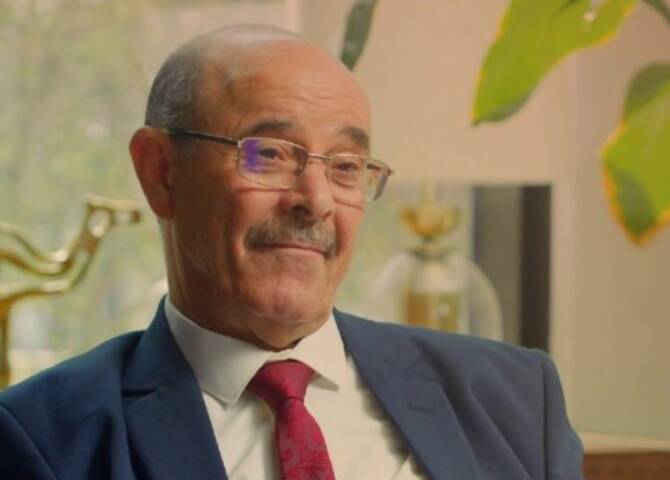
ALGIERS: An Algiers appeals court on Tuesday reduced historian Mohamed Amine Belghit’s prison sentence from five years to three, with two years suspended, following his conviction over comments dismissing the existence of Amazigh culture.
The Amazigh, often called Berbers, are North Africa’s indigenous people, predating the Arab conquests of the 7th century, with communities across Algeria, Libya, Morocco, Tunisia and beyond.
Belghit was originally sentenced in July after saying in a televised interview that “the Amazigh language is an ideological project of Franco-Zionist origin,” and that “there’s no such thing as Amazigh culture.”
He was arrested in May and charged with undermining national unity and spreading hate speech, as well as insulting national symbols, prosecutors said at the time.
On Tuesday, his lawyer Toufik Hichour said on Facebook that the appeals court had reduced the sentence “to three years in prison and two years suspended.”
Belghit, a university professor, is no stranger to controversy.
His remarks have repeatedly sparked outrage, with critics accusing him of historical revisionism and hostility toward the Amazigh community.
Algeria granted official status to Tamazight, the language of the Amazigh, in 2016.
The following year, the Amazigh new year celebration, Yennayer, was added to the list of national holidays.

Algeria cuts jail time for historian who questioned Amazigh culture
https://arab.news/w5dtd
Algeria cuts jail time for historian who questioned Amazigh culture
- He was arrested in May and charged with undermining national unity and spreading hate speech
- His lawyer said the appeals court had reduced the sentence “to three years in prison and two years suspended“
Palestinian coach gets hope, advice from mum in Gaza tent
- The manager, himself a former left-back, says he wants his players to convey the spirit of his mother and Gazans like her
DOHA: Coach Ehab Abu Jazar is guiding a national team that carries on its shoulders all the hopes and sorrows of Palestinian football, but it is his mother, forced by war to live in a Gaza tent, who is his main inspiration and motivation.
The war that broke out following Hamas’s unprecedented attack on Israel on October 7, 2023 put an end to Palestinian league matches, and left athletes in exile fearing for their loved ones in Gaza.
But Abu Jazar’s mother refuses to let the conflict overshadow the sporting dreams of her son, to whom she feeds tactical advice from the rubble of the Palestinian territory by phone.
“She talks to me about nothing but the team. She wants the focus to remain solely on the tournament,” the 45-year-old manager told AFP.
“My mother asks me about the players, who will play as starters and who will be absent, about the tactics, the morale of the players and the circumstances surrounding them.”
The manager, himself a former left-back, says he wants his players to convey the spirit of his mother and Gazans like her.
“We always say that we are a small Palestinian family representing the larger family,” he said.
“Undoubtedly, it puts pressure on us, but it’s positive pressure.”
The Palestinian team are 96th in the FIFA rankings, and their hope of playing in their first World Cup vanished this summer.
But the squad, most of whom have never set foot in Gaza, is within reach of the Arab Cup quarter-finals, keeping their message of resilience alive.
Palestine play Syria in their final Arab Cup group match Sunday, where a draw would be enough to achieve an unprecedented feat for the team.
He said progress would show the world that the Palestinians, if given the right conditions, can “excel in all fields.”
- ‘Genes of resilience’ -
Abu Jazar finished his playing career in 2017 before managing the Palestinian U-23 team and eventually taking the top job last year.
After the war broke out, his family home was destroyed, displacing his mother in Gaza, like most of the territory’s population during the height of the conflict.
He now feels pressure to deliver for them after witnessing from exile the horrors of the war, which came to a halt in October thanks to a fragile US-backed ceasefire.
“At one point, it was a burden, especially at the beginning of the war,” he said.
“We couldn’t comprehend what was happening. But we possess the genes of resilience.
“If we surrender and give in to these matters, we as a people will vanish.”
In her maternal advisory role, Abu Jazar’s mum, who goes by the traditional nickname Umm Ehab, is only contactable when she has power and signal.
But she works around the clock to find a way to watch the team’s matches from Al-Mawasi camp.
“My mother and siblings... struggle greatly to watch our matches on television. They think about how to manage the generator and buy fuel to run it and connect it to the TV,” he said.
This determination is pushing him to give Gazans any respite from the reality of war.
“This is what keeps us standing, and gives us the motivation to bring joy to our people,” he said.
“All these circumstances push us to fight on the field until the last breath.”