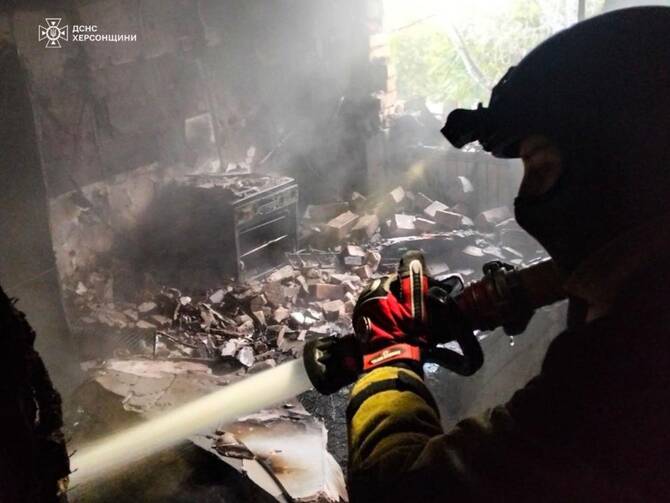
KYIV, Ukraine: Russia launched its biggest attack of the war overnight against natural gas facilities run by Ukraine’s state-owned Naftogaz Group, officials said Friday.
Russia fired a total of 381 drones and 35 missiles at Ukraine, according to Ukraine’s air force in what officials said was an attempt to wreck the Ukrainian power grid ahead of winter and wear down public appetite for the 3-year-old conflict.
“This is deliberate terror against civilian facilities that provide gas extraction and processing for the normal life of people,” Serhii Koretskyi, chief executive of Ukraine’s state-owned gas company Naftogaz, said in a statement. “It has no military purpose. This is yet another act of Russian malice aimed solely at disrupting the heating season and depriving Ukrainians of warmth in winter.”
Russia aimed 35 missiles, many of them ballistic, and 60 drones at Naftogaz’s gas extraction and processing facilities in the northeastern Kharkiv and central Poltava regions, some of which sustained critical damage, Koretskyi said.
Russia’s Ministry of Defense said its forces launched a mass strike using drones and guided weapons against Ukraine’s military-industrial complex and the gas and energy infrastructure that supports it. “All designated targets were hit,” it said in a statement.
As winter has approached each year since Russia’s February 2022 invasion of its neighbor, Russian forces have blasted Ukraine’s power grid. Ukraine says it is an attempt to weaponize winter by denying civilians heat, light and running water.
Russia has recently escalated its strikes on the power grid, as well as on Ukraine’s rail network, which is essential for military transport.
“Russia is terrorizing civilians and trying to disrupt the heating season,” Ukraine’s Prime Minister Yulia Svyrydenko said in a statement.
In Poltava, the attacks injured an 8-year-old child and two women, according to authorities. One blast also shattered about half of the windows in the city’s historic St. Nicholas Church, which is listed as an architectural monument of local significance.
Ukraine has used its domestically produced long-range drones to hit back at Russia, with drones strikes on the Orsk oil refinery, located about 1,400 kilometers (900 miles) from the Ukrainian border, Andriy Kovalenko, head of the Center for Countering Disinformation at the National Security and Defense Council of Ukraine, said Friday.
A Ukrainian drone attack also briefly halted operations at the Azot chemical plant, one of Russia’s largest, in Berezniki, more than 1,500 kilometers (930 miles) east of Moscow, officials said.
Russian air defenses shot down 20 Ukrainian drones overnight, most of them over the Black Sea, Russia’s Defense Ministry said Friday.


![]()

Russia targets Ukraine’s natural gas facilities in biggest attack of the war
Short Url
https://arab.news/2cte5
Russia targets Ukraine’s natural gas facilities in biggest attack of the war
- Attacks hit Naftogaz’s gas extraction and processing facilities in the northeastern Kharkiv and central Poltava regions
- Russia fires a total of 381 drones and 35 missiles at Ukraine, according to Ukraine’s air force


Latest updates





© 2026 SAUDI RESEARCH & PUBLISHING COMPANY, All Rights Reserved And subject to Terms of Use Agreement.