Modi starts Mideast-Africa tour as India-Oman free-trade pact nears completion

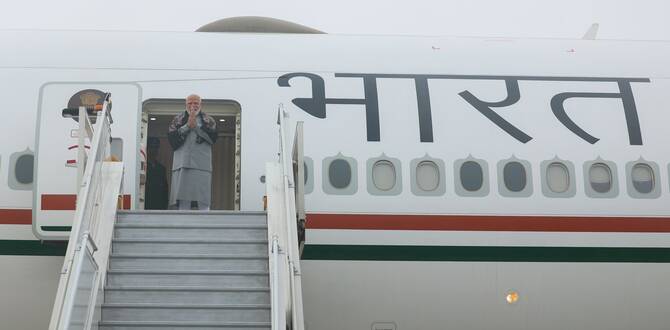
Indian PM Narendra Modi boards his airplane from New Delhi to Amman, starting a four-day Jordan-Ethiopia-Oman trip on Dec. 15, 2025. (Prime Minister's Office)
Short Url
Updated 15 December 2025
Follow

Modi starts Mideast-Africa tour as India-Oman free-trade pact nears completion

  • Oman’s Shoura Council approved the trade deal’s draft last week
  • Modi begins trip in Amman, heading to Addis Ababa and Muscat

NEW DELHI: Prime Minister Narendra Modi left New Delhi on Monday for a tour covering Jordan, Oman and Ethiopia, as his government looks to strengthen partnerships with West Asia and Africa and finalize a free-trade deal with Muscat.

Modi’s four-day trip will start in Amman, at the invitation of King Abdullah.

“I am sure this visit will boost bilateral linkages between our nations,” Modi said on social media upon his arrival in Jordan, where he was received by Prime Minister Jafar Hassan.

On Tuesday, he is scheduled to arrive in Addis Ababa for his first state visit to Ethiopia. A day later, he will be in Muscat, where the Shoura Council last week approved the draft Comprehensive Economic Partnership Agreement with India.

“If it is signed during this visit, it will significantly deepen the economic ties between India and Oman. And it will open up a new chapter in the history of India-Oman trade and commercial relationship,” Ministry of External Affairs Secretary Arun Chatterjee told reporters ahead of Modi’s departure.

He said Modi would be accompanied by a high-level delegation for his second visit to Oman, after his last trip in February 2018. It also follows the visit of Oman’s Sultan Haitham bin Tariq to India in December 2023.

Free-trade negotiations between India and Oman began in November 2023, with the first round in New Delhi and the second in Muscat.

When the talks concluded in March 2024, Oman sought revisions on market-access terms and the final signature was postponed.

Announcements of the deal’s possible finalization have been made in the past few months by India’s Commerce and Industry Minister Piyush Goyal and the Omani ambassador to New Delhi, Issa Saleh Al-Shibani.

It would be its second with a GCC country after a 2022 trade deal with the UAE, as India has been trying to reach a similar agreement with the whole bloc.

“The framework is expected to be the same as the UAE’s, that is, a Comprehensive Economic Partnership Agreement. This is significant given that the progress on India-GCC FTA has been slow and non-consequential so far,” said Muddassir Quamar, associate professor at the School of International Studies, Jawaharlal Nehru University.

While Oman is one of Delhi’s smaller GCC trading partners — trailing behind the UAE and Saudi Arabia, with bilateral trade about $10 billion — it remains strategically important, particularly in energy and logistics.

“The FTA is likely to give a boost to India-Oman economic and trade relations, especially of goods and services. (It is) important given India has worked to enhance its trade and economic relations with the Gulf countries that are (among) the most dynamic and fast-expanding global economies,” Quamar told Arab News.

“It is also important because there is immense potential for Indian businesses and industries to partner with their Gulf and Omani partners in contributing to the diversification and economic growth plans.”


Iran war unsettles India’s packaged water makers as bottles, caps get pricey

Updated 55 min 10 sec ago
Follow

Iran war unsettles India’s packaged water makers as bottles, caps get pricey

  • Higher polymer ‌prices hurt bottled water industry
  • Industry worth $5 billion has big multinational players like Pepsi, Coca-Cola

NEW ​DELHI: The Iran war is rattling India’s $5 billion packaged water market just ahead of the sweltering summer season.
One of the world’s fastest growing bottled water markets is seeing some manufacturers hike prices for distributors, as supply disruptions linked to the war fuel higher costs in everything from plastic bottles to caps, labels and cardboard boxes.
Though retail prices are yet to feel the heat and bigger companies are absorbing the pain, about 2,000 smaller bottled water makers have increased rates for their resellers by around 1 rupee per ‌bottle, a ‌5 percent hike, which will rise by a further 10 percent in ​coming ‌days, ⁠according ​to the ⁠Federation of All India Packaged Drinking Water Manufacturers’ Association.
Consumers usually pay less than 20 rupees, or around 20 US cents, for a one-liter bottle.
“There is chaos and within the next 4-5 days, this will start impacting customer prices,” said Apurva Doshi, the federation’s secretary general.
Rising oil prices have increased the cost of polymer, which is made from crude oil and is a key material for the industry’s plastic bottles. The cost of material used in making ⁠plastic bottles has risen by 50 percent to 170 rupees per kilogram, ‌while the price of the caps has more than ‌doubled to 0.45 rupees apiece. Even corrugated boxes, labels and ​adhesive tape are costing much more, ‌industry letters showed.
Clean water is a privilege in the country of 1.4 billion people where ‌researchers say 70 percent of the groundwater is contaminated, leaving people reliant on bottled water. Companies including Bisleri, Coca-Cola’s Kinley, Pepsi’s Aquafina, billionaire Mukesh Ambani’s Reliance and Tata all compete for a share of the $5 billion market. The companies did not respond to Reuters request for comment.
PREMIUM WATER FACES HEAT ‌TOO
Within the broad bottled water market, natural mineral water is a $400 million business in India and a new, fast-growing wellness product for ⁠India’s wealthy.
The premium ⁠water segment accounted for 8 percent of the bottled water market last year in India, compared to just 1 percent in 2021, Euromonitor says.
Aava, which sells mineral water sourced from the foothills of the Aravalli mountains, has increased prices of its water bottles by 18 percent for resellers, Shiroy Mehta, CEO of the company, told Reuters.
“Most manufacturers are absorbing 40-50 percent of the cost to ensure that they don’t lose clients. It’s a poor situation for the beverage industry ahead of the summer season,” he said.
The mass market, however, is dominated by companies that produce “drinking water” to be sold in 1-liter bottles to customers. Clear Premium Water, a brand of India’s Energy Beverages, said in a notice to its distributors there ​had been an “unprecedented and continuous surge” in ​prices of key raw materials used in packaging and production.
“It is no longer possible for us to absorb the escalating costs while maintaining existing product prices,” the notice said.