

Pakistan competition watchdog approves PTCL’s $400 million deal to acquire Telenor

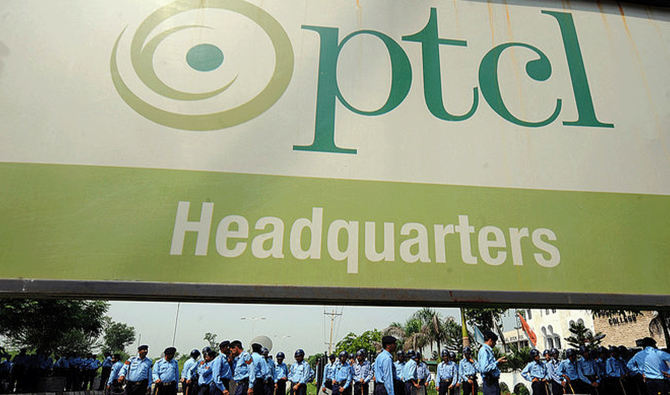
This file photo, taken on July 15, 2008, shows Pakistani police deploy in front of the building of Pakistan Telecommunication Company Limited (PTCL), the largest landline telephone network, in Islamabad. (AFP/File)
Short Url
Updated 01 October 2025
Follow

Pakistan competition watchdog approves PTCL’s $400 million deal to acquire Telenor

  • Competition Commission of Pakistan cleared PTCL’s acquisition of Telenor after lengthy review
  • Deal marks major consolidation in telecom sector grappling with thin margins, high spectrum fees

KARACHI: Pakistan Telecommunication Company Limited (PTCL) on Wednesday applauded the Competition Commission of Pakistan (CCP) for granting approval to acquire Telenor Pakistan, calling the deal a pivotal step for the country’s telecom sector.

The decision concludes a protracted regulatory process for the $400 million transaction, which will merge PTCL’s mobile arm Ufone with Telenor Pakistan to create the country’s second-largest mobile operator.

The CCP subjected the merger to a Phase II review, citing concerns over market dominance, transparency, and funding sources, before granting approval with conditions.

“We highly appreciate the Commission’s thoroughness in safeguarding the future outlook and long-term sustainability of Pakistan’s telecom sector,” the PTCL said in a statement. “This intra-sector consolidation is a pivotal step forward for Pakistan’s telecom industry, which will draw strengths from both PTML (Ufone) and Telenor.”

The consolidation comes as Pakistan’s telecom industry faces rising costs and regulatory pressures.

PTCL said the acquisition will improve customer experience, enhance network quality and coverage, while enabling the whole sector to achieve greater efficiency, build resilient infrastructure and create a more competitive landscape.

The PTCL Policy Board had earlier accepted the CCP’s terms after months of hearings, with the regulator applying its Substantial Lessening of Competition (SLC) Test across multiple segments, including mobile, fixed line and long-distance markets.

The deal is expected to reshape Pakistan’s telecom landscape, which has four major operators but remains under pressure from thin margins, high spectrum fees and heavy capital expenditure needs.


IMF discussing electricity tariffs revisions with Pakistan

Updated 4 sec ago
Follow

IMF discussing electricity tariffs revisions with Pakistan

  • Pakistan announced proposed tariff overhaul which analysts said would lift inflation while easing pressure on industry
  • The talks come as Islamabad seeks to meet conditions under its $7 billion bailout with ⁠another review of program ‌approaching

KARACHI: The International Monetary Fund is discussing proposed electricity tariff revisions with ​Pakistan authorities, the fund said in a statement to Reuters on Saturday, adding that the burden of the revisions should not fall on middle- or lower-income households.

“The ongoing discussions with the authorities will assess whether the proposed tariff revisions are ‌consistent with these commitments ‌and evaluate their ​potential ‌impact ⁠on ​macroeconomic stability, including ⁠inflation,” it said in its statement.

Pakistan announced proposed tariff overhaul which analysts said would lift inflation while easing pressure on industry, as it seeks to meet conditions under its $7 billion Extended Fund Facility (EFF) as ⁠another review of the program ‌approaches.

The EFF is ‌a longer-term IMF loan program ​designed to help countries ‌address deep-seated economic weaknesses and medium-term balance-of-payments ‌problems.

Electricity carries significant weight in Pakistan’s consumer price index, making tariff adjustments highly sensitive at a time when inflation, though sharply lower than ‌its near-40 percent peak in 2023, remains a key political and economic pressure point.

Pakistan’s ⁠power ⁠sector has long been weighed down by circular debt — a chain of unpaid bills and subsidies that builds up across generation companies, distributors and the government — prompting repeated tariff increases under IMF-backed reforms since 2023.

The accumulation of power sector circular debt has been contained within program targets, supported by improved performance on recoveries and ​loss prevention, the ​Fund added.