
DUBAI: Saudi Arabia’s Royal Commission for AlUla has opened a major exhibition in China highlighting the rich history of the ancient North Arabian kingdoms.
Being held at the Shang Dynasty Capital Site Museum in Henan province until Jan. 5, “Glimpses of the Ancient North Arabian Kingdoms” forms part of the Saudi Ministry of Culture’s Saudi-Chinese Cultural Year and is jointly curated by the commission and the museum.
It explores the kingdoms of Dadan, Lihyan and Nabataea, which once controlled caravan routes linking Arabia with Egypt, Mesopotamia and the Mediterranean. Centered in AlUla, these civilizations left behind temples, tombs, inscriptions and artworks.
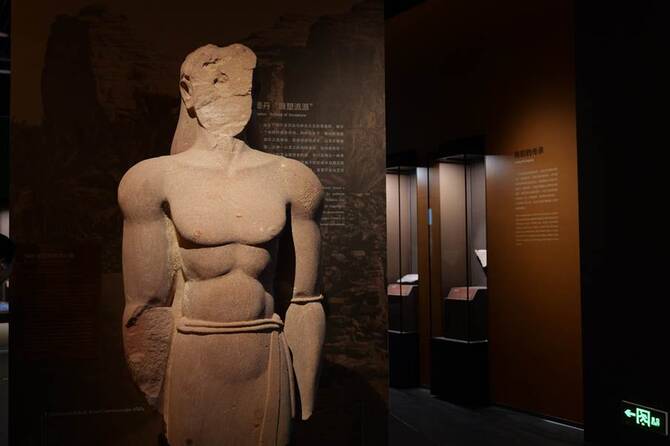
More than 30 rare objects from AlUla are on display, including 15 being shown to the public for the first time. Highlights include a sandstone statue of a Lihyanite ruler from Dadan (fifth to the third centuries B.C.), votive figurine fragments left by pilgrims at Umm Daraj and Jabal Dadan, and a 2,000-year-old Nabataean silk fragment discovered in a monumental tomb. A silver “sela” coin from Petra depicting Nabataean King Aretas IV and Queen Huldu is among several ancient coins featured.
The collection also includes 10 Chinese artifacts, such as camel figurines, incense burners and cosmetic items, displayed to highlight parallels between the two regions. Both AlUla and Henan are home to UNESCO World Heritage Sites, and the exhibition underlines shared legacies in trade, writing and cultural exchange dating back to the first millennium B.C.
While direct contact between the North Arabian kingdoms and ancient Chinese dynasties has not been proven, organizers say the exhibition offers a unique opportunity to explore the interconnected histories of two civilizations that once stood at the crossroads of global exchange.