
RIYADH: Foreign ministers from Saudi Arabia, Jordan, the UAE, Indonesia, Pakistan, Turkiye, Qatar and Egypt expressed support for a peace plan to end the war in Gaza unveiled by US President Donald Trump on Monday.
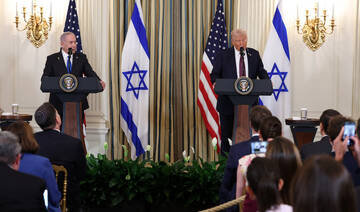
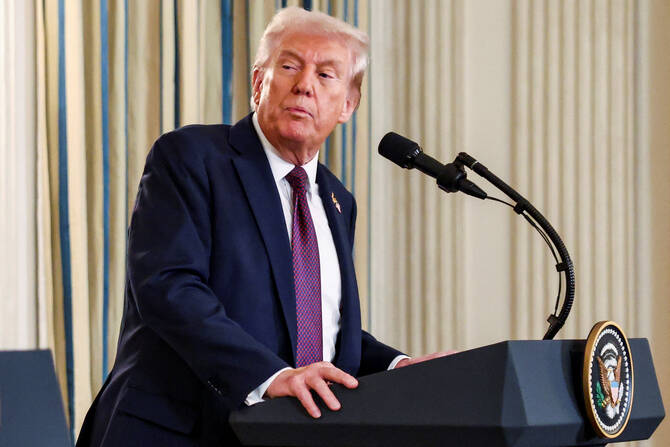
He announced his proposal during a joint press conference with Israeli Prime Minister Benjamin Netanyahu, following talks between the two leaders at the White House.
The Arab and Muslim ministers issued a joint statement in which they welcomed Trump’s “sincere efforts” and voiced confidence in his ability to “find a path to peace” in the region.
They highlighted the importance of working in partnership with Washington in pursuit of peace, describing the proposal as a chance to advance a comprehensive settlement, the Saudi Press Agency reported. The plan offers a framework for stability, they added.
The proposal, contained in a 20-point document released by the White House, includes a ceasefire agreement, an exchange of hostages held by Hamas and Palestinian prisoners held by Israel, a staged Israeli withdrawal from Gaza, the disarmament of Hamas, and the reconstruction of Gaza with the assistance of the international community.
Humanitarian aid would be allowed to flow into Gaza in large amounts, with relief efforts run by “neutral international bodies” including the UN and Red Crescent. There would be no forced displacement of Palestinians from the territory.
The US would work with Arab and other international partners to create a transitional authority to oversee security in Gaza. The internationally recognized Palestinian Authority would initially have a limited “representative” role in this, and would be expected to commit to reforms before its role can be expanded, with the aim of it eventually being able to govern.
Though the proposal refers to the ultimate possibility of “a credible pathway to Palestinian self-determination and statehood,” the details of this were vague.
Netanyahu said he backed Trump’s plan. However, some elements seem to contradict the previously stated views of his government, in particular those related to the possibility of the Palestinian Authority eventually governing Gaza.
The plan also requires agreement from Hamas, which would be required to voluntarily disarm, effectively surrendering. Trump warned that should the group reject the deal, he could give Israeli authorities even more of a free hand to continue their military campaign in the war-ravaged territory.
In addition to backing Trump’s Gaza peace plan, the Arab and Muslim foreign ministers also welcomed the president’s pledge to block any attempt by Israel to annex the West Bank as a significant step.
The ministers outlined a series of commitments they believe to be essential for lasting peace, many of which were covered by Trump’s plan: efforts to ensure sufficient humanitarian aid reaches Gaza free from obstruction; the prevention of forced displacement of Palestinians; the release of hostages; establishment of a security mechanism for all parties; and a guarantee of full Israeli withdrawal from the territory.
They added that reconstruction of Gaza, and progress towards a two-state solution to the conflict between Israelis and Palestinians, in which Gaza and the West Bank form part of a fully sovereign Palestinian state, were “the key to achieving regional stability and security.”