Australia says father and son carried out Sydney beach attack as Pakistan condemns violence

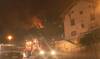
Police inspect at the scene of a shooting at Bondi Beach in Sydney on December 15, 2025. (AFP)
Short Url
Updated 15 December 2025
Follow

Australia says father and son carried out Sydney beach attack as Pakistan condemns violence

  • Australian authorities say at least 16 people were killed in the shooting, including a 10-year-old girl
  • Pakistan says it stands in solidarity with Australia, condemns ‘terrorism in all forms and manifestations’

ISLAMABAD: Australian authorities said on Monday a father and son carried out a mass shooting at Sydney’s Bondi Beach during a Jewish festival, as Pakistan expressed solidarity with Australia and condemned the attack that claimed at least 16 lives.

Police said the 50-year-old father was shot dead at the scene while his 24-year-old son was wounded and taken into custody after the gunmen opened fire on crowds gathered for a Hanukkah celebration at the popular beach.

“We want to get to the bottom of this,” New South Wales police commissioner Mal Lanyon said on Monday. “We want to understand the motives behind it.”

A 10-year-old girl was among the 16 dead in Australia’s worst mass shooting for almost 30 years, while 42 more were rushed to hospital with gunshot wounds and other injuries.

Pakistan’s government said it stood with Australia following the shooting, reiterating its opposition to such incidents amid renewed militant violence at home.

Prime Minister Shehbaz Sharif expressed condolences to the victims and said Pakistan condemned “terrorism in all its forms and manifestations.”

President Asif Ali Zardari also conveyed sympathy to the victims’ families and wished the injured a speedy recovery.

“Pakistan itself a victim of terrorism, stands in solidarity with & condemns violence against innocent civilians,” he said.

Pakistan has faced a resurgence in militant attacks in recent months, particularly in its northwest. On Sunday, Sharif praised security forces after they killed 13 militants in two separate operations in the Mohmand and Bannu districts, according to a statement from his office.

Australian police said the attackers fired from a raised boardwalk overlooking the beach, sending people fleeing in panic. Authorities later discovered what they described as an improvised explosive device in a vehicle parked near the scene, which they believe was linked to the attackers.

Prime Minister Anthony Albanese said tougher gun controls may be needed, including limits on the number of firearms an individual can own, after police confirmed the father held licenses for six weapons believed to have been used in the attack.

Mass shootings have been rare in Australia since sweeping gun law reforms were introduced after the 1996 Port Arthur massacre, but Albanese said the latest attack required authorities to reassess whether existing controls remained sufficient.

With input from AFP


Pakistan PM orders accelerated privatization of power sector to tackle losses

Updated 4 sec ago
Follow

Pakistan PM orders accelerated privatization of power sector to tackle losses

  • Tenders to be issued for privatization of three major electricity distribution firms, PMO says
  • Sharif says Pakistan to develop battery energy storage through public-private partnerships

ISLAMABAD: Pakistan’s prime minister on Monday directed the government to speed up privatization of state-owned power companies and improve electricity infrastructure nationwide, as authorities try to address deep-rooted losses and inefficiencies in the energy sector that have weighed on the economy and public finances.

Pakistan’s electricity system has long struggled with financial distress caused by a combination of factors including theft of power, inefficient collection of bills, high costs of generating electricity and a large burden of unpaid obligations known as “circular debt.” In the first quarter of the current financial year, government-owned distribution companies recorded losses of about Rs171 billion ($611 million) due to poor bill recovery and operational inefficiencies, official documents show. Circular debt in the broader power sector stood at around Rs1.66 trillion ($5.9 billion) in mid-2025, a sharp decline from past peaks but still a major fiscal drain. 

Efforts to contain these losses have been a focus of Pakistan’s economic reform program with the International Monetary Fund, which has urged structural changes in the energy sector as part of financing conditions. Previous government initiatives have included signing a $4.5 billion financing facility with local banks to ease power sector debt and reducing retail electricity tariffs to support economic recovery. 

“Electricity sector privatization and market-based competition is the sustainable solution to the country’s energy problems,” Prime Minister Shehbaz Sharif said at a meeting reviewing the roadmap for power sector reforms, according to a statement from the prime minister’s office.

The meeting reviewed progress on privatization and infrastructure projects. Officials said tenders for modernizing one of Pakistan’s oldest operational hubs, Rohri Railway Station, will be issued soon and that the Ghazi Barotha to Faisalabad transmission line, designed to improve long-distance transmission of electricity, is in the initial approval stages. While not all power-sector decisions were detailed publicly, the government emphasized expanding private sector participation and completing priority projects to strengthen the electricity grid.

In another key development, the prime minister endorsed plans to begin work on a battery energy storage system with participation from private investors to help manage fluctuations in supply and demand, particularly as renewable energy sources such as solar and wind take a growing role in generation. Officials said the concept clearance for the storage system has been approved and feasibility studies are underway.

Government briefing documents also outlined steps toward shifting some electricity plants from imported coal to locally mined Thar coal, where a railway line expansion is underway to support transport of fuel, potentially lowering costs and import dependence in the long term.

State authorities also pledged to address safety by converting unmanned railway crossings to staffed ones and to strengthen food safety inspections at stations, underscoring broader infrastructure and service improvements connected to energy and transport priorities.