



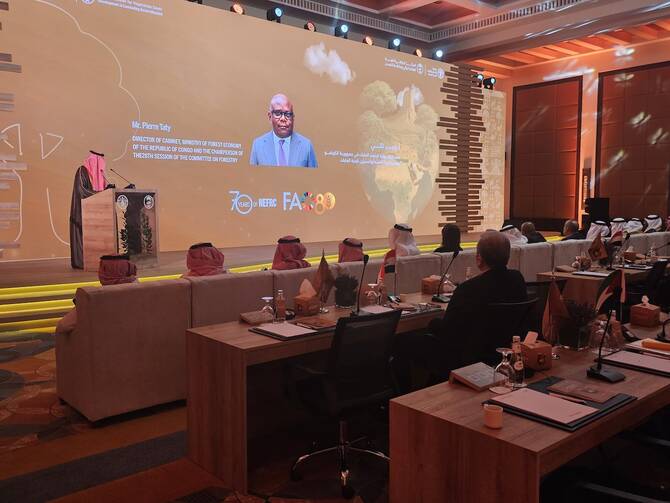

JEDDAH: The 27th session of the Near East Forestry and Range Commission opened in Jeddah on Monday.
Held by the UN’s Food and Agriculture Organization, in coordination with the Saudi National Center for Vegetation Cover Development and Combating Desertification, it will run until Oct. 1 and marks the NEFRC’s 70th anniversary.
With themes including integrated land restoration frameworks and solutions to drought and desertification, with a particular focus on forest fires, invasive species and green cities, it brings together government officials and representatives of a range of organizations involved with forest-related issues.
Participants from 25 countries will discuss forest and rangeland resilience, sustainable land use, women’s participation in non-wood forest products and pastoral value chains.
Mishal bin Abdulaziz Al-Harbi, director general of the general department of natural rangelands at NCVC, told Arab News the event embodied the Kingdom’s interest in preserving and developing vegetation cover.
“The Kingdom of Saudi Arabia plays a key role in preserving and developing its vegetation cover through national initiatives like the Saudi Green Initiative and Vision 2030, which involve restoring degraded forests and mountains, planting billions of trees, establishing protected areas and royal reserves, and combating desertification,” he said.
Al-Harbi also highlighted the country’s major environmental challenges, from desertification to water shortages and environmental degradation.
“The challenges lie in two elements — climate and human,” he told Arab News. “The Kingdom is working to modernize rainmaking through the regional cloud seeding program and also to raise awareness in the local community of the importance of preserving the plant sector.”
Speaking about an initiative to enhance vegetation cover, he added: “The initiative to sow 80 tons of seeds is an important step to enhance vegetation cover and develop natural pastures, achieving environmental and economic benefits for society.”
During the opening ceremony, FAO Saudi Arabia’s program director, Nizar Haddad, underlined the role the Kingdom was playing with NEFRC to combat desertification.
He said: “Saudi Arabia has invested heavily in green and national initiatives. We really hope to transfer this experience to other countries. This session is vital and crucial because it highlights the value of forests, rangelands and it is also trying to present solutions from the region.”
He added he hoped the meetings would result in recommendations tailored to the region’s specificity, fragility and importance, contributing to innovative policies to mitigate the effects of climate change and develop forests and pastures while presenting initiatives with a direct impact on both the environment and local people.
This year’s session is preceded by a dedicated virtual “Youth Day” which provides young leaders with a platform to present solutions, exchange ideas and contribute to shaping the region’s green future.


