American bluegrass band brings musical fusion to Jeddah

1 / 3
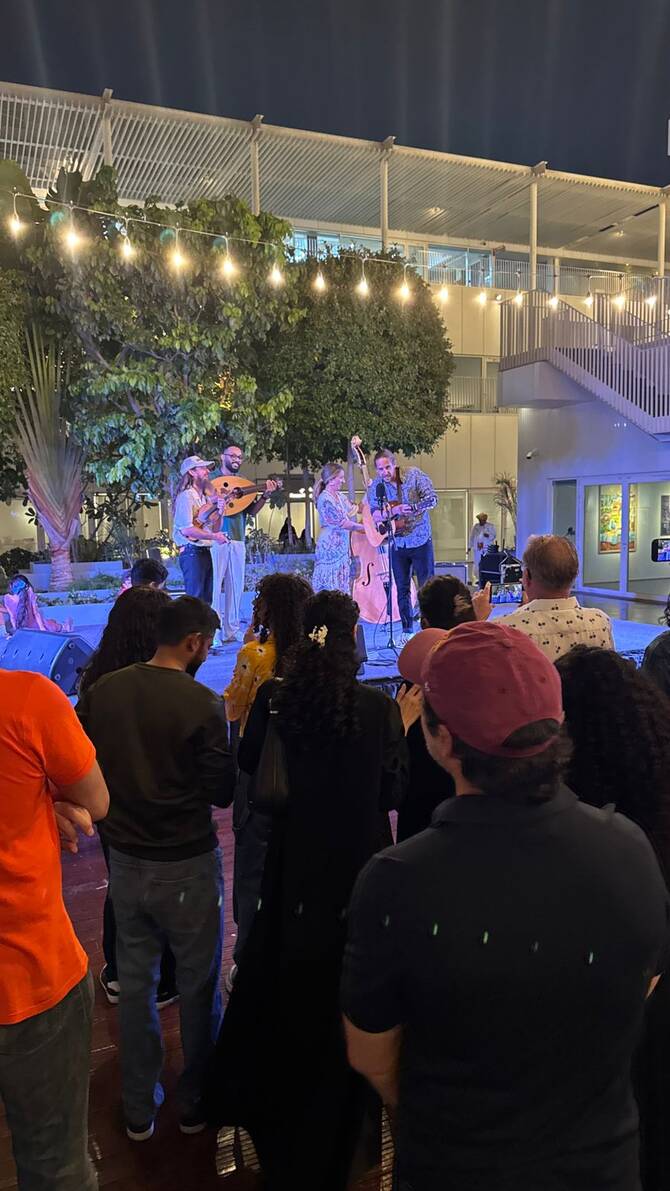
The US Consulate General in Jeddah, in collaboration with Hayy Jameel, recently hosted a performance by the American bluegrass band Damn Tall Buildings at Hayy Jameel. (Supplied)
2 / 3
The US Consulate General in Jeddah, in collaboration with Hayy Jameel, recently hosted a performance by the American bluegrass band Damn Tall Buildings at Hayy Jameel. (Supplied)
3 / 3
The US Consulate General in Jeddah, in collaboration with Hayy Jameel, recently hosted a performance by the American bluegrass band Damn Tall Buildings at Hayy Jameel. (Supplied)
Short Url
Updated 29 September 2025
Follow

American bluegrass band brings musical fusion to Jeddah

  • Saudi composer Majed Mohammed, who worked with the band to fuse Arabic music and bluegrass, described the experience as transformative

JEDDAH: The US Consulate General in Jeddah, in collaboration with Hayy Jameel, recently hosted a performance by the American bluegrass band Damn Tall Buildings at Hayy Jameel.

As part of their cultural program in Saudi Arabia, the band delivered a fresh and dynamic interpretation of the traditional genre, blending folk sounds with a contemporary energy that resonated with the audience.

Saudi composer Majed Mohammed, who worked with the band to fuse Arabic music and bluegrass, described the experience as transformative.

“Collaboration is essential, and it is truly amazing. Experiences like this, where Arabic music connects with other cultures, help share our art with the community and broaden our understanding,” he said.

“For me as a composer, working with them has been inspiring and has pushed me to explore new creative directions.”

The band members shared their perspectives on the collaboration, highlighting how their music and Arabic traditions complemented each other.

Max Capistran, who plays guitar, banjo and vocals, explained that their set was a mixture of original compositions inspired by American blues, folk and bluegrass, alongside traditional bluegrass pieces and creative takes on popular songs such as Linda Ronstadt’s “Blue Bayou.”

He added that for every international performance, they aim to learn a piece of music from the host country.

“This time, we were recommended Nancy Ajram’s ‘Leilah Law Bagi Leilah,’ and now we can’t stop singing it,” he said.

Sasha Dubyk, upright bass and vocals, noted the shared spirit between the two musical worlds.

“Arabic music and bluegrass share the same heart and soul, with traditions rooted in instrumentation and emotion.

“Even with short rehearsals, the music came together naturally. It’s the power of music connecting across cultures.”

Avery Ballotta, violinist and vocalist, reflected on the role of tradition in shaping the collaboration.

“Bluegrass, originating from the mountains of Appalachia, is passed down by ear, in a familial and community-based way. This oral tradition informs how we write and perform music, and blending it with Arabic melodies created something new and vibrant.”

Capistran also highlighted the impact on younger audiences: “The kids were curious and excited, asking about how long we’ve been playing and how we bring music together. It’s inspiring to see two very different cultures merge instantly through music, creating a powerful shared experience,” Dubyk added.

“Food, music, and art play a crucial role in building bridges. Music touches everyone, no matter who or where they are. People have been incredibly friendly, attempting to speak Arabic and share their culture with us. Music is a universal language, and playing together allowed us to connect instantly with local musicians,” Capistran said.

Eiman Elnaiem, public programs manager at Art Jameel, highlighted the importance of such collaborations.

“Hayy Sounds is designed to foster cross-cultural exchange. The Brooklyn-based Damn Tall Buildings and Majed Mohammed blended jazz, bluegrass, blues, folk and classic Arabic songs, taking audiences on a journey full of energy, soul and passion.

“Watching them discover common ground proved that distance, language and expression cannot limit the universality of music. The reception from the crowd, especially children, was magical.

“Art Jameel continues to support artists from the region and beyond to grow, learn and create meaningful connections through music.”

Zaina Ali, attending the show with her children, said: “We enjoyed it immensely and experienced the music like never before.

“The energy, talent and passion of the performers were truly inspiring. My children were so excited that by the end they were asking the band countless questions, taking pictures and even talking about learning to play music themselves.”


Saudi traditional meal anchors Al-Balad’s culinary scene

Ghalib Naji Al-Shadwy (center) with his son (right) and longtime customer Abu Samer Al-Sulami (left). (AN photo)
Updated 14 December 2025
Follow

Saudi traditional meal anchors Al-Balad’s culinary scene

  • Slow-cooked sheep’s head is drawing new generations and visitors to Jeddah’s historic district

JEDDAH: In the streets of Al-Balad, where centuries-old buildings frame one of Saudi Arabia’s most storied districts, culinary heritage continues to draw visitors as powerfully as architecture. 

Among the area’s enduring attractions is Al-Shadwy for Sheep Head Meat, a family-run restaurant that has served one of the Kingdom’s most traditional dishes since 1958, turning a once-necessity meal into a symbol of Saudi food culture and hospitality.

Tucked into Baba Makkah, Al-Balad’s historic core, Al-Shadwy began as a modest corner table before becoming a landmark destination for locals, food enthusiasts and tourists seeking an authentic taste of the past.

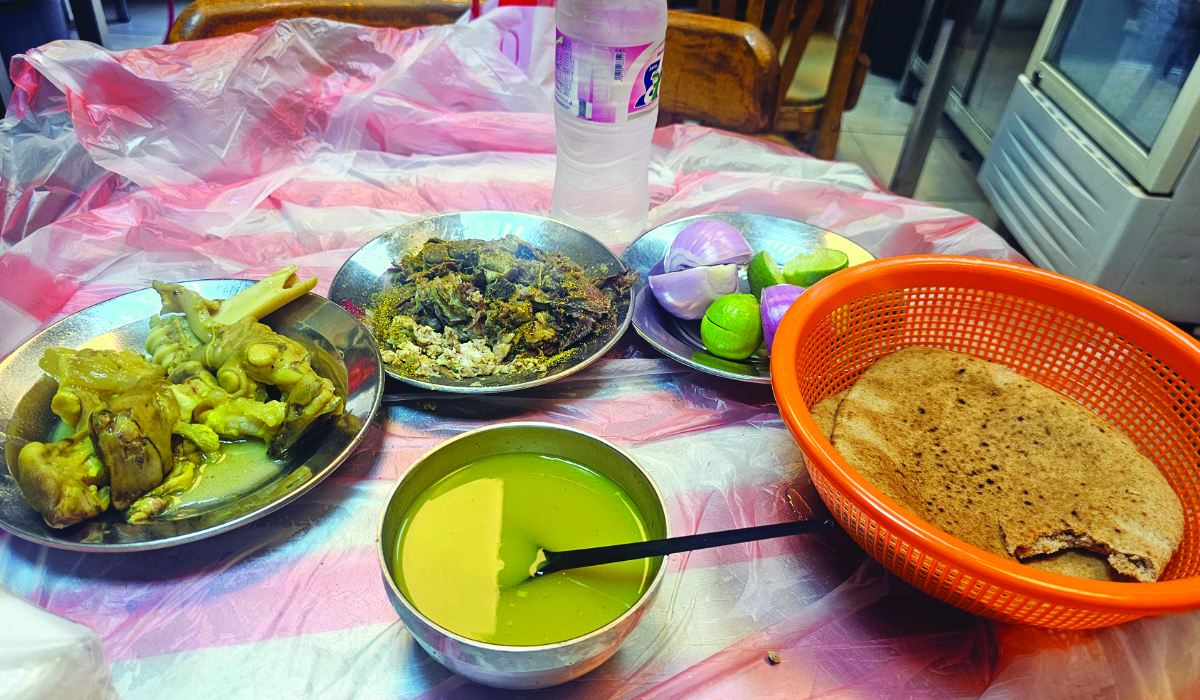
Eating sheep’s head has long been rooted in Arab culinary traditions, shaped by the principle of using the entire animal and avoiding waste. (AN photo)

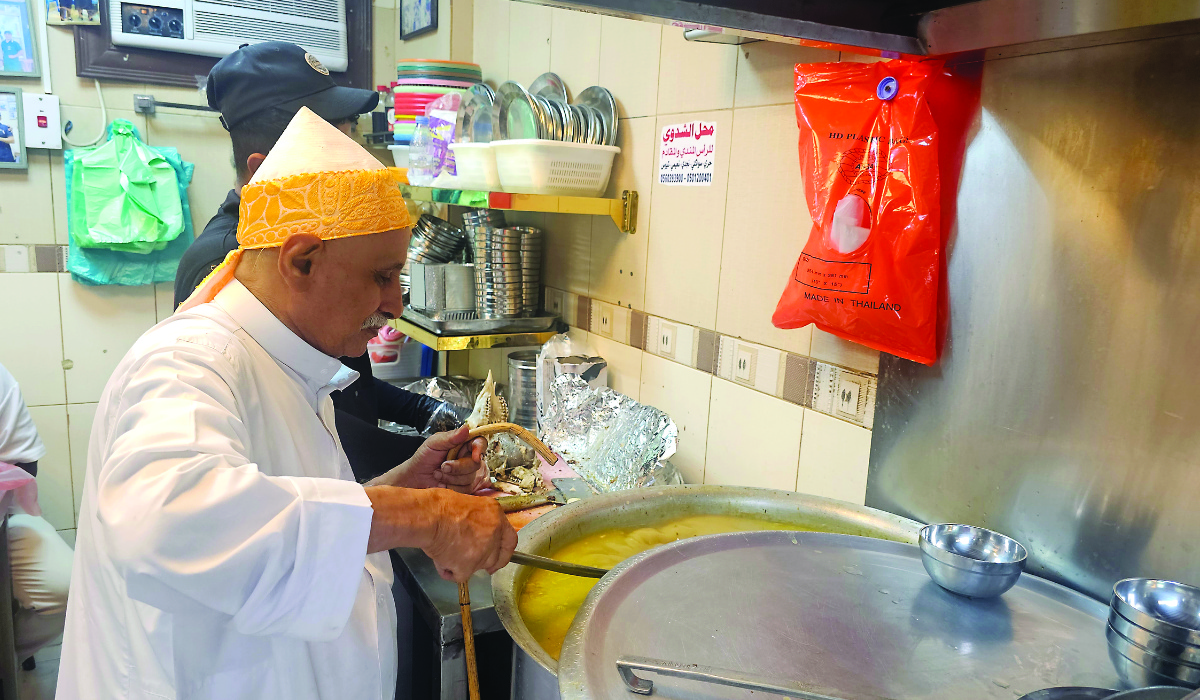
Now run by the third generation of the Al-Shadwy family, the restaurant remains devoted to a single specialty; sheep’s head, slow-roasted over charcoal using a recipe unchanged for decades.

Eating sheep’s head has long been rooted in Arab culinary traditions, shaped by the principle of using the entire animal and avoiding waste. In Saudi Arabia, the dish evolved into communal meal associated with generosity, warmth and social gathering.

Sixty-five-year-old owner Ghalib Naji Al-Shadwy, who inherited the restaurant from his grandfather and father, remains a familiar presence at the restaurant, overseeing the service and greeting customers. 

FASTFACTS

• Al-Shadwy for Sheep Head Meat is a family-run restaurant in Al-Balad that has served one of the Kingdom’s most traditional dishes since 1958.

• It began as a modest corner table before becoming a landmark destination for locals, food enthusiasts and tourists seeking an authentic taste of the past.

He told Arab News that the dish has been central to Saudi culinary culture for generations.

“The sheep’s head has been a staple in Saudi Arabia and other GCC countries culinary culture for centuries,” he said. “Traditionally, it was a meal served during cold winter mornings to provide energy and warmth. In many regions of Saudi Arabia, the sheep head (is) always on the top of the main plate for guests, and families festive holidays gather in restaurants or at home to enjoy the sheep’s head, making it a social and festive occasion.”

In Saudi Arabia, the dish evolved into communal meal associated with generosity, warmth and social gathering. (AN photo)

Speaking about its significance in hospitality culture, he added: “Serving it to guests is considered an act of generosity and care.” Rich and filling, it is most commonly eaten as breakfast or an early morning meal.

Preparing sheep’s head is a slow, careful process. According to Al-Shadwy, the heads are cooked at low temperatures to soften the tendons and connective tissue, resulting in tender meat and deep flavor.

The preparation includes curing and slow cooking, a method that has remained largely unchanged at the restaurant for more than six decades. 

Being a family-owned restaurant here for so many years makes us a part of Jeddah’s history.

Ghalib Naji Al-Shadwy, Al-Shadwy for Sheep Head Meat owner

“I’ve cooked many sheep heads a while back and I still enjoy it,” he said. “Most of the customers actually prefer the head and the brain.”

Despite its small size and somewhat tucked-away location, the restaurant’s popularity is unmistakable. Long queues form outside each morning, often guiding first-time visitors to its door. A sign reading “Al-Shadwy Mandi” in Arabic marks the entrance, while the steady crowd confirms its reputation.

Over the years, the restaurant has attracted officials, celebrities and social media figures, with photographs of notable guests lining the walls. Al-Shadwy said the steady attention reflections Al-Balad’s growing appeal as a cultural and culinary destination.

He said that interest in sheep’s head is no longer limited to older generations. Younger Saudis, he said, are increasingly curious about traditional dishes, while tourists often see it as an adventurous experience. 

“For many visitors, trying sheep’s head is considered ‘extreme food’ or a challenging dish,” he said. “But it gives them a sense of adventure and a unique story to tell.”

Inside the lively restaurant one morning, longtime customer Abu Samer Al-Sulami, who has been dining there for 40 years, described it as a rare example of authentic Saudi cuisine.

“I am a regular customer here and always come early in the morning because when you eat the sheep’s head it really gives you energy for work,” he said. 

Demand is highest in the early hours, particularly on Fridays. Al-Shadwy said the restaurant often sells out by mid-morning, making early visits essential.

“The number of sheep heads our restaurant sells daily varies but it reaches around 200 heads,” he added.

As he works alongside his two sons, Al-Shadwy says preserving the family legacy is as important as serving the fish. 

“Being a family-owned restaurant here for so many years makes us a part of Jeddah’s history,” he said.