

Pakistan fintech network says Saudi firms interested in investing in crypto, financial technology

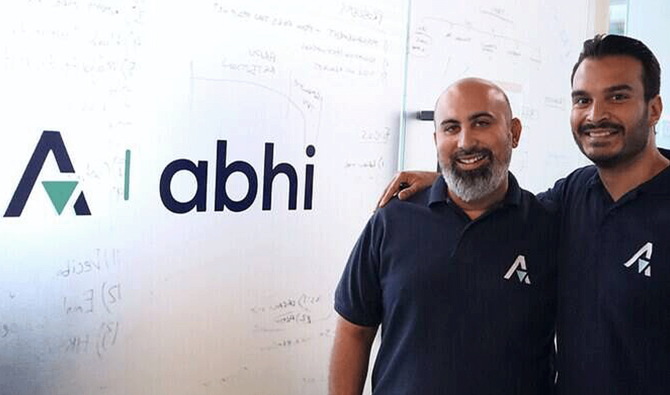
An undated file photo of the team of Pakistani fintech ABHI. (Photo courtesy: speedinvest/ website)
Short Url
Updated 25 September 2025
Follow

Pakistan fintech network says Saudi firms interested in investing in crypto, financial technology

  • Over a dozen Saudi firms voiced investment interest at last week’s financial gathering in Riyadh
  • Nearly 25 Pakistani fintechs showcased solutions, drawing interest in their platforms and services

ISLAMABAD: Interest in Pakistan’s fintech and crypto markets is rising, with more than a dozen Saudi companies signaling plans to invest after engaging Pakistani firms at a major financial technology gathering in Riyadh last week, according to the Pakistan Fintech Network (PFN) on Wednesday.

The Money20/20 Middle East conference, held in the Saudi capital from September 15 to 17, was aligned with the Kingdom’s Vision 2030, which seeks to foster innovation in financial services, strengthen collaboration between regulators, investors and startups and position Riyadh as a global fintech hub. The event brought together more than 450 brands, 600 investors and 350 speakers from over 40 countries.

According to PFN, more than 25 Pakistani fintech firms showcased their solutions at the forum, signing agreements and exploring opportunities in the Saudi market.

“They are interested in crypto exchanges, loan-lending fintech companies and financial institutions to tap the Pakistani market,” PFN CEO Fahad Sajjad told Arab News.

He said the “highly encouraging” response reflected Saudi demand for innovation and added that investors were closely watching the development of Pakistan’s crypto framework.

“The Saudi market is hungry for innovation and offers vast potential that Pakistani fintech firms can tap into through collaborations,” Sajjad said.

Among the announcements tied to the event, Pakistani fintech startup ABHI unveiled a partnership with TRAY, a Saudi cloud-based point-of-sale (POS) and business management platform.

The agreement introduces Earned Wage Access (EWA) services to Saudi Arabia’s fast-growing food and beverage sector.

EWA is a financial solution that enables employees to withdraw part of their earned salary at any time before payday, eliminating the need to wait until the end of the month. Under the deal, ABHI’s technology will be integrated into TRAY’s enterprise POS ecosystem, covering restaurants, cafés and cloud kitchens across the Kingdom.

“The response at Money20/20 was amazing,” Omair Ansari, ABHI’s CEO and co-founder, said. “We signed eight memorandums of understanding in total, and TRAY has already gone live with ABHI, with more big names to follow soon.”

“This will empower employees with instant access to their salaries, helping reduce turnover and strengthen retention in one of the Kingdom’s most dynamic industries,” he added.

Founded in 2021, ABHI offers EWA, payroll solutions and SME financing. It has already expanded into the UAE, Saudi Arabia and Bangladesh while attracting major international investment.

The company entered the Saudi market last year through a partnership with Alraedah, a principal SME financing institution in the Kingdom.

“Soon more names will be going live in the upcoming weeks or in the start of October,” Ansari said.


Pakistan rejects Amnesty claims of Israeli spyware use, calls reports ‘disinformation’

Updated 10 sec ago
Follow

Pakistan rejects Amnesty claims of Israeli spyware use, calls reports ‘disinformation’

  • FO denies any link with Israel, says Pakistan has “absolutely no cooperation” on surveillance tools
  • Islamabad accuses India of delaying clearance for relief aircraft bound for flood-hit Sri Lanka

ISLAMABAD: Pakistan on Friday rejected an Amnesty International report alleging the use of Israeli-made invasive spyware in the country, calling the findings speculative and misleading.

Amnesty’s investigation, published Thursday under the title Intellexa Leaks, cited the case of a Pakistan-based human rights lawyer who reported receiving a suspicious WhatsApp link in 2025. According to Amnesty International’s Security Lab, the link bore signatures consistent with Predator, a spyware product developed by Israeli manufacturer c

Foreign Office spokesperson Tahir Andrabi dismissed the suggestion that Islamabad had deployed the tool or maintained any technological cooperation with Israel.

“These are all media speculations. These are all rumor-mongering and disinformation. There is absolutely no cooperation between Pakistan and Israel on anything, let alone a spyware or these kinds of tools. So, I would reject it quite emphatically,” he said at a weekly briefing.

Andrabi also accused India of obstructing humanitarian operations, saying New Delhi delayed flight clearance for a Pakistani relief aircraft carrying aid to flood-affected Sri Lanka.

“The special aircraft carrying Pakistan’s relief goods had to wait for 48 hours, in fact more than 48 hours, around 60 hours, while the flight clearance from India was delayed,” he said.

He added that the eventual conditional flight window was too narrow to be workable.

“The partial flight clearance which eventually was given after 48 hours was operationally impractical, time-bound just for a few hours and hence not operable, severely hindering the urgent need for the relief mission for the brotherly people of Sri Lanka,” Andrabi stated.

“Humanitarian assistance is like justice, if it is delayed, it is denied.”

Responding to India’s claim that clearance was granted within four hours, he said Pakistan has documentary proof contradicting New Delhi’s version.

On a separate question about reported delays in the arrival of a Turkish delegation aimed at mediating between Islamabad and Kabul, Andrabi said Pakistan welcomed Ankara’s initiative but was unaware of the cause of postponement.

“We stand ready to receive the Turkish delegation. That delegation has not arrived as yet. And I’m not aware of any schedule. Pakistan is ready to hold negotiations, discussions,” he said, adding that the delay may be linked to coordination with the Afghan side.