
In England and across Europe, the sun is setting on an eventful 2025 cricket season. It will be remembered for the visit of India to England for a hard fought, sometimes acrimonious, five-match Test series, which was shared two wins apiece.
The series was immediately followed by the fifth edition of The Hundred, which will be subject to changes previously discussed in this column.
Those who were present at Southampton on Sept. 7 will remember that England scored 304 for three against South Africa, the third highest total yet in international T20s.
The European Cricket Network is looking back in dismay to the loss of funding from the fantasy gaming platform Dream11, which was forced to cease operations overnight as a result of India’s new online gaming legislation.
A much happier group of people are those representing Italian cricket, whose men’s team qualified for the 2026 T20 World Cup in India, upsetting Scotland in the process.
It used to be the case that, after the end of the English cricket season, international attention switched to the other main Test-playing nations, mainly in the southern hemisphere. This year, in a move symbolic of cricket’s changing landscape, the attention has switched to the UAE.
Its role in cricket’s ecosystem has grown significantly since the opening of a stadium in Sharjah in 1982, where the first international matches were staged in April 1984 in the Asia Cup. The stadium then became a regular venue for one-day internationals (ODIs), hosting 198 until 2003. Between 2010 and 2016 it was the home ground for the Afghanistan cricket team’s ODI and first-class matches.
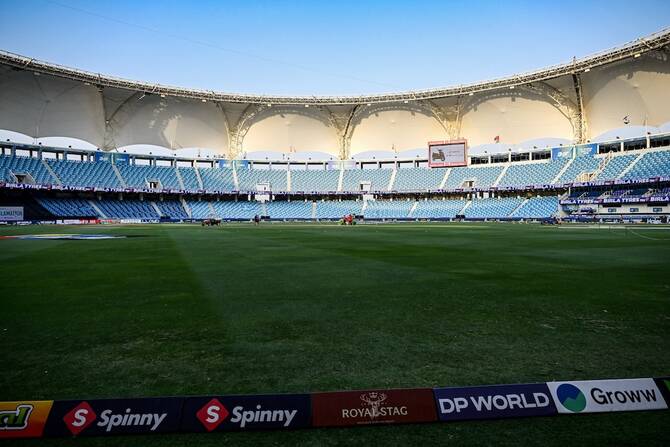
The UAE’s growing commitment and importance to cricket was further illustrated by the opening of the Sheikh Zayed Cricket Stadium in Abu Dhabi in May 2004 and the Dubai International Stadium in 2009.
The stadiums have hosted the Indian Premier League and T20 World Cups when the original venues could not be used. Further strength was added to the UAE’s position when the ICC switched its base from London to Dubai in 2005. The provision of training facilities in Dubai and Abu Dhabi have enhanced the attraction to visiting teams, with some English counties routinely conducting their pre-season training there.
Such has been the impact of franchise leagues on player mobility and choice that several have chosen to relocate to the UAE, also a place of exile for several members of the Afghanistan’s men’s team.
All the time the UAE’s teams have become more competitive. The men’s team qualified for the current Asia Cup. This is being held in the UAE because India and Pakistan will not play in the other’s country. The ongoing tensions between them overshadow cricket. It was only at the 11th hour that the Indian team received clearance from its own government to participate in this Asia Cup. India’s match against Pakistan on Sept. 9 was, as always, eagerly anticipated, but it failed to live up to expectations, Pakistan being easily defeated by seven wickets. Prior to that, Pakistan lost to India by six wickets with six overs to spare in the Champions Trophy on Feb. 23, 2025. The match was also held in Dubai, despite Pakistan being the tournament hosts.
In the T20 World Cup in a match played in New York on June 9, 2024, India beat Pakistan by six runs in a game Pakistan was well placed to win. India was defending 119, Pakistan reached 80 for three and needed 40 runs off the last 36 balls. Statistical forecasters rated their chances of victory at 93 percent. India’s bowlers, especially Jasprit Bumrah, held their line and nerve to snatch an astonishing victory. Since then, Pakistan’s performances have regressed. A gulf has opened up between them and India that shows few signs of being bridged, either on or off the field.
There has been considerable media coverage of the Indian team’s decision not to shake hands with the Pakistani team and coaches at the end of the match last Sunday. The details of this were covered in Arab News on Monday. During the week, other aspects of the decision have emerged. The Pakistan Cricket Board lodged a complaint with the ICC against the match referee, Andy Pycroft, accusing him of conduct which breached the “spirit of cricket”. This appears to be based on the fact that the captains did not shake hands at the toss, as is normal practice.
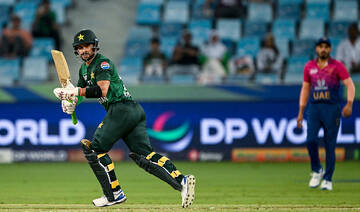
The PCB alleges that this was pre-arranged by Pycroft. One can only guess at the behind-the-scenes maneuverings, but the ICC rejected the PCB’s demand for Pycroft to be removed from the tournament. It is understood that a second letter was sent by the PCB repeating the demand and threatening to withdraw from the competition. The threat did materialize in the hours before the match. After more behind-the-scenes discussions, play started an hour late and Pakistan beat the UAE. This means that Pakistan and India will lock horns in the Super 4 stage.
A PCB communication reported that Pycroft apologized for “miscommunication.” Later communiques suggested that Pycroft issued a clarification. Either way, the situation is opaque.
In all of this it is easy to feel sorry for the UAE team and for Pakistan’s new captain, Salman Ali Agha, and his team, all caught up in a political controversy at a time when they should be focused on their jobs. Agha did not attend the post-India match press conference, which was dominated by the Indian captain, Suryakumar Yadav, who barely referred to the cricket. Instead, he spoke about the Indian armed forces, terrorist attacks and standing at one with the Indian cricket board and government.
Cricket has always prided itself on maintaining traditions of a “gentlemanly” nature that many other sports have not emulated, coupled with a capacity to build bridges. On occasion these features have been stretched to breaking point — over South Africa’s apartheid policies, for example.
The current impasse has different dimensions. An opportunity to build bridges, to counterbalance political tensions, has been foregone, replaced by an openly political stance in which a government directive has shaped a press conference and relations between players.
The political calculation behind this stance is likely to rest on an assessment that India will now beat Pakistan whenever they meet. Such victories fuel national pride and earn political capital. India could have decided not to play in this competition. Instead, it delayed the decision. Public opinion seemed to favor not playing. Indian cricket does not need the money generated by the tournament. What it does need is to sustain its position at the forefront of cricket’s commercial machine, which supports wider ambitions at the 2028 Olympics and beyond. It seems that beating, rather than boycotting Pakistan, is the preferred strategy.
As the summer fades in Europe, new dangers for cricket rise to the east in the form of actions which may corrupt its soul. Cricket should be about the appreciation of technique, individual excellence and team strategy, which generate shared human delight.
Instead, in Dubai, a genuine sporting contest has been turned into a political playground designed for a domestic Indian audience. The sight of displays of friendship and respect between players and between spectators for the two sides used to be common. Now, it may be a thing of the past. There is a saying “It is not cricket” to convey the concept of fair play. The events that unfolded in Dubai are definitely not cricket. Who knows what is going to happen when India and Pakistan meet again on Sunday?