OSLO: A Norwegian human rights foundation gave its annual prize on Wednesday to the Emergency Response Rooms, a Sudanese network of community groups providing aid, for “their courageous work to preserve the most fundamental human right — the right to life.”
Four past laureates of the Rafto prize including Myanmar’s Aung San Suu Kyi and East Timor’s Jose Ramos-Horta, went on to win the Nobel Peace Prize.
This year’s Nobel Peace Prize will be announced on Oct. 10 in Oslo. The Peace Research Institute Oslo, a research institution, named the Emergency Response Rooms as a possible winner.
The Emergency Response Rooms are a loose network that emerged during the civil war that broke out in Sudan in 2023.
They have tried to sustain basic services, such as water and power, and distribute food and medical supplies.
“They consist of thousands of volunteers who engage in collaborative, community driven efforts to meet urgent humanitarian needs of others, at great personal risk,” the Rafto Foundation said in a statement.
“(They) save lives and maintain human dignity in a place of misery and despair. Their innovative mutual aid efforts through citizen participation contribute to developing a civil society and is essential to building a better future for Sudan.”
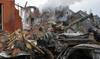
Already one of the world’s poorest countries, Sudan has been ravaged by a deadly war since April 2023 between the regular army and the paramilitary Rapid Support Forces (RSF), each side led by generals vying for power.
The conflict has killed tens of thousands of people and driven more than 14 million from their homes, according to figures from the UN.
The UN has called it “the world’s worst humanitarian crisis,” where famine has spread in parts of the country and cholera has affected large areas.
Shortly after the first shots of the conflict rang out, a surge of solidarity emerged in the country that has no functioning state, infrastructure or basic services.
Despite meagre resources, neighborhood volunteers quickly set up self-funded “community kitchens” to feed their neighbors, at times going door-to-door.
The movement also provides civilians with health care and evacuation help.
The ERRs rose out of the resistance committees that organized pro-democracy protests during the revolution that ended the reign of dictator Omar Al-Bashir in 2019. The movement now counts thousands of volunteers.
With communications cut frequently and few journalists on the ground, the ERR volunteers also play a key role in documenting attacks on civilians.
Regarded with suspicion by the two rival camps, some volunteers have been killed, raped, beaten or had their aid pillaged, according to witness accounts.
The Rafto Foundation, citing media reports, said more than 100 volunteers had been killed since the beginning of the conflict.
It urged the two sides to agree to “a ceasefire and an end to the fighting in Sudan and for protection of civilian lives for Sudan.”
It added: “We call on the Rapid Support Forces and the Sudanese Armed Forces to respect international humanitarian law and protect humanitarian relief workers.”
First awarded in 1987 and named after Norwegian historian and human rights activist Thorolf Rafto, the prize comes with $20,000.