WASHINGTON: Former Vice President Kamala Harris says it was “recklessness” for Democrats to leave it to President Joe Biden to decide whether to continue seeking another term last year, but she defends his ability to do the job, according an excerpt of her new book.
Harris, in an excerpt of “107 Days” published Wednesday in The Atlantic, writes that as questions swirled about whether the then-81-year-old Biden should seek re-election, she and others left the decision to him and first lady Jill Biden.
“Was it grace, or was it recklessness? In retrospect, I think it was recklessness,” Harris said.
The remarks are the first time Harris has been publicly critical of Biden’s decision to run again — an ill-fated decision that saw him drop out in July 2024 after a disastrous debate performance, leaving her to head up the Democratic ticket and ultimately lose to Republican Donald Trump.
“The stakes were simply too high,” Harris writes in the book. “This wasn’t a choice that should have been left to an individual’s ego, an individual’s ambition. It should have been more than a personal decision.”
Biden’s office did not immediately have a comment Wednesday.
Throughout the campaign and in its wake, Harris had avoided much criticism of the president she served beside and defended him amid questions about his mental acuity.
In the book excerpt, Harris continues to defend Biden’s ability to do the job but describes him in 2024 and especially at the time of his “debate debacle” as “tired.”
“On his worst day, he was more deeply knowledgeable, more capable of exercising judgment, and far more compassionate than Donald Trump on his best. But at 81, Joe got tired. That’s when his age showed in physical and verbal stumbles,” Harris writes. “I don’t think it’s any surprise that the debate debacle happened right after two back-to-back trips to Europe and a flight to the West Coast for a Hollywood fundraiser. I don’t believe it was incapacity.”
She adds that if she believed Biden were incapacitated, she would have said so out of loyalty to the country.
Harris also blames those close to Biden for unflattering media coverage throughout the time she served as vice president and throwing her under the bus to boost Biden’s public standing.
She writes about receiving a high level of scrutiny as the first female vice president but says “when the stories were unfair or inaccurate, the president’s inner circle seemed fine with it. Indeed, it seemed as if they decided I should be knocked down a little bit more.”
Harris writes that she often learned that Biden’s staff was “adding fuel to negative narratives” that surrounded her, such as stories about her vice presidential office being in disarray and having high turnover.
The former vice president also accuses Biden’s staff of being afraid of her upstaging him, describing a speech she gave in Selma, Alabama, in March of last year in which she called for an immediate ceasefire in Gaza and more humanitarian aid to be delivered to people there.
“It went viral, and the West Wing was displeased,” Harris says, “I was castigated for, apparently, delivering it too well.”
She suggests that diminishing her also diminished Biden, especially “given the concerns about his age.”
Harris’ success, she writes, would be a marker of Biden’s good judgment and a reassurance to the public that if something happened to the president, she could step in.
“My success was important for him,” she writes. “His team didn’t get it.”
Harris’ book, whose title is a nod to the length of her abbreviated presidential campaign, is set to be published by Simon & Schuster on Sept. 23.


![]()

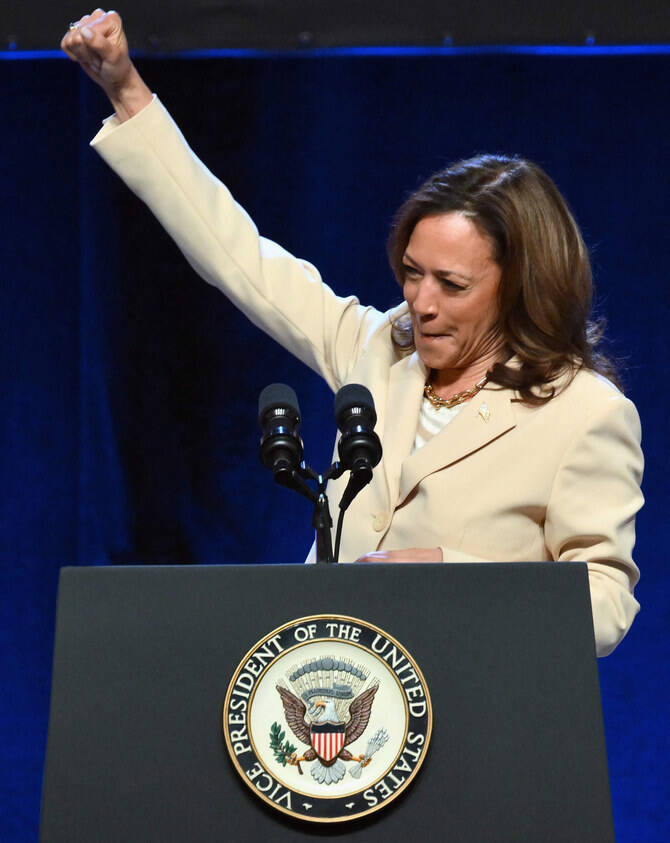
Harris says leaving reelection decision to Biden was ‘recklessness,’ but she defends his abilities
Short Url
https://arab.news/cmau9
Harris says leaving reelection decision to Biden was ‘recklessness,’ but she defends his abilities
- “Was it grace, or was it recklessness? In retrospect, I think it was recklessness,” Harris said
- The remarks are the first time Harris has been publicly critical of Biden’s decision to run again


Latest updates




© 2026 SAUDI RESEARCH & PUBLISHING COMPANY, All Rights Reserved And subject to Terms of Use Agreement.