GULU: Every evening, Everlyn Ayo left her village in northern Uganda, trekking with thousands of other children known as “night commuters” hoping to escape the horrors of Joseph Kony and his Lord’s Resistance Army.
The messianic Kony, whose case is finally being heard by the International Crime Court (ICC) from Tuesday, led one of the world’s most barbaric insurgencies, massacring and mutilating tens of thousands of people across the region, kidnapping children and turning them into child soldiers and sexual slaves.
Ayo saw the brutality first hand when Kony’s forces attacked her school in Nwoya district when she was around five years old.
“The rebels raided the school, killed and cooked our teachers in big drums and we were forced to eat their remains,” she told AFP from her home in the nearby city of Gulu.
Twenty years ago, Kony became the first person ever issued with an arrest warrant by the ICC, though his war crimes hearing will be in absentia since he has never been caught.
Ayo, now 39, will be among those following the case on her radio, thousands of miles from the sterile courtroom in The Hague.
After her school was attacked, Ayo’s family sent her to relatives in a remote village.
But that was also considered dangerous, and so she became a so-called night commuter, one of the emblematic features of a conflict that raged through much of the 1990s and 2000s.
Every night, she would walk around five kilometers, joining thousands of other children trekking through forests and jungle to stay in towns or shelters where they hoped there was less risk of being kidnapped by Kony’s army.
“We would leave the villages at 4:00 p.m. because the distances were long and we feared the villages at night. In the morning, we had to wait for daylight at around 8:00 am to return,” Ayo said.
The shelters were sporadically guarded by government troops, though they would often abandon their posts, themselves fearful of Kony’s fanatical forces.
“We were so many children that even if you did not cover yourself at night, you did not feel cold because we were squeezed together,” Ayo recalled.
Each morning, after walking for hours, they would find new horrors.
“Many times, on our return to the village, we would find blood-soaked dead bodies. Seeing all that blood as a child traumatized my eyes.
“For many years now, I do not see well, all I see is blood.”
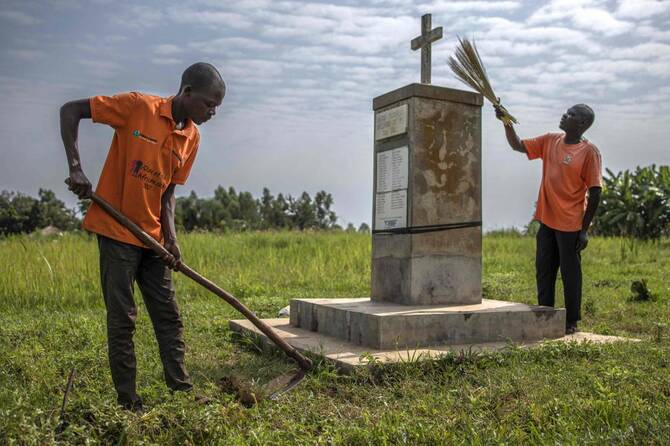
Wilfred Lalobo, 60, showed AFP a monument built in Lukodi, just outside Gulu, for 69 people killed in an attack by Kony’s forces on May 19, 2004.
“When the rebels arrived, the government troops were few, and they fled,” he said.
“Then they started killing civilians. Some people were stabbed with bayonet, others hacked and the rest burned alive in their houses.”
“On that day, my four-year-old daughter, Akello Lalobo was among those killed. My brother’s wife and six other relatives of mine were also killed,” Lalobo added.
Kony’s trial will be closely followed here, particularly by those who have sought to rebuild the region’s many shattered lives.
Stella Angel Lanam was 10 when she was captured by the LRA, which indoctrinated her into becoming a child soldier. She spent nine years in captivity.
Now 38, she is director of the War Victims and Children Networking Initiative, which offers counselling, training and other support in the region.
Lanam said the trial was a comfort, offering some justice to Kony’s many victims.
“Even though we have passed through a lot, we cannot lose hope,” she said.
“Will the government or Kony repair me back to the way I was? No. But at least I will get justice.”
Ayo worries that the world has too quickly forgotten the extreme trauma suffered at the hands of Kony’s forces.
She hopes he will one day see real justice.
“Joseph Kony should be punished severely in a way that the world will never forget,” Ayo said.


![]()
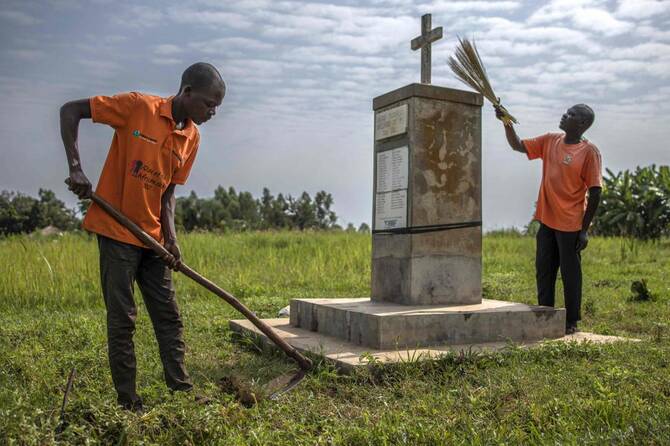
‘All I see is blood’: Kony survivors recall horrors ahead of trial
Short Url
https://arab.news/2vqw2
‘All I see is blood’: Kony survivors recall horrors ahead of trial
- Every evening, Everlyn Ayo left her village in northern Uganda, trekking with thousands of other children known as “night commuters” hoping to escape the horrors of Joseph Kony


Latest updates




Recommended


© 2026 SAUDI RESEARCH & PUBLISHING COMPANY, All Rights Reserved And subject to Terms of Use Agreement.