Why a crumbling Baghdad house linked to Agatha Christie has sparked such debate

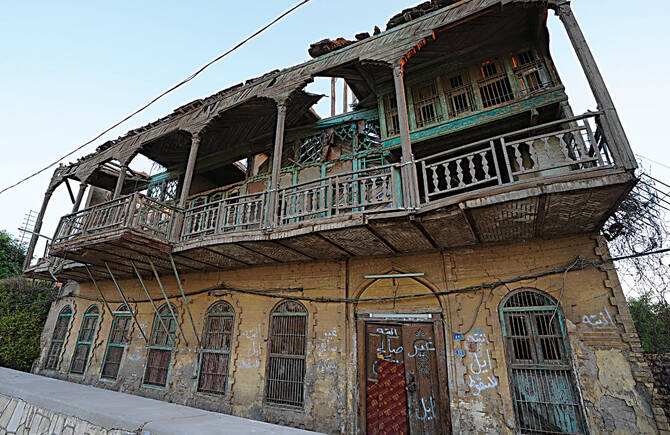
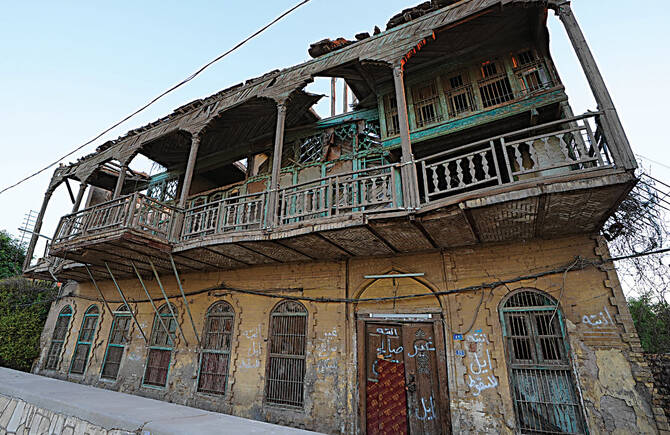
Historic house on the banks of the Tigris River, where British crime writer Agatha Christie lived for many years in Baghdad, Iraq, is in need of repair. (Photo by Murtadha Al-Sudani/Anadolu via Getty Images)
Short Url
Updated 06 September 2025
Follow

Why a crumbling Baghdad house linked to Agatha Christie has sparked such debate

  • The house where the British crime author is said to have lived now stands derelict, its roof missing and balconies sagging
  • Scholars remain divided on which house Christie called home — a mystery the Queen of Crime herself might have relished

LONDON: Among the fans of the British crime writer Agatha Christie, it’s no secret that the literary mother of such enduring fictional characters as Miss Marple and Hercule Poirot loved Iraq and, for some years after the Second World War, lived in a house in Baghdad.

According to recent reports originating from Turkiye’s Anadolu Agency, that house, in the city’s Karrada Maryam district on the west bank of the Tigris, is now a near-ruin, in danger of imminent collapse.

As the story goes, it isn’t only Christie’s association with the property that makes it a heritage gem worth saving for posterity.

Known as the Beit Melek Ali, legend has it that the house once belonged to Ali bin Hussein, the former King of Hejaz who sought sanctuary in Baghdad after being deposed in 1925.


English detective novelist, Agatha Christie (1890-1976) typing at her home, Greenway House, Devon, January 1946. (Getty Images/AFP File)

But there’s a problem with this narrative, which is somewhat undermined by a mystery that Christie herself might have relished, and to which she left few clues behind.

It is clear from recently published photographs of the house in the city’s Karrada Maryam district, on the riverbank in the shadow of Al-Jumariyah bridge and close to the northerly edge of the Green Zone, that this abandoned building is indeed in an advanced state of disrepair. Most of its roof is missing and its river-facing balconies are sagging.

But did Christie ever really stay here and, if so, when, exactly?

The author first came to Baghdad in 1928, at the age of 38, in the wake of her much-publicised divorce from her first husband, Col. Archibald Christie, whom she had married in 1914.

She travelled from England in style, as far as Istanbul on board the luxurious Orient Express — a journey that inspired her 1934 novel, “Murder on the Orient Express” — and from there on to Baghdad, via another train to Damascus and from there across 880 km of desert by a specially equipped car, part of a fleet operated on the route by the Nairn Transport Company, which was run by two New Zealand brothers.


Cover of Agatha Christie’s “Murder on the Orient Express” book.

The 48-hour journey, as Christie recalled in her autobiography, was “fascinating and rather sinister,” broken by an overnight stay at a well-guarded fort in the isolated town of Rutbah in western Iraq, midway between Damascus and Baghdad.

Christie described her first sight of Baghdad: “In the distance, on the left, we saw the golden domes of Kadhimain, then on and over another bridge of boats, over the river Tigris, and so into Baghdad — along a street full of rickety buildings, with a beautiful mosque with turquoise domes standing, it seemed to me, in the middle of the street.”

On this occasion she stayed with one of the many expat British couples based in Baghdad. The capital had been seized from Ottoman forces in 1917 and, like the rest of the country, would remain under British control until Iraq was granted independence in 1932.


English detective novelist, Agatha Christie (1890 - 1976), circa 1950. (ullstein bild via Getty Images)

At that time, as Christie’s biographer Laura Thompson wrote, Baghdad “was a city where the British traveller could find racing, tennis, clubs and no doubt Marmite on toast; in the pre-war years it was not at all unusual to find people of Agatha’s class in such places.”

Christie embarked on the obligatory round of social calls, during which she met the famous archaeologist Sir Leonard Woolley, who in 1922 had begun excavating the ancient Sumerian royal city of Ur. Christie became friends with Woolley and his wife, Katherine, and was invited to the dig, 300 km southeast of Baghdad.

Christie returned to England, but came back to Baghdad, and to Ur, in 1930. On this trip she met her future husband, Woolley’s assistant Max Mallowan, and they were married in September that year.


'Modern Baghdad, the City of Caliphs', Iraq 1925. A print from Baghdad, Camera Studio Iraq, published by Hasso Bros, Rotophot AG, Berlin, 1925. (Print Collector photo/Getty Images)

From 1930 to 1939, and then again — after the Second World War — from 1949 to the late 1950s, Christie accompanied Mallowan on an estimated 15 or more archaeological digs in Iraq or Syria, frequently staying in Baghdad en route.

However, in her autobiography, begun in 1950 and completed in 1965, only once did Christie mention living in Baghdad.

“I have not yet mentioned our house in Baghdad,” she writes near the end of the book, which was published posthumously in 1977, the year after her death.

“We had an old Turkish house on the West bank of the Tigris. It was thought a very curious taste on our part to be so fond of it, and not to want one of the modern boxes, but our Turkish house was cool and delightful, with its courtyard and the palm-trees coming up to the balcony rail.”

This, possibly, was the house that now stands derelict on the Tigris. But there is evidence that after the war Christie and her husband moved into a far grander property in Baghdad.

An Agatha Christie fan site repeats the story that “Christie lived in the Beit Melek Ali with Max Mallowan for a time.” In 1949, it adds, the Iraqi-Palestinian author Jabra Ibrahim Jabra wrote of meeting the Mallowans there.

Robert Hamilton, an archaeologist who invited Jabra to meet the Mallowans, told him it was “the house of King Ali ... an old Turkish house that goes back to the Ottoman period, and it is one of the most beautiful homes of old Baghdad.”


Ashar Creek leading to the Shatt al-Arab, Basra, Iraq, 1925. (Photo by The Print Collector/Print Collector/Getty Images)

But even in its heyday, the house now decaying on the river’s edge in the Karradat Maryam neighborhood would not have fitted that description.

King Ali of the Hejaz had fled to Baghdad in 1925 because his brother Faisal had been installed as King of Iraq four years earlier. Ali died in Baghdad in 1935 and Christie, whose first trip to Baghdad was in 1928, seven years before the exiled king died, was certainly aware of the house where he lived.

She set two books in Iraq: Murder in Mesopotamia, inspired by her archaeological adventures and published in 1936, and the 1951 adventure They Came to Baghdad.

In this spy thriller a character is told to walk along the Tigris until she comes to the Beit Melek Ali. She finds “a big house built right out on to the river with a garden and balustrade. The path on the bank passed on the inside of what must be the Beit Melek Ali or the House of King Ali. She could not go along the bank any further and so turned inland.”

This description fits the only known photograph of the Beit Melek Ali, held in the archives of the US Library of Congress. Unlike the altogether less impressive house by Jumariyah bridge, this building — far grander, and clearly fit for a king — is right on the waterfront, with no path in front of it.

It seems improbable that in her autobiography Christie would have made no mention of the history of her Baghdad house had she in fact lived in the Beit Melek Ali — and, besides, there are other candidates for the title “Agatha Christie’s Baghdad house.”


This photo taken on June 5, 1957, shows an excavation site of an ancient Assyrian Fortress built more than 25 centuries ago, at Nimrud, in what is now Iraq. British Archeologist M.E. Mallowan, aided by his wife, mystery story writer Agatha Christie, supervised the excavation. (Getty Images)

Mallowan, her husband, was a member of an organization called the British School of Archaeology in Iraq, which in 1946 purchased a building in Baghdad. As a paper published in 2018 in the journal of the American Society of Overseas Research recalled, Mallowan was appointed as the school’s first director “and immediately took up residence, along with a secretary, six students and Agatha Christie.”

This, then, was Christie’s house in Baghdad during the 1940s and 1950s. There is an oblique reference to it in her obituary, published in 1976 in the British School of Archaeology’s journal Iraq, which recorded only that “in the old schoolhouse overlooking the river Tigris in Baghdad where she wrote ‘They Came to Baghdad,’ she would read and write in peace.”

But where it was, and whether it is still standing today — questions that can also be asked of the true Beit Melek Ali — remains a mystery.


READ MORE:

• Agatha Christie and her Middle Eastern mysteries

Agatha Christie had little-known role in ancient Nimrud


The likelihood that the now-decrepit old house by Al-Jumariyah bridge was the headquarters of the British School of Archaeology in Iraq, and the home for several years of Christie and Mallowan, is further undermined by two photographs, both of which purport to show Christie on the balcony of the BSAI, and neither of which appears to have been taken at the claimed Christie house in the Karrada Maryam district.

In terms of pinpointing the exact location of the BSAI house she shared with Mallowan in Baghdad, inquiries with both the organization (which in 2007 was renamed The British Institute for the Study of Iraq) and the Christie Archive Trust have so far drawn a blank.

Meanwhile, an email this week from an archaeologist who has written about the history of the BSAI has muddied the waters further.

“As far as I know, there was nothing particularly special about the (BSAI) house,” Mary Shepperson, who specializes in the urban archaeology of the Middle East at the University of Liverpool’s School of Architecture, told Arab News.

“It was chosen because it was cheap -– archaeology always operates on a shoestring. It was notoriously basic. I think it’s still standing today but in very poor shape.”


Caption

And then she added: “I don’t think either of the two photos you sent are the old BSAI house.”

Attached to the email was a photograph of yet another building in Baghdad. “This,” Shepperson declared, “is a picture of the river side of the house.”

As Christie wrote in her very first detective novel, “The Mysterious Affair at Styles,” published in 1920, “everything must be taken into account. If the fact will not fit the theory — let the theory go.”

Ultimately, though, Christie, who died in 1976 at the age of 85, would probably have found the fascination with her living arrangements in Baghdad tedious.

“People,” as she once said, “should be interested in books, not their authors.”


Why Gaza aid curbs are deepening children’s health crisis despite ceasefire

Updated 04 December 2025
Follow

Why Gaza aid curbs are deepening children’s health crisis despite ceasefire

  • Humanitarian aid deliveries are still restricted, leaving thousands of children without sufficient food, medicine, and basic shelter
  • International agencies warn that without urgent, unrestricted aid, child mortality and long-term health crises will escalate sharply

DUBAI: Two months into Gaza’s fragile ceasefire, children in the besieged enclave continue to bear the brunt of a deepening humanitarian crisis, with aid agencies warning that Israel’s continued restrictions on relief supplies are exposing the population to malnutrition and disease. 

Despite the Oct. 10 ceasefire, humanitarian groups say convoys carrying much-needed aid remain stuck at border crossings. Meanwhile, thousands of families displaced by two years of war are now enduring heavy rains in overcrowded shelters, heightening the risk of disease. 

For displaced children, limited access to medical care and vaccinations could have long-term, irreversible consequences. Without timely medical intervention and proper nutrition, healthcare workers warn that children are far more vulnerable to illness and death. 

Caption

The UK-based charity Medical Aid for Palestinians has reported a rise in cases of child malnutrition, with medical facilities facing “critical shortages” of supplies needed to treat postwar health complications. 

“While the number of severely malnourished patients has decreased compared with the peak of the famine, cases are still regularly presenting to hospital emergency departments and medical points,” Rohan Talbot, MAP’s director of advocacy and campaigns, told Arab News. 

In November, the organization’s nutrition cluster identified 575 children with acute malnutrition, including 128 with severe malnutrition, out of 7,930 children screened. The highest rates were in Gaza City, where almost 10 percent of children screened were malnourished. 

“We have also seen birth defects attributed to poor nutrition in mothers and lack of access to proper food and medical care,” said Talbot, warning that malnutrition could have long-term effects on children, leaving them at risk of stunting, poor development, and recurrent infections. 

A man carries the body of Palestinian baby Zainab Abu Haleeb, who died due to malnutrition, according to health officials, at Nasser Hospital in Khan Younis, southern Gaza Strip, on July 26, 2025. (REUTERS)

Last week, MAP reported that three of Gaza’s largest hospitals — Al-Shifa, Nasser and the Patient’s Friends Benevolent Society — remain overwhelmed with critically injured and malnourished patients. 

Staff are unable to provide adequate care or carry out surgeries postponed during the war, with some patients dying as a result. 

Medical supplies have not “meaningfully increased” since the ceasefire began, leaving a collapsed healthcare system with little capacity to recover, the organization said. 

According to the UN, only half of Gaza’s 36 hospitals are currently partially operational, and not a single hospital in the enclave is fully functional.  

A nurse examines a malnourished child at Nasser Hospital in Khan Younis, southern Gaza Strip, on July 25, 2025. (REUTERS)

The Patient’s Friends Benevolent Society Hospital, the main pediatric facility in northern Gaza, has reported critical shortages of essential drugs, medical supplies, cleaning materials, and sterilization equipment. 

On Nov. 14, the hospital — already damaged in the fighting — was flooded by heavy rain, trapping children and their families on the ground floor. 

“Medical intervention was not enough to save the lives of children, so we lost a large number of them in the intensive care unit,” Dr. Majd Awadallah, the hospital’s medical director, said in a statement. 

“These problems are unsolvable without opening the crossings and allowing the unconditional entry of essential materials, especially medicines. How can a hospital operate in surgical and maternity cases without cleaning materials?”   

INNUMBERS

600 Aid trucks expected to enter Gaza daily under ceasefire deal.

145 Actual average number of aid trucks entering Gaza per day.

(Source: Gaza’s Government Media Office)

On Monday, the UN Relief and Works Agency accused Israel of blocking around 6,000 aid trucks carrying food, medicine, tents and blankets — enough to sustain the enclave for three months. 

The organization warned that 1.5 million people urgently need shelter after heavy rains in November flooded displacement camps and damaged at least 13,000 tents. 

Israel’s military operation in Gaza, triggered by the Hamas-led Oct. 7, 2023, attack, has displaced about 2.1 million Palestinians — roughly 95 percent of the population — and destroyed nearly 78 percent of the enclave’s 250,000 buildings, according to UN figures. 

Most of the displaced now live in makeshift tents, some erected over the rubble of their former homes, without proper sanitation, clean water, insulation or sewage systems, contributing to the spread of infectious diseases. 

The World Health Organization has reported a rise in cases of Guillain-Barre Syndrome, acute watery diarrhea, and acute jaundice syndrome, the latter of which can be linked to hepatitis A. 

Though more aid has been reaching the devastated enclave since the ceasefire, humanitarian organizations warn this is insufficient to meet the population’s needs. 

Under the US-brokered truce, at least 600 aid trucks were expected to enter Gaza daily. However, Gaza’s Government Media Office said the enclave has received an average of just 145 trucks a day since the agreement began. 

Palestinians collect aid supplies from trucks in Khan Younis, southern Gaza Strip, on October 12, 2025, amid a ceasefire between Israel and Hamas. (REUTERS)

Of the aid that has entered Gaza, only 5 percent of the trucks contained medical supplies, according to the UN. 

“The strain on Palestinians’ lives is only deepening,” said Talbot. “Even the most basic materials needed for shelter continue to be blocked by Israeli authorities.” 

Though food availability has slightly improved due to the entry of humanitarian and commercial trucks, aid organizations still report limited quantities and less diverse food in markets. 

The World Food Programme said food consumption remained below pre-conflict levels by mid-October, as meat, eggs, vegetables, and fruits remain unaffordable for many families. Talbot said the food shortages are affecting patient recovery and overall public health. 

“Local food production has been severely disrupted, and humanitarian access remains extremely constrained by Israeli restrictions, with a severe lack of properly nutritious food entering Gaza,” he said. 

The war has eroded purchasing power, leaving 95 percent of the population entirely dependent on aid, UNRWA said, urging Israel to facilitate rapid at-scale and unimpeded humanitarian access. 

Although the ceasefire was intended to bring relief, near-daily Israeli strikes have killed 347 Palestinians, including at least 67 children, and injured 889 others, pushing Gaza’s death toll to more than 70,000, according to the Ministry of Health. 

Gaza’s Government Media Office has documented 535 Israeli violations since the ceasefire began, while satellite imagery shows more than 1,500 buildings have been destroyed during this period. 

In a statement last week, rights monitor Amnesty International accused Israel of continuing to commit genocide in Gaza by severely restricting the entry of aid and blocking the restoration of services essential for civilian survival. 

Agnes Callamard, the organization’s secretary-general, said the ceasefire creates “a dangerous illusion that life in Gaza is returning to normal,” warning that the lack of proper food, water and shelter could lead to “slow death” of Palestinians in Gaza. 

This includes blocking equipment needed to repair life-sustaining infrastructure and to remove unexploded ordnance, contaminated rubble and sewage — all of which pose serious and potentially irreversible public health and environmental risks, she said. 

Israel denies accusations it is deliberately obstructing aid, and accuses Hamas of stealing humanitarian assistance. 

Israeli soldiers secure humanitarian aid, amid the ongoing conflict in Gaza between Israel and the Palestinian Islamist group Hamas, near the Erez Crossing point in northern Gaza, on May 1, 2024. (REUTERS)

COGAT, the Israeli military arm that oversees humanitarian matters, insists that “hundreds of trucks” enter Gaza daily. 

In a Nov. 30 statement, the unit said it “approved 100,000 pallet requests submitted by organizations, of winter-related items, shelter equipment, and sanitation supplies.” 

“These supplies are ready and waiting for weeks for immediate coordination by the relevant organizations so they can enter Gaza,” the statement read. 

Israel and Hamas have continued to trade accusations of ceasefire violations as the first phase nears completion. 

Under this initial phase, Israel was required to withdraw its troops behind a temporary boundary known as the yellow line, while Hamas was to release all living and deceased hostages. 

The next stage of the Trump 20‑point Gaza peace plan, endorsed by the UN Security Council on Nov. 18, faces major obstacles, including Hamas disarmament, Israel’s full withdrawal from Gaza, governance of the enclave, and international security arrangements. 

Despite these obstacles, aid agencies are continuing live-saving work, stepping up efforts to provide essential health services, distribute clean water, support trauma and emergency responses, and offer mental health support. 

On Nov. 21, the WHO, UNRWA, and the UN children’s fund UNICEF, announced the completion of the first round of vaccinations, which immunized more than 13,700 children against measles, polio, mumps and rubella, hepatitis B, tuberculosis, rotavirus and pneumonia. 

The agencies are now preparing for rounds two and three after 1.6 million syringes procured by UNICEF entered Gaza in mid-November. 

The UN also distributed food parcels to more than 264,000 families in the same month. 

However, aid workers say that these efforts represent only a fraction of what is needed to mitigate the worsening humanitarian crisis and help the population recover. 

“A ceasefire must mean more than this; it must bring an end to Palestinians’ suffering and allow them to regain their dignity and safety,” said Talbot. 

“Without a flood of aid and assistance, we will see more avoidable deaths and deprivation.”