MOSCOW: Russia’s defense ministry said on Wednesday that its troops had captured “about half” of the city of Kupiansk in Ukraine’s northeastern Kharkiv region, but Ukraine’s military denied any such advance.
Reuters could not independently confirm the battlefield reports from either side.
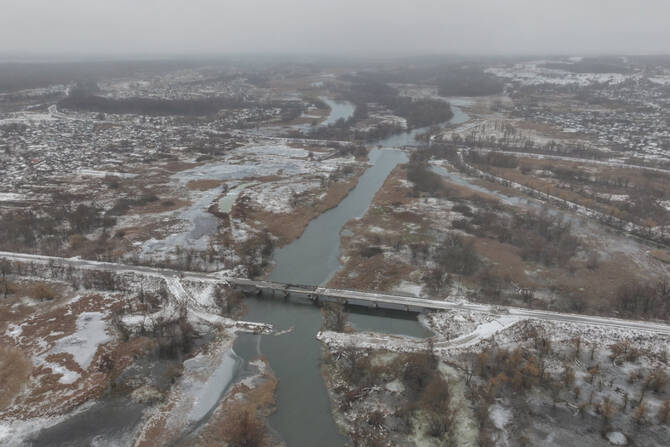
Kupiansk has been the focus of months of increased Russian military activity and heavy fighting. Russian troops captured the city in the early weeks of their February 2022 invasion and Ukrainian forces took it back later that same year.
Much of the city has been destroyed as Moscow tries to seize it back as part of a slow advance westward along parts of the 1,000-km (620-mile) long frontline.
The Russian Defense Ministry released a drone video showing a soldier holding a Russian flag while standing on a road in the town.
Ukraine’s 10th army corps, in a post on the Telegram messaging app, described the Russian report as staged propaganda.
“All such attempts are pointless,” it said alongside a video of its own, which it said showed a Russian unit being destroyed. “All such attempts by the Russian occupiers to use localities as a decoration for propaganda videos are doomed to fail.”
Ukraine’s official Center Against Disinformation said any notion that Russian forces had advanced into Kupiansk was untrue and a propaganda exercise.
Ukraine’s popular Deepstate war blog, which uses open source maps of the conflict, said the incident with the flag occurred on the city’s southern outskirts where control is disputed.
In a late evening report, the General Staff of Ukraine’s military said one armed clash was raging in the Kupiansk sector.
The report listed nearly 50 attempts by Russian forces to break through Ukrainian defenses near Pokrovsk, one of the focal points of Moscow’s drive through Donetsk region.


![]()

Russia claims capturing ‘about half’ of Ukrainian city Kupiansk; Kyiv says it’s untrue
Short Url
https://arab.news/rgakk
Russia claims capturing ‘about half’ of Ukrainian city Kupiansk; Kyiv says it’s untrue
- Ukraine’s 10th army corps, in a post on the Telegram messaging app, described the Russian report as staged propaganda
- Kupiansk has been the focus of months of increased Russian military activity and heavy fighting


Latest updates


© 2026 SAUDI RESEARCH & PUBLISHING COMPANY, All Rights Reserved And subject to Terms of Use Agreement.