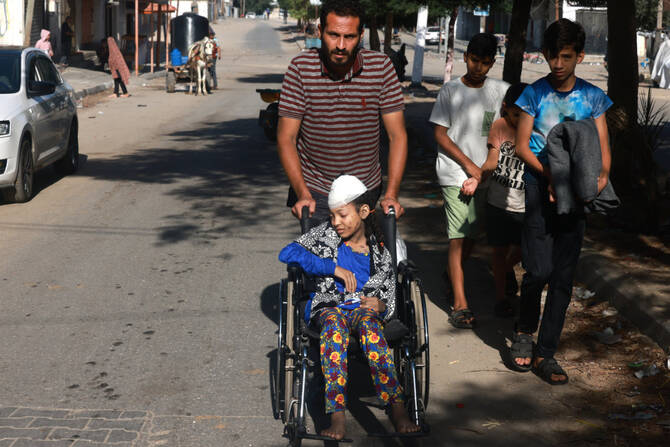
GENEVA: At least 21,000 children in Gaza have been disabled since the war between Israel and Hamas began on October 7, 2023, a United Nations committee said Wednesday.
Around 40,500 children have suffered “new war-related injuries” in the nearly two years since the war erupted, with more than half of them left disabled, said the UN Committee on the Rights of Persons with Disabilities.
Reviewing the situation in the Palestinian territories, it said Israeli evacuation orders during the army’s offensive in Gaza were “often inaccessible” to people with hearing or visual impairments, “rendering evacuation impossible.”
“Reports also described people with disabilities being forced to flee in unsafe and undignified conditions, such as crawling through sand or mud without mobility assistance,” it said.
Meanwhile the committee said the restrictions on humanitarian aid being brought into the Gaza Strip were disproportionately impacting the disabled.
“People with disabilities faced severe disruptions in assistance, leaving many without food, clean water, or sanitation and dependent on others for survival,” it said.
While the private US- and Israel-backed Gaza Humanitarian Foundation has four distribution points across the territory, the UN system it has largely replaced had about 400.
Physical obstacles, such as war debris and the loss of mobility aids under the rubble, have further prevented people from reaching the relocated aid points.
The committee said 83 percent of disabled people had lost their assistive devices, with most unable to afford alternatives such as donkey carts.
It voiced concern that devices like wheelchairs, walkers, canes, splints and prosthetics were considered “dual-use items” by the Israeli authorities and were therefore not included in aid shipments.
The committee called for the delivery of “massive humanitarian aid to persons with disabilities” affected by the war, while insisting that all sides needed to adopt protection measures for the disabled to prevent “further violence, harm, deaths and deprivation of rights.”
The committee said it had been informed of at least 157,114 people sustaining injuries, with over 25 percent at risk of life-long impairments, between October 7, 2023 and August 21 this year.
It said there were “at least 21,000 children with disabilities in Gaza as a result of impairments, acquired since October 7, 2023.”
It said Israel should adopt specific measures for protecting children with disabilities from attacks, and implement evacuation protocols that take into account persons with disabilities.
Israel should ensure disabled people are “allowed to return safely to their homes and are assisted in doing so,” it added.


![]()
At least 21,000 children disabled in Gaza war: UN committee

Short Url
https://arab.news/8ntbu
At least 21,000 children disabled in Gaza war: UN committee
- Around 40,500 children have suffered “new war-related injuries” in the nearly two years since the war erupted, said the UN Committee on the Rights of Persons with Disabilities
- “Reports also described people with disabilities being forced to flee in unsafe and undignified conditions“


Latest updates


© 2026 SAUDI RESEARCH & PUBLISHING COMPANY, All Rights Reserved And subject to Terms of Use Agreement.