

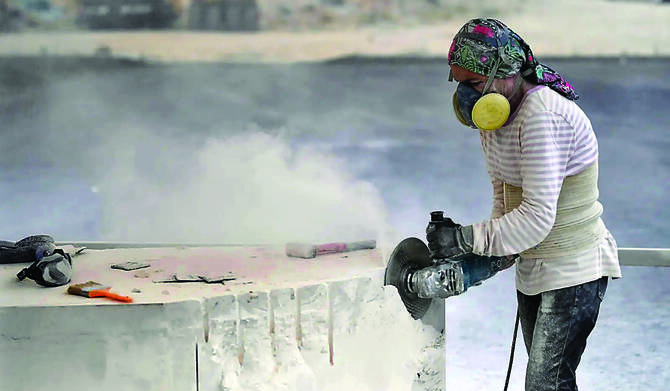

MAKKAH: Al-Namas International Sculpture Symposium wrapped up in Asir region recently, bringing together leading Arab sculptors under the theme “Linear Rhythms.”
Organized by Al-Namas municipality with artistic direction from Saudi sculptor Mohammed Al-Thaqafi, the symposium, which concluded on Aug. 26, highlighted the governorate’s ambition to strengthen its visual identity and enhance public spaces with contemporary art.

Al-Namas International Sculpture Symposium highlighted the region’s ambition to enhance public spaces with contemporary art. (SPA)
The theme drew inspiration from Al-Namas’s striking topography, where mountain ridges and cloud lines merge into sweeping horizons. This natural geometry guided the artists’ designs and interpretations.
Ten renowned sculptors from across the Arab world took part: Saudi representatives Al-Thaqafi, Ali Al-Tokhais, and Ebtesam Saleh were joined by Morocco’s Ikram Kabbaj, the UAE’s Azza Al-Qubaisi, Qatar’s Mohammed Al-Ateeq, Oman’s Yousuf Al-Rawahi, Sudan’s Khalid Abdullah, Tunisia’s Mohammed Bou Aziz, and Egypt’s Omar Toussoun.
HIGHLIGHTS
• Working with locally sourced stone, 10 Arab and Gulf artists created large-scale pieces now installed in gardens and public areas.
• The theme drew inspiration from Al-Namas’s striking topography, where mountain ridges and cloud lines merge into sweeping horizons.
• Participants praised both the artistic exchange and Al-Namas’s natural setting.
Working with locally sourced stone, they created large-scale pieces now installed in gardens and public areas, blending modern creativity with Saudi heritage.

The theme drew inspiration from Al-Namas’s striking topography, where mountain ridges and cloud lines merge into sweeping horizons. (SPA)
Al-Thaqafi told Arab News the event was a platform for celebrating visual culture while making art accessible to the community.
He emphasized sculpture’s role in “advancing visual literacy and urban beautification,” adding that the medium “expresses identity and spirit while transforming public areas into creative showcases of local aesthetics and heritage.”

The theme drew inspiration from Al-Namas’s striking topography, where mountain ridges and cloud lines merge into sweeping horizons. (SPA)
He noted the symposium’s growth in scope and ambition each year, with Al-Namas aspiring to become a regional hub for public art, and he said expressed optimism that other Saudi cities will embrace comparable initiatives.
Participants praised both the artistic exchange and Al-Namas’s natural setting.

Al-Namas International Sculpture Symposium highlighted the region’s ambition to enhance public spaces with contemporary art. (SPA)
Egyptian sculptor Toussoun described the invitation as one of the most prestigious moments of his career, drawing inspiration from the region’s “mountainous terrain, valleys, and captivating landscapes.”
Qatari artist Al-Ateeq highlighted the strength of Gulf and Arab participation, saying the symposium offered artists “ideal working conditions” to bring large-scale ambitious visions to life.
With its cool climate, scenic beauty, and cultural vibrancy, Al-Namas continues to position itself as both a tourism draw and a rising cultural destination where art, nature and heritage intersect.


