


RIYADH: Global leaders urged governments and religious leaders to condemn the war in Gaza and act urgently to stop the massacre, pressing the Israeli occupation government to end the crisis. They said the tragedy exposes the failure of international law and accountability.
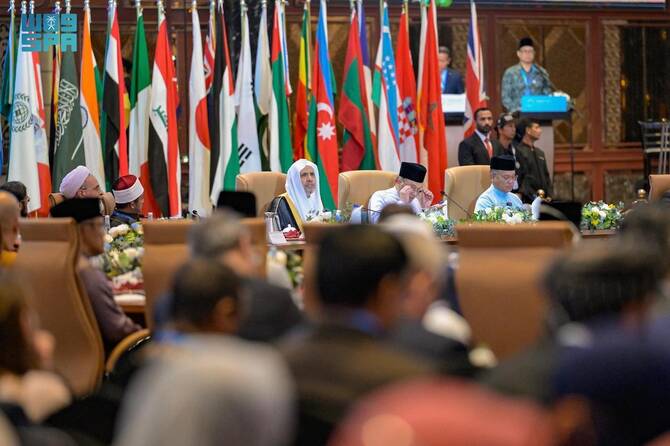
The statement concluded the second International Summit of Religious Leaders, “The Role of Religious Leaders in Conflict Resolution,” held in Kuala Lumpur by the Malaysian Prime Minister’s Office in cooperation with the Muslim World League, the Saudi Press Agency reported on Sunday.
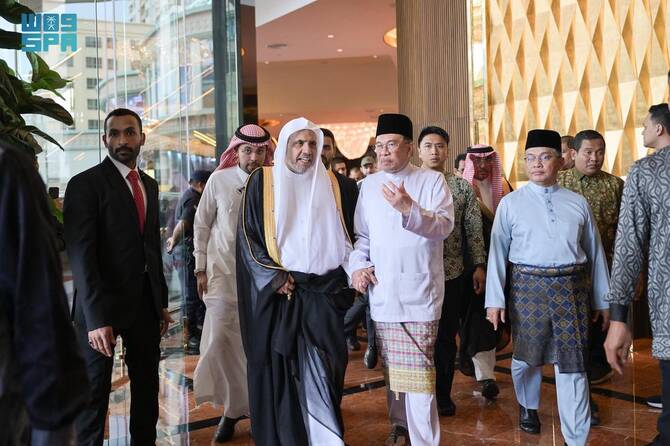
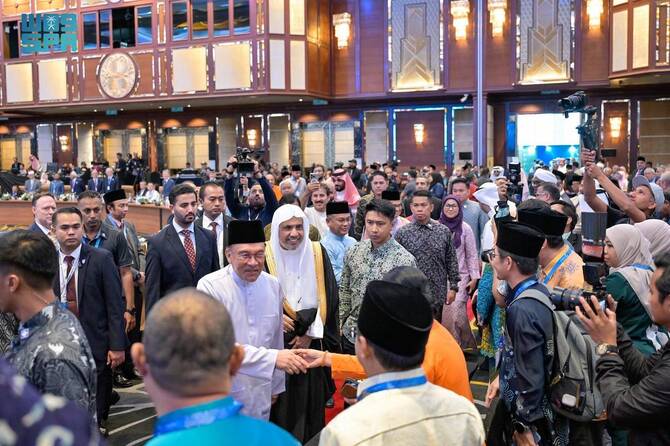
The summit was inaugurated by Malaysian Prime Minister Anwar Ibrahim and the secretary-general of the MWL, Dr. Mohammed bin Abdulkarim Al-Issa, with 400 prominent religious leaders from around the world in attendance.
In their statement, the religious leaders urged the international community to pressure the Israeli occupation government to comply with international and human rights treaties, end the suffering of the Palestinian people, guarantee their legitimate rights, and establish an independent state in line with relevant international resolutions.
They expressed support for the final document of the high-level international conference on the peaceful settlement of the Palestinian question and the two-state solution, hosted by Saudi Arabia and France at the UN in New York.
In his speech, Ibrahim emphasized that all religions aim to promote humanity, stressing the need for unity among faiths against those who reject humanity’s shared values, and calling on religious leaders to defend the essence of humanity.
He warned against conflict-driven theories, such as the “Clash of Civilizations,” noting that the Gaza crisis reflects the international community’s waning commitment to justice and humanity.
Al-Issa also said that global peace is not optional but essential, tied to both human survival and the credibility of the UN Charter. He recalled that on June 26, 1945, the UN’s founding nations pledged to save future generations from war and to live together in peace.
Al-Issa expressed deep concern over global wars and conflicts that threaten world security and societal stability, noting that the extermination and starvation in Gaza set a dangerous precedent for human rights.
He said such events, unprecedented since the founding of the UN Charter, cast doubt on international legitimacy and threaten the cohesion of nations committed to justice under the charter.
He announced two initiatives: to strengthen the spiritual and moral role of religious leaders worldwide; and to protect minorities in countries with religious, ethnic, and cultural diversity.
The summit’s final statement expressed support for two historic MWL documents: the Makkah Declaration and the Charter of Building Bridges between Islamic Schools of Thought, both unanimously approved by Muslim scholars and sponsored by King Salman.
Participants recommended forming a permanent committee with representatives from the Malaysian Prime Minister’s Office and MWL to prepare for the third International Summit of Religious Leaders and develop strategies to address societal challenges from a spiritual perspective.
They also endorsed MWL initiatives to activate the spiritual and moral role of religious leaders in promoting peaceful conflict resolution and to protect minorities in countries with religious, ethnic, and cultural diversity, as outlined by Al-Issa.