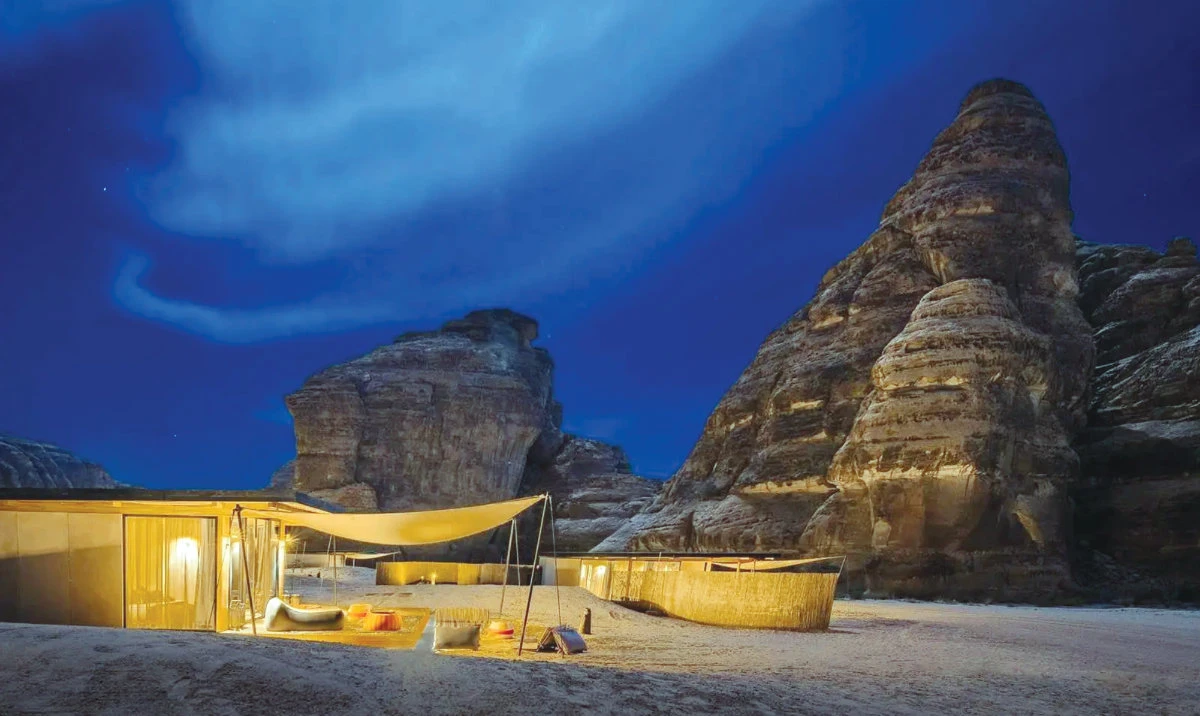
- As part of the National Tourism Strategy, Saudi Arabia aims to attract 150 million visitors by 2030
RIYADH: Saudi Arabia’s vast deserts are shedding their image as empty stretches of sand, emerging instead as the stage for a luxury tourism revolution.
From solar-powered tents in AlUla to AI-enhanced stargazing in the Empty Quarter, high-end glamping is turning remote landscapes into billion-dollar assets, combining sustainability with indulgence under the Kingdom’s Vision 2030.
As part of the National Tourism Strategy, Saudi Arabia aims to attract 150 million visitors by 2030 and increase tourism’s contribution to gross domestic product to 10 percent, supporting economic diversification.
Glamping — a blend of “glamorous” and “camping” — offers the outdoor experience with amenities and, in some cases, resort-style services far removed from traditional camping. In the Kingdom, it is redefining premium tourism by attracting affluent travelers to eco-conscious, culturally rooted stays in stunning desert settings.
Cultural depth and comfort
According to Camilla Bevilacqua, partner at Arthur D. Little, the combination of comfort, heritage, and sustainability supports Saudi Arabia’s efforts to attract high-value visitors and promote lesser-known destinations through meaningful, low-impact experiences.
“In AlUla high-end glamping combines natural beauty with deep cultural heritage — from Hegra’s Nabataean tombs to the ancient oasis networks and rock art sites — making it ideal for immersive travel experiences. The introduction of luxury tented accommodations has reframed how visitors engage with the destination. Guests now wake up to the sound of the wind through sandstone cliffs and end their day with private stargazing sessions guided by local astronomers,” Bevilacqua said.
“This kind of experiential layering resonates strongly with affluent travelers seeking connection, authenticity, and privacy in extraordinary settings,” she added.
She noted that in the Empty Quarter, glamping is taking shape with low-impact, mobile designs to protect the desert environment. These offerings combine comfort with cultural storytelling, including curated access to fossil sites, Bedouin heritage, and ancient trade routes.
“By offering immersive, experience-led alternatives to conventional tourism models, it aligns with broader global shifts in traveler preferences. In the Saudi context, it also serves to distinguish the Kingdom from regional competitors — emphasizing the unique interplay of landscape, heritage, and sustainability as key value drivers for international high-end tourism segments,” Bevilacqua said.
Shifting from assets to experiences
Philippe Najjar, PwC Middle East partner for Destinations, said the rise of luxury glamping signals a shift in tourism strategy from building physical assets to creating emotionally resonant, experience-led destinations.
“This transition shows clearly how Saudi Arabia is on a journey toward diversifying its destination offerings: by anchoring tourism development around immersive ‘play’ experiences, destinations can lead the way toward increasing dwell time, drive higher revenues, and enhance the Kingdom’s global awareness and association,” Najjar said.
“The upcoming challenge for immersive destinations will be expanding their appeal beyond just high-end and luxury markets,” he added.
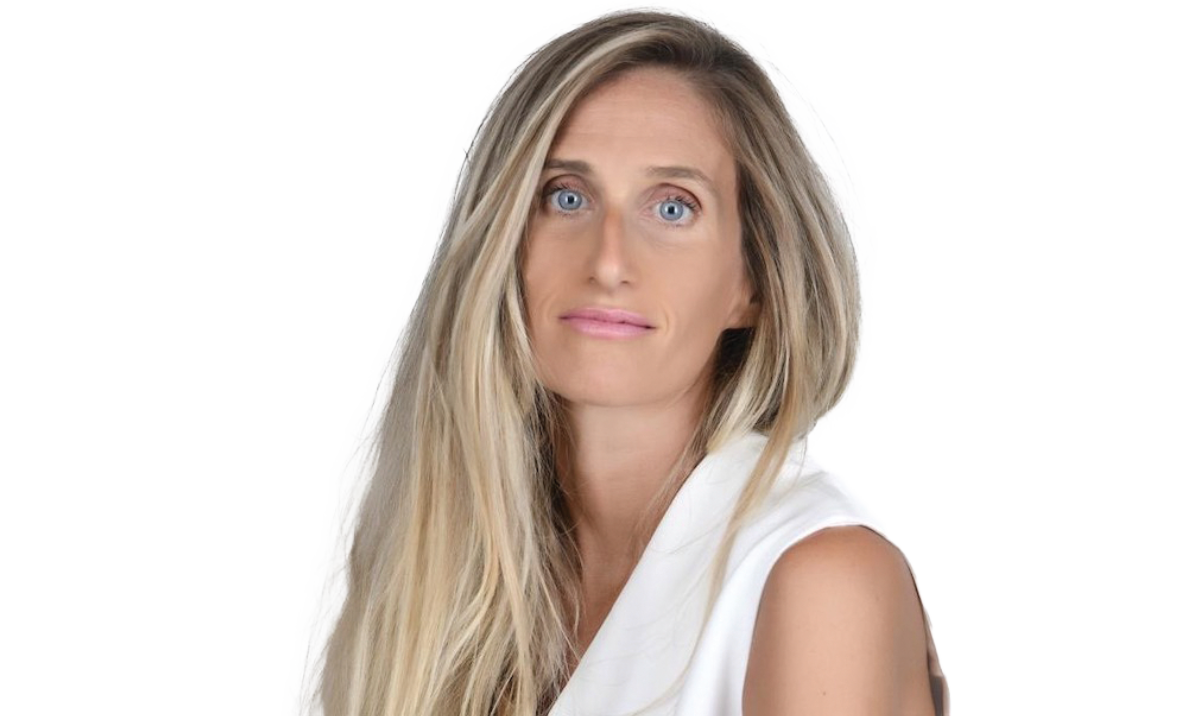
The combination of comfort, heritage, and sustainability supports Saudi Arabia’s efforts to attract high-value visitors and promote lesser-known destinations.
Camilla Bevilacqua, partner at Arthur D. Little
Simon Mead, head of Discover Saudi DMC, part of Almosafer, noted that while early pioneers like Habitas have set benchmarks, large parts of the Kingdom remain untapped. He said the company has developed tailored desert experiences focused on authenticity over excess — offering privacy, storytelling, and traditional Bedouin hospitality.
“We’re also developing new experiences in places like Wadi Disah, a breathtaking and still lesser-known location that is accessible from both AlUla and Tabuk. This will extend our immersive desert offering and begin to formalize what the next generation of ‘Saudi glamping’ looks like, rooted in place, led by locals, and tailored to the traveler,” Mead said.
Supporting Vision 2030 goals
Industry experts agree that high-end glamping aligns with Vision 2030 by creating sustainable, experience-driven tourism that boosts revenue, generates jobs, and supports regional development.
From Arthur D. Little’s perspective, it attracts high-spending travelers seeking exclusive and authentic stays, benefiting related sectors such as transport, culture, and wellness. Bevilacqua said these ventures also foster local employment in hospitality, guiding, and culinary services, with growing emphasis on community involvement and SME participation.
“Overall, glamping advances Vision 2030’s goal of establishing Saudi Arabia as a global hub for sustainable tourism. These desert-based experiences are often designed with light-touch infrastructure, minimal environmental impact, and principles of ecological stewardship, offering a blueprint for how tourism can expand without compromising the integrity of the landscape,” Bevilacqua said.
“By aligning economic ambition with environmental sensitivity and community inclusion, high-end glamping serves as a mechanism for Saudi Arabia’s transition toward a more experience-led, diversified, and resilient tourism economy,” she added.
Najjar highlighted how glamping developments stimulate local economies by involving nearby communities and engaging local suppliers, guides, and artisans.

We’re developing new experiences in places like Wadi Disah, a breathtaking and still lesser-known location that is accessible from both AlUla and Tabuk.
Simon Mead, head of Discover Saudi DMC, part of Almosafer
“In KSA, and in alignment with Vision 2030’s emphasis on regional development and sustainable tourism, luxury glamping serves as an exemplary model. By designing low-impact, culturally resonant destinations, it ensures enduring benefits for both residents and visitors,” he said. For Discover Saudi DMC, sustainability means cultural and economic inclusion as much as environmental responsibility. Mead said their fully Saudi team in AlUla delivers authentic experiences while proudly sharing heritage with visitors.
“We’re also deeply committed to talent development. Through government-backed programs like Tamheer, we’re introducing young Saudis to the standards and expectations of global luxury tourism. High-end desert hospitality can be a powerful entry point, one that creates jobs, nurtures storytelling, and positions Saudi talent at the forefront of a growing sector,” Mead said.
Tech meets tradition
Saudi Arabia’s luxury desert hospitality is moving into a new era, where landscape immersion is combined with technology-driven personalization.
Bevilacqua said innovations such as AI concierges, augmented reality stargazing, and immersive storytelling are enhancing guest engagement, and future models may involve multi-stop desert circuits that encourage regional travel. “Fundamentally, the evolution of desert glamping in Saudi Arabia is not driven by technology alone, but by a desire to enrich the visitor’s connection to place, reveal the deeper stories embedded in the landscape, and cultivate a form of hospitality that honors both local identity and national vision,” she said.
Najjar said PwC’s research shows that future value in destinations lies in smart, seamless integration of experiences.
“For developers and tourism authorities, this evolution presents a significant competitive advantage. By embracing tech-driven design, they can surpass traditional infrastructure, delight guests, optimize operations, and engage in data-driven planning, the hallmarks of a connected destination’s future,” he said.
Mead added that while AI concierges and AR stargazing can elevate experiences, they will never replace the human connection. “Ultimately, the future of luxury camping in Saudi Arabia is one where innovation and heritage sit side by side. It’s about pairing digital tools with deeply human moments, a formula that defines our approach as the Kingdom’s leading DMC,” he said.