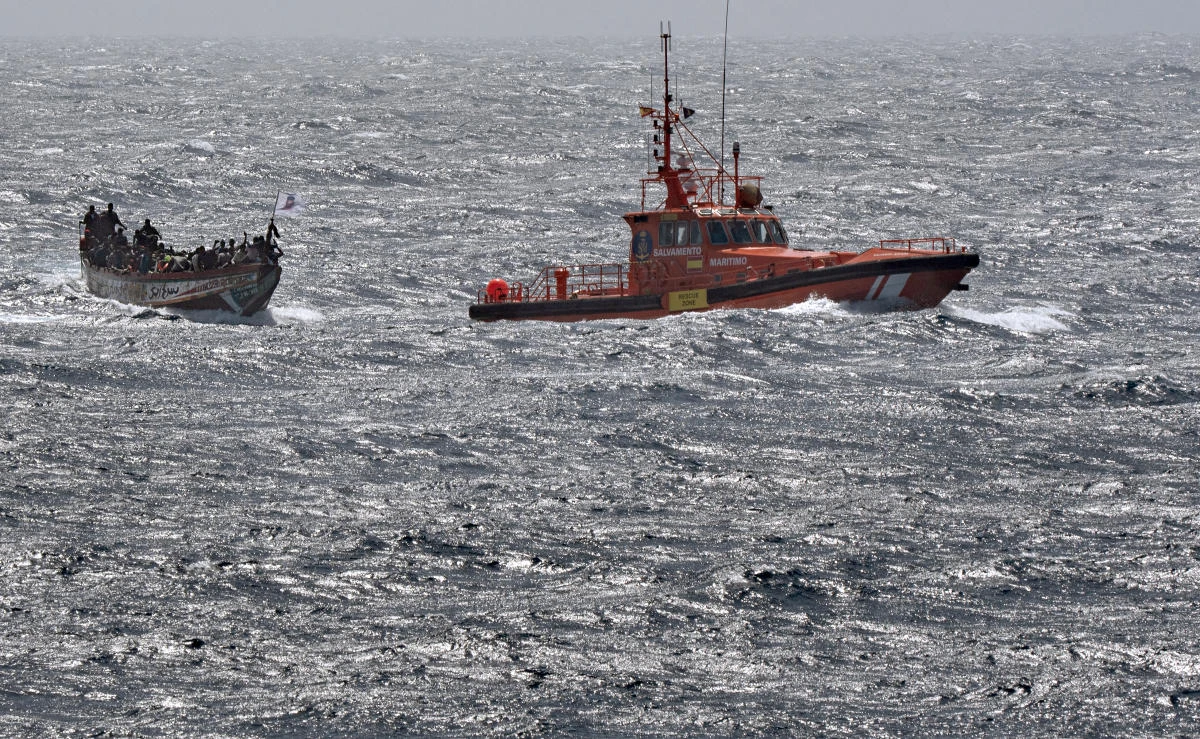
At least 70 people were killed when a boat carrying migrants capsized off the coast of West Africa, Gambia’s foreign affairs ministry said late on Friday, in one of the deadliest accidents in recent years along a popular migration route to Europe.
Another 30 people are feared dead after the vessel, believed to have departed from Gambia and carrying mostly Gambian and Senegalese nationals, sank off the coast of Mauritania early on Wednesday, the ministry said in a statement.
It was carrying an estimated 150 passengers, 16 of whom had been rescued. Mauritanian authorities recovered 70 bodies on Wednesday and Thursday, and witness accounts suggest over 100 may have died, the statement said.
The Atlantic migration route from the coast of West Africa to the Canary Islands, typically used by African migrants trying to reach Spain, is one of the world’s deadliest.
More than 46,000 irregular migrants reached the Canary Islands last year, a record, according to the European Union. More than 10,000 died attempting the journey, a 58 percent increase over 2023, according to the rights group Caminando Fronteras.
Gambia’s foreign affairs ministry implored its nationals to “refrain from embarking on such perilous journeys, which continue to claim the lives of many.”
At least 70 killed in capsize of migrant boat off West Africa, Gambia says
https://arab.news/8yw4p
At least 70 killed in capsize of migrant boat off West Africa, Gambia says
- Another 30 people are feared dead after the vessel sank off the coast of Mauritania early on Wednesday
- Gambia’s foreign affairs ministry implored its nationals to ‘refrain from embarking on such perilous journeys’
Most of Iranian women’s soccer team leave Australia
GOLD COAST: The Iranian women’s soccer team left Australia without seven squad members after tearful protests of their departure outside Sydney Airport and frantic final efforts inside the terminal by Australian officials, who sought to ensure the women understood they were being offered asylum.
As the team’s flight time drew nearer and they passed through security late on Tuesday, each woman was taken aside to meet alone with officials who explained through interpreters that they could choose not to return to Iran.
Before the team traveled to the airport, seven women had accepted humanitarian visas allowing them to remain permanently in Australia and were ushered to a safe location by Australian police officers.
One has since changed her mind, underscoring the tense and precarious nature of their decisions.
“In Australia, people are able to change their mind,” said Australian Home Affairs Minister Tony Burke, who had hours earlier posted photos of the seven women granted humanitarian visas to his social media accounts, their identities clearly visible.
After what Burke described as “emotional” meetings between the remaining women who reached the airport and Australian officials, the rest of the team declined offers of asylum and boarded their flight.
It was a dramatic conclusion to an episode that had gripped Australia since the Iranian team’s first game at the Asian Cup soccer tournament, when they remained silent during their national anthem.