

Asir magpie, only bird species endemic to Saudi Arabia, is on IUCN’s ‘endangered’ list

1 / 4
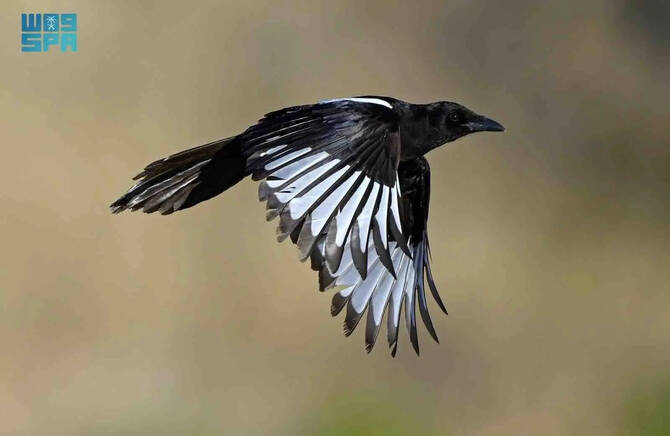
Known for its high intelligence and ability to recognize itself in a mirror, the bird is called a magpie because of its melodious sounds. (SPA)
2 / 4
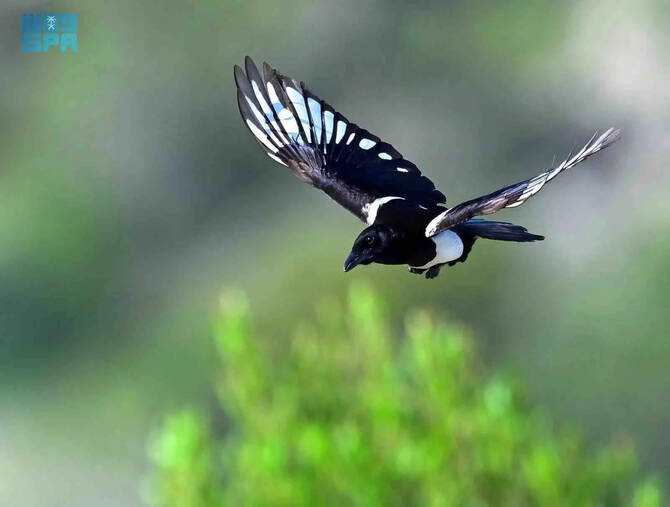
Known for its high intelligence and ability to recognize itself in a mirror, the bird is called a magpie because of its melodious sounds. (SPA)
3 / 4
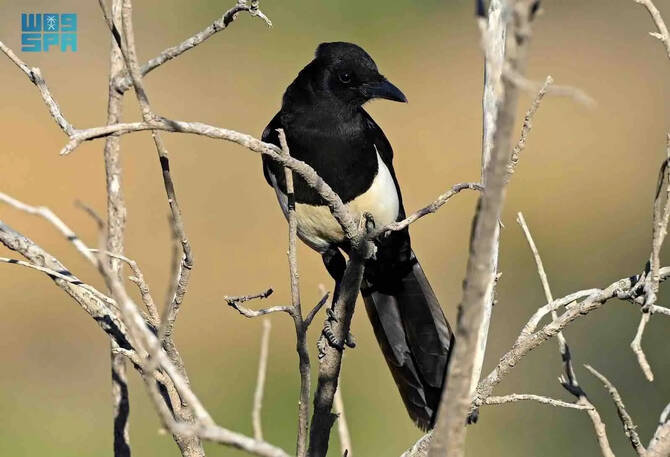
Known for its high intelligence and ability to recognize itself in a mirror, the bird is called a magpie because of its melodious sounds. (SPA)
4 / 4
Short Url
Updated 30 August 2025
Follow

Asir magpie, only bird species endemic to Saudi Arabia, is on IUCN’s ‘endangered’ list

  • Known as the Asir magpie, the bird can be found “only in a few small patches” in the mountains of Asir
  • About 100 breeding pairs of Asir magpies remain, making it one of the “rarest birds on the planet”

ABHA: Of 499 bird species recorded in Saudi Arabia, only one is considered endemic to the Kingdom, which means it is found nowhere else in the world.

This is according to Aramco’s 2021 book “The Birds of Saudi Arabia,” which noted that the bird known as the Asir magpie (scientific name Pica asirensis) can be found “only in a few small patches” in the mountains of Asir region in the Kingdom’s southwest.

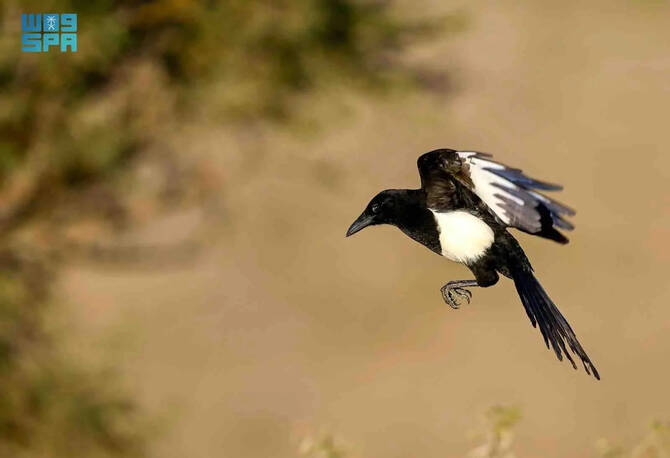
Known for its high intelligence and ability to recognize itself in a mirror, the bird is called a magpie because of its melodious sounds. It is easily recognizable by its black and white feathers and the large, dome-shaped nest it builds, typically in juniper or acacia trees.


With only about about 100 breeding pairs of Asir magpies remaining, the Asir magpie is one of the “rarest birds on the planet.” (SPA photos)

The Asir magpie is classified as “endangered” on the Red List of Threatened Species of the International Union for the Conservation of Nature, or IUCN.

A report by the Saudi Press Agency on Friday said that recent estimates suggest that only about 100 breeding pairs of Asir magpies remain, or around 200 adults, making it one of the “rarest birds on the planet.”

“The primary threat to the Asir magpie’s survival is climate change, which has limited its natural range because of rising temperatures and arid weather conditions over the past decades,” SPA said.

The Aramco book said there are 18 other species that are largely or entirely confined to the Arabian Peninsula, including the Arabian sunbird, the Arabian babbler, the Arabian scops owl, the rare Arabian grosbeak, and the Arabian woodpecker.


Pakistan, Saudi Arabia explore joint investment push in high-growth regions

Updated 29 min 10 sec ago
Follow

Pakistan, Saudi Arabia explore joint investment push in high-growth regions

  • Both sides discuss combining Pakistan’s production capacity with Saudi capital and regional market access
  • Government says Saudi side expressed interest in corporate farming in Pakistan, particularly in rice sector

KARACHI: Pakistan and Saudi Arabia are looking to jointly tap high-growth regional markets and align production and capital strengths, according to an official statement on Wednesday, following talks between Commerce Minister Jam Kamal Khan and Saudi Investment Assistant Minister Ibrahim Al-Mubarak in the Kingdom.

The two countries have long maintained close bilateral ties that have evolved into a multidimensional strategic partnership.

In October last year, the two countries launched an Economic Cooperation Framework aimed at shifting relations beyond aid toward sustainable trade, investment and development links. The framework followed the signing of a joint security agreement a month earlier, under which aggression against one would be treated as an attack on both.

“A key focus of the discussion was the joint exploration of regional markets, particularly Central Asia, Africa, and ASEAN, identified as high-growth regions offering significant opportunities for collaboration,” according to a statement circulated by Pakistan’s commerce ministry after the meeting.

“The two sides agreed that Pakistan and Saudi Arabia, by leveraging their respective strengths, can position themselves as complementary partners — combining Pakistan’s production capabilities with Saudi Arabia’s capital strength, market access, and regional connectivity,” it added.

The Saudi side expressed interest in corporate farming in Pakistan, particularly in the rice sector, with discussions covering mechanization, storage and logistics to enable consistent, long-term exports under structured arrangements.

Talks also covered broader cooperation in agriculture and food security, including rice, fodder, meat and other agri-products, with the potential involvement of Saudi financing institutions in supporting export-linked agricultural and infrastructure projects.

Corporate farming and mechanization were discussed as long-term solutions to productivity challenges in crops such as cotton, where declining yields and high manual input costs have hurt competitiveness, the statement said.

Human resource development emerged as another area of focus, with both sides noting shortages in mid-tier skills such as nurses, caregivers, technicians and hospitality staff.

The Saudi side expressed openness to replicating vocational “train-to-deploy” models in Pakistan that link training programs directly with overseas employment opportunities.

The meeting also examined opportunities in building materials, pharmaceuticals, sports goods, footwear and light manufacturing, with both sides agreeing to pursue sector-specific workshops and business-to-business engagements to translate policy alignment into tangible trade and investment flows.