


‘This is Spinal Tap’

Rob Reiner’s 1984 mockumentary about a middle-aged heavy metal band desperately trying to stay relevant is so crammed with gags — visual and spoken — that you can watch it repeatedly and still not catch them all. Even more impressive is the fact that those gags were mostly improvised by Reiner (playing filmmaker Marty Di Bergi) and the rest of the cast, including the band members — frontman David St. Hubbins (Michael McKean), lead guitarist Nigel Tufnell (Christopher Guest) and bassist Derek Smalls (Harry Shearer). The chemistry between those three — childhood friends who’ve never really progressed beyond adolescence — is utterly believable and the film nails the ego battles, highs and lows, and camaraderie of any long-term creative collaboration. It’s also a supremely confident takedown of the inherent ludicrousness of fame, muso pretentiousness, the monetization of music, and music documentaries. The numerous quotable lines and scenarios have become part of the vocabulary of bands around the world.
Adam Grundey
‘What We Do in the Shadows’

No, “What We Do in the Shadows” is not some kind of gritty, explicit cinema verité. It’s a mashup of “The Office” and “The Blair Witch Project.” A mocumentary that follows four vampires sharing a flat together in New Zealand, and their day-to-day (or night-to-night, to be more accurate) activities. From feasting on after-hours club dwellers to stalking their octogenarian former lovers — all while steering clear of the werewolves (not scarewolves). Each of these eccentric bloodsuckers comes with their own personal baggage, from dreams lost to lovers killed, but you can’t help but laugh at the mundanity of their lives.
Tarek Ali Ahmed
‘Dazed and Confused’

Richard Linklater’s sophomore feature manages to feel both timeless and effortlessly real. Linklater’s direction, as he captures a group of students on their last day of high school in the Seventies, is so unobtrusive you can hardly feel it. He lets the characters and their ordinary moments of teenage life unfold naturally. That light touch elevates the film and makes the laugh-out-loud moments even funnier. The cast is equally great. Matthew McConaughey’s endlessly quotable turn as Wooderson (“Alright, alright, alright”) has become pop-culture legend, while a young Ben Affleck perfectly embodies the overzealous bully. Even beyond the two (now-) big names, the spectacular ensemble and Linklater perfectly capture the awkward chaos of the teenage school experience, from the carefree freedom to the confusion, the friendships and rivalries, and the way one summer’s night can feel like the center of the universe.
Shyama Krishna Kumar
‘Animal House’

It’s unlikely anyone in my home country, the UK, had heard of a toga party before 1978; by the time I attended university four years later, we were invited to at least one a week. Such was the influence of “Animal House,” the film that arguably launched the “gross-out” genre beloved by undergraduates. Directed by John Landis, written by Harold Ramis, Douglas Kenney and Chris Miller, and starring Tim Matheson, a pre-“Amadeus” Tom Hulse, Donald Sutherland, and the incomparable John Belushi, the film somehow taps into the nostalgia of 1973’s “American Graffiti” — also set in 1962 — while changing film comedy forever. No mean feat.
Boasting a soundtrack by legendary composer Elmer Bernstein, the whole experience is art disguised as mayhem, or is it the other way round? Like “Airplane,” which came along two years later, “Animal House” changed the world for the better. What’s not to like?
Nick Wood
‘The Italian Job’

The original (1969) version of “The Italian Job” is 96 minutes of sheer brilliance capped by one of the greatest car chases — iconic in the truest sense — in the history of cinema, as a fleet of Mini Coopers tear through the streets of Turin; a triumph for director Peter Collinson. The central character, Charlie (a young Michael Caine) has just come out of prison. He learns of a friend’s (fatal) failed attempt to carry out a gold heist in Italy (he was assassinated by the Mafia, who saw a foreigner’s plan to steal Italian gold as an insult), and is persuaded by his friend’s widow to put a team together and carry out the job himself. The crew’s training scenes are hilarious, prompting Caine’s most-quoted line “You’re only supposed to blow the bloody doors off” in the film’s literal cliffhanger climax.
Peter Harrison
‘The Mummy’

Brendan Fraser stars as a charming ex-soldier who guides a curious scholar and librarian (Rachel Weisz) and her clumsy brother to uncover the lost ancient city of Hamunaptra. What starts as an archaeological dig in Egypt quickly turns chaotic when they accidentally awaken Imhotep, a cursed priest with supernatural powers who begins to wreak havoc as he searches for the reincarnation of his long-lost love. With a stellar cast and a perfect mix of comedy, action, and just enough horror, “The Mummy” stays endlessly entertaining. The visual effects were cutting-edge for the time and still hold up surprisingly well, especially during those epic mummy battles. The film also offers a light (if Hollywoodized) dive into ancient Egyptian myth and legend. But it’s Fraser’s effortless blend of humor and heroism that make this film a hit.
Sherouk Maher
‘Dirty Rotten Scoundrels’

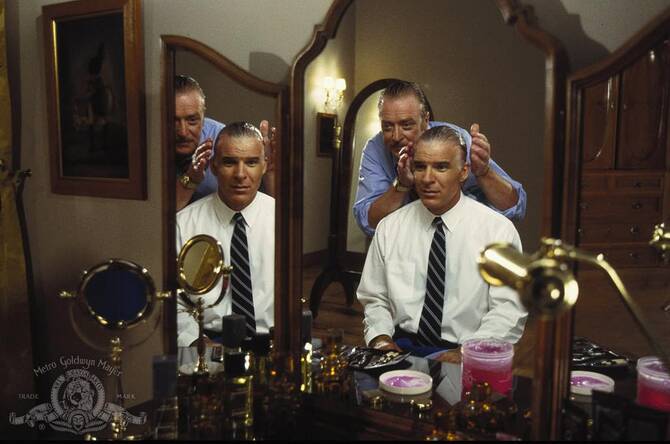
A wonderfully witty 1988 comedy about two con artists in a battle of charm and trickery. Set on the French Riviera, it follows suave, sophisticated Lawrence (Michael Caine) and brash, over-the-top Freddy (Steve Martin) as rivals competing to swindle an heiress. Their schemes become increasingly elaborate, culminating in a final twist that’s as satisfying as it is surprising. The movie’s strength lies in the perfect contrast of Caine’s refined elegance versus Martin’s manic energy. Their chemistry drives the story, with Glenne Headly as their target providing the perfect foil. The script balances sharp dialogue with physical comedy. Director Frank Oz gives the film a polished, stylish feel that complements the glamorous setting while never losing sight of the humor. The film remains fresh all these decades later thanks to its combination of sophistication and silliness. It’s both smart and laugh-out-loud funny, with a clever payoff that rewards the audience.
Rebecca Parsley


