
UNITED NATIONS: The UN Security Council is set to vote Thursday on the future of the blue helmet peacekeeping mission in south Lebanon, which has faced US and Israeli opposition.
Some 10,800 peacekeepers have been acting as a buffer between Israel and Lebanon since 1978. But the usual renewal of their mandate, which expires Sunday, is facing hostility this year from Israel and its American ally, who want them to leave.
The Council is debating a French-drafted compromise that would keep the United Nations Interim Force in Lebanon (UNIFIL) in place until the end of next year while it prepares to withdraw.
France, which oversees the issue at the Security Council and has the support of Beirut, had initially considered a one-year extension and referred simply to an “intention” to work toward a withdrawal of UNIFIL.
But faced with a possible US veto, and following several proposals and a Monday postponement of the vote, the latest draft resolution seen by AFP unequivocally schedules the end of the mission in 16 months.
The Council “decides to extend for a final time the mandate of UNIFIL as set out by resolution 1701 (2006) until 31 December 2026 and to start an orderly and safe drawdown and withdrawal from 31 December 2026 and within one year,” the text says.

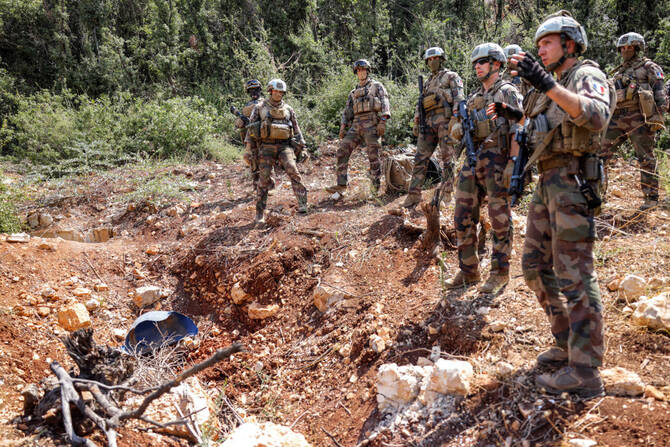
A French peacekeeper of the UNIFIL sits atop a stopped armored vehicle during a patrol in the village of Kfar Kila in southern Lebanon near the border with northern Israel on August 27, 2025. (AFP)
At that point the Lebanese army will be solely responsible for ensuring security in the country’s south.
With US envoy Tom Barrack saying Tuesday that Washington would approve a one-year extension, it remained unclear what the US position would be come Thursday.
Under a truce that ended a recent war between Israel and Iran-backed Hezbollah, Beirut’s army has been deploying in south Lebanon and dismantling the militant group’s infrastructure there.
As part of the ceasefire, and under pressure from Washington, the plan is for Hezbollah’s withdrawal to be complete by the end of the year.
Last week Lebanese President Joseph Aoun called for the UN peacekeepers to remain, arguing that any curtailment of UNIFIL’s mandate “will negatively impact the situation in the south, which still suffers from Israeli occupation.”
The latest draft resolution also “calls on the Government of Israel to withdraw its forces north of the Blue Line” — the UN-established demarcation line between Lebanon and Israel — “including from the five positions held in Lebanese territory.”