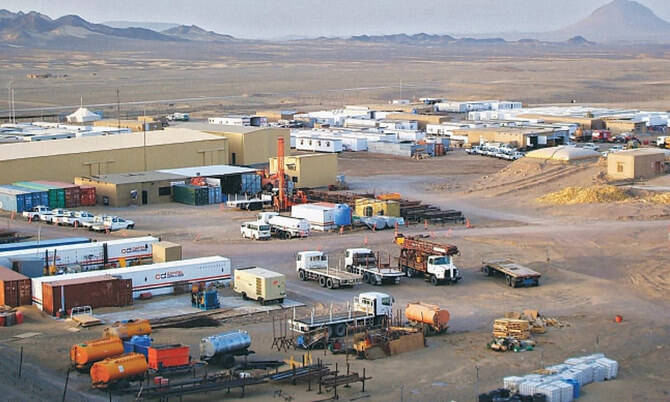

ISLAMABAD: Pakistan’s state broadcaster reported on Wednesday the country had secured $6 billion in international funding for the Reko Diq copper and gold mines in the country’s restive Balochistan province, a project officials describe as an economic lifeline but one dogged by security challenges.
Located in Pakistan’s largest and poorest province, Reko Diq is among the world’s biggest untapped deposits of copper and gold. The project is expected to generate approximately $74 billion in free cash flow over the next 37 years.
Long stalled by legal disputes and political wrangling, the project was revived after a 2022 settlement with Canada’s Barrick Gold. Islamabad has since touted the mine as a potential driver of growth and foreign exchange earnings in an economy heavily burdened by debt and reliant on IMF support.
“The required funds for Reko Diq project have been approved with the support of Special Investment Facilitation Council,” Radio Pakistan reported, referring to a special civil-military body that oversees foreign investments.
“The United States, Japan and other international financial institutions have announced funding of six billion dollars for Reko Diq project. Out of the total six billion dollars funding, 1.5 billion dollars have already been approved by Asian Development Bank and World Bank.”
While the funding marks a breakthrough for Pakistan’s mining sector and overall economic development, the project’s location underscores the security and political challenges that have long dogged investment in the province.
Balochistan, which borders Iran and Afghanistan, has for decades faced a separatist insurgency. Armed groups have repeatedly attacked government facilities, the military, and infrastructure tied to foreign investment, including Chinese projects under the multi-billion-dollar China-Pakistan Economic Corridor. Insurgents say they are fighting for greater control over the province’s resources and for independence, while the state has described such attacks as terrorism threatening national stability.
Authorities in Islamabad view Reko Diq as a flagship investment that could transform Pakistan’s resource sector. Officials say revenues from the mine would help stabilize public finances, bolster exports, and reduce dependence on costly fuel imports, while also signaling to global investors that Pakistan remains open for business despite persistent security threats.
Barrick Gold owns a 50 percent stake in the Reko Diq mine and the governments of Pakistan and the province of Balochistan own the other 50 percent. Barrick considers the mine one of the world’s largest underdeveloped copper-gold areas.
The project is expected to start production by the end of 2028 and will produce 200,000 tons of copper per year in its first phase, with an estimated cost of $5.5 billion. The first phase is expected to be completed by 2029, Barrick’s CEO Mark Bristow told Pakistani digital media outlet Dawn News English in January.
A second phase, estimated to cost $3.5 billion, will double production, he added.
The mine is estimated to have reserves lasting 37 years but Bristow said that through upgrades and expansions it could potentially be mined for much longer.