


ISLAMABAD: Pakistani disaster management authorities on Monday issued fresh flood warnings for two major rivers as heavy monsoon rains continue to batter the country, with the death toll from weather-related incidents since late June climbing close to 800.
The most devastating spell of the monsoon began on August 15 and has killed at least 485 people in just 10 days. Since the start of the season on June 26, official figures show 798 deaths, underscoring the scale of the disaster in a country ranked among the most climate-vulnerable in the world.
“NDMA’s National Emergencies Operation Center (NEOC) has issued a flood alert for River Ravi over the next 48 hours, indicating a medium-level threat,” the authority said in its latest alert on Monday.
According to hydrological data, inflows at Thein Dam on the Indian side have reached 1,717 feet, or about 86 percent of its capacity.
“Downstream releases from Thein Dam, combined with rising nullah discharges on the Indian side, are likely to further elevate river flows,” the NDMA said.
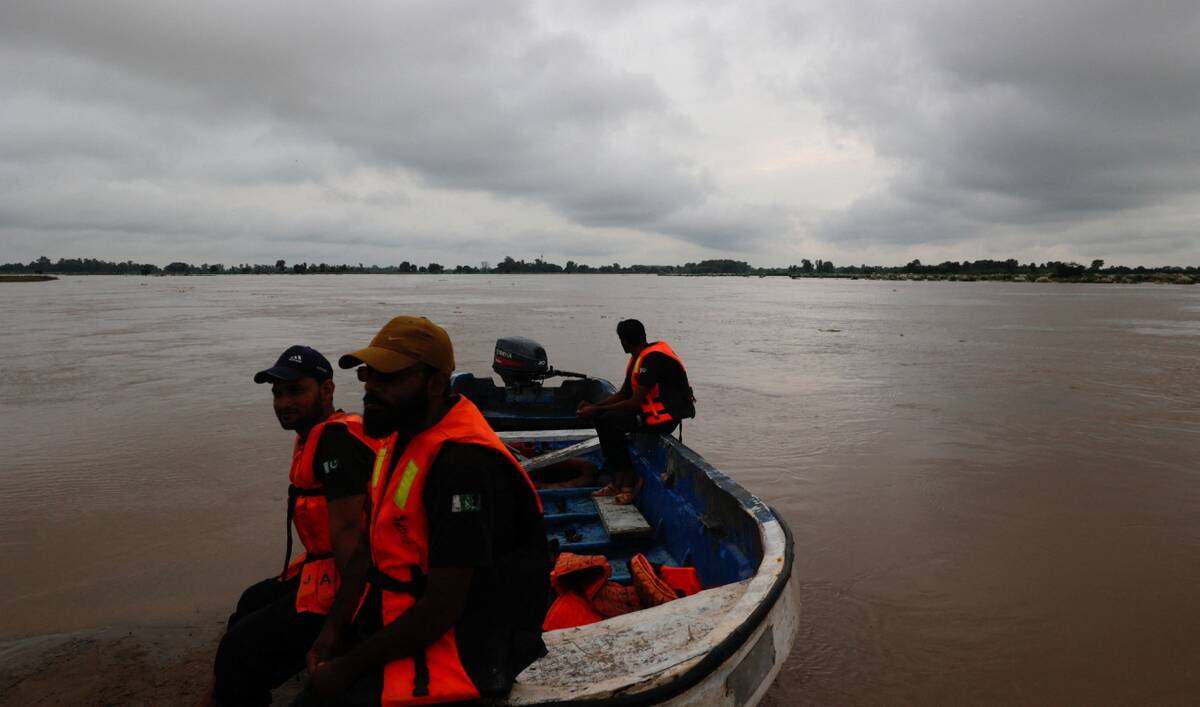
Members of the Rescue 1122 team sit on a boat with the monsoon rain clouds in the background, as they are waiting for residents to evacuate, due to the monsoon rains and rising water level of the Sutlej River, in Ghatti Kalanjar village near the Pakistan-India border in Kasur district of the Punjab province, Pakistan, on August 24, 2025. (REUTERS)
Medium to high flows are expected in nullahs originating from the Pir Panjal Range, particularly Bein, Basantar and Deg, with low to medium flooding likely at Jassar in the next 24 hours.
Residents in low-lying and flood-prone areas have been urged to remain alert, avoid unnecessary travel near riverbanks and strictly follow official flood warnings. The NDMA advised communities to prepare emergency kits with food, water and medical supplies for up to five days, secure valuables and livestock, and avoid crossing causeways, low bridges and flooded roads.
Separately, the Punjab Provincial Disaster Management Authority (PDMA) reported a high flood in the Sutlej River at Harike, downstream of India.
“River Sutlej (Harike below) has been reported to be at high flood level at 10:00 hrs (25th August, 2025) which will affect the incoming water levels downstream,” the PDMA said in its flood alert.
Authorities in Punjab have directed commissioners and deputy commissioners in multiple districts, including Lahore, Sahiwal, Multan, Bahawalpur and Dera Ghazi Khan, to remain on high alert. PDMA Director General Irfan Ali Kathia instructed local administrations to complete emergency preparations, pre-position rescue teams at sensitive locations, and issue community warnings through mosques and local announcements.
The PDMA has said the province was experiencing its eighth monsoon spell, expected to last until August 27. Heavy rains have been forecast in the next 24 hours across most districts, with upper Punjab, including Murree, Rawalpindi, Attock, Jhelum and Chakwal, likely to receive the heaviest downpours.
The PDMA reported no casualties or damages in the past 24 hours but directed district administrations in vulnerable areas to remain on high alert. Citizens were urged to adopt safety measures during the rains, especially keeping children away from rivers, canals and storm drains.
Separately, the Flood Forecasting Division (FFD) said on Sunday that the Chenab and Indus rivers were likely to reach high flood levels in the next 24 hours, while the Sutlej at Ganda Singh Wala would remain at high flood levels for several days, depending on releases from Indian reservoirs.

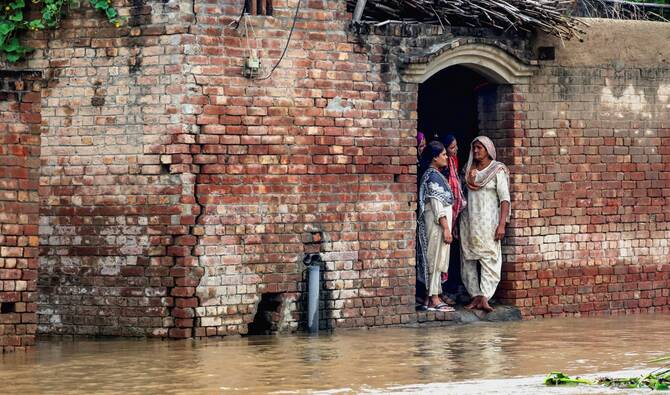
Residents stand at the premises of their house flooded due to the monsoon rains and rising water level of the Sutlej River, in Hakuwala village near the Pakistan-India border in Kasur district of the Punjab province, Pakistan, on August 23, 2025. (REUTERS)
SHIFTING CLIMATE PATTERNS
Since the monsoon season started on June 26, the Khyber Pakhtunkhwa (KP) province has reported 479 deaths, followed by Punjab with 165, Sindh 54, Gilgit-Baltistan 45, Balochistan 24, Azad Jammu and Kashmir 23 and the capital, Islamabad, eight, according to official figures.
Authorities say the ongoing monsoon spell is expected to last until at least September 10 and the National Disaster Management Authority (NDMA) has warned the rains could rival the scale of the catastrophic floods of June 2022, which killed more than 1,700 people and caused over $30 billion in damage, according to government estimates.
“During 25th August: Landslides/mudslides may cause road closures in vulnerable hilly areas of Kashmir during the forecast period,” the Pakistan Meteorological Department (PMD) said in its daily forecast on Monday morning.
“Heavy downpour may cause urban flood in low lying areas of Narowal, Sialkot, Gujarat, Jhelum, Gujranwala and Lahore.”
The PMD also cautioned that heavy rain, windstorms and lightning could damage weak structures such as the roofs of mud houses, electric poles, billboards, vehicles and solar panels.
Annual monsoon rains are crucial for Pakistan’s agriculture and water supply but in recent years have also unleashed devastation, intensified by shifting climate patterns.
Despite contributing less than 1 percent of global greenhouse gas emissions, Pakistan ranks among the countries most vulnerable to climate change. In recent years it has endured increasingly erratic weather, including droughts, heatwaves and record-breaking rains that have caused widespread loss of life and damage to property.
Experts warn that without urgent adaptation and mitigation measures, the human and economic toll of climate change in Pakistan will only deepen in the years ahead.


