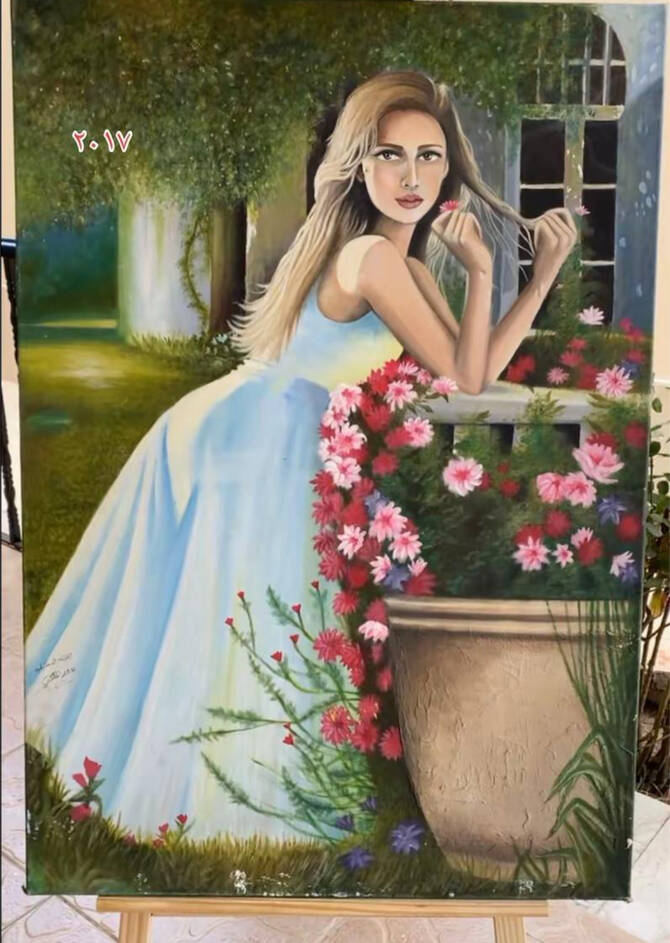
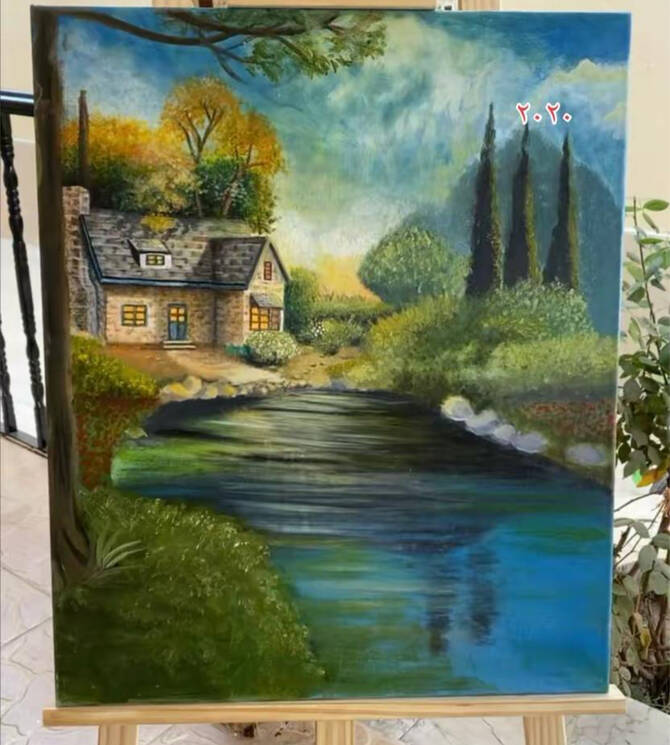

MAKKAH: Saudi visual artist Bdour Al-Maliki has emerged as a distinct voice in the local art scene, transforming her personal pain and lived experience into colorful works.
Al-Maliki’s childhood was shaped by her artist father, who nurtured her visual awareness from an early age.
“My father being an artist had a profound impact on my early years,” she said. “I would watch him paint with passion, handling colors and tools with love. That instilled in me the understanding that painting isn’t just a hobby, it’s a form of expression and a way of life.”
Her father did not impose art on her, she stressed. Rather, his inspiring presence made her turn to it naturally, as if it were part of her identity: “Even now, I feel that every painting I work on carries a part of his artistic spirit,” she said.
I draw inspiration from the environment, the stories, and the feelings we experience, and I try to express them in my own way. My art carries the spirit of the place to which I belong.
Bdour Al-Maliki, Saudi visual artist
Painting evolved from being a childhood companion for Al-Maliki into a lifelong pursuit.
“The first time I realized that painting wasn’t just a hobby was when I saw how my paintings touched people’s emotions,” she said. “From that moment, I knew it was my passion and the way I expressed myself.”
Al-Maliki believes art holds a profound power to touch the soul, which in turn fuels her sense of responsibility to the work she creates. She explained that she tends toward exploring sad and painful topics, especially human stories that “shake people’s hearts.” She believes that such emotions carry an energy that deserves to be conveyed to people through art.
Al-Maliki explained that she does not follow a specific artistic school, but strives to create her own style in each painting — a style that serves the story’s emotions and conveys the feeling in its most authentic form, even if it changes from one work to the next. “Expression is more important than adherence to any one artistic school,” she said. “My Saudi identity is present in my feelings above all else. I draw inspiration from the environment, the stories, and the feelings we experienced, and I try to express them in my own way. My art carries the spirit of the place to which I belong.”
Al-Maliki spoke optimistically about the state of the Saudi art scene, noting that it is witnessing an unprecedented boom thanks to Saudi Vision 2030’s initiatives for culture and the arts, which has provided artists with greater opportunities to fulfill their potential. When Al-Maliki was starting out — before such initiatives were in place — she felt there was a notable lack of support for artists.
But she transformed those challenges— as well as personal ones including her divorce — into fuel for her creativity, viewing every painting she completes as a victory over adversity.
Al-Maliki is currently preparing for an international exhibition of works the she explained reflect her identity and stories.
“My next ambition is for the world to hear my voice through my art,” she said. “Art is my voice and my homeland.”