

India moves to strengthen ties with Russia, China amid Trump’s tariff war

Short Url
Updated 22 August 2025
Follow

India moves to strengthen ties with Russia, China amid Trump’s tariff war

  • Narendra Modi meets Chinese FM, Indian FM visits Russia
  • Delhi, Moscow agree to strengthen trade ties, boost Indian exports

NEW DELHI: In the wake of US President Donald Trump’s steep tariffs on Indian goods, New Delhi has moved to rebuild ties with Beijing while continuing its close energy and defense partnership with Russia, moves that experts say carry strategic opportunities.

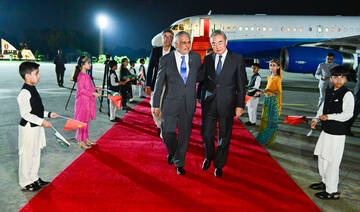
After a yearslong standoff between India and China over a deadly clash at their disputed border, Chinese Foreign Minister Wang Yi arrived in the Indian capital on Monday for a two-day visit and talks with Prime Minister Narendra Modi and Foreign Minister S. Jaishankar.

Modi hailed the improved relations with Beijing and said after the meeting that the “steady progress” they made was “guided by respect for each other’s interests and sensitivities.”


The two sides also agreed to resume direct flights between China and India to help boost trade and investment, facilitate business and cultural exchanges, and recommence the issuing of journalist and tourist visas.

The thaw in relations comes after Trump imposed 50 percent tariffs on Indian goods, 25 percent of which was a penalty for India buying Russian oil, which Washington said was helping fuel Moscow’s war in Ukraine.

The Indian government said the tariffs were “unjustified and unreasonable” and vowed to “take all necessary steps to protect its national interests.”

The progress in India-China relations was followed by Jaishankar’s three-day visit to Moscow, which ended on Thursday and resulted in the two sides agreeing to boost trade ties.

In a joint news conference with Russian Foreign Minister Sergei Lavrov, Jaishankar said that relations between the two countries had been “among the steadiest of the major relationships in the world” since World War II.

The sides reaffirmed their ambition to expand two-way trade, including an increase in Indian exports to Russia.

“This requires swiftly addressing non-tariff barriers and regulatory impediments,” Jaishankar said.

“Enhancing Indian exports to Russia in sectors like pharmaceuticals, agriculture and textiles will certainly help to correct the current imbalance.”

Harsh V. Pant, vice president at Delhi-based think tank Observer Research Foundation, said that while India’s engagements with Russia and China had started before Trump’s global tariff campaign, it had acted as a catalyst.

“What Trump seems to have done is to create a sentiment against America in India and to accelerate India’s ties with these countries,” he told Arab News.

International affairs expert Mohan Guruswamy said that Delhi’s efforts to strengthen ties with China and Russia would assure “India of its strategic independence.”

“By associating with America, it lost it. And associating with America has proved to be expensive,” he told Arab News.

Bharat Karnad, a political scientist and emeritus professor at the Center for Policy Research in Delhi, said India’s frayed ties with Washington were an opportunity for it “to rethink and repurpose (its) strategy.”

“America has always been an unreliable, untrustworthy partner to all its allies. It’s historically been the case that America helps only when its own interests are served and not when the allies’ interests are at stake,” he told Arab News.

This was an opportunity for Modi’s government to support de-dollarization efforts that had been pursued by the BRICS geopolitical forum, which includes India, Russia and China, he said.

“This is the time, and there are still some indications that we are working toward precisely the kinds of BRICS initiative to de-dollarize trade.

“Rather than become captive of the US or Western or any other … trading system, we should have the independence and the flexibility to switch to serve our national interests.”

US kills 8 in eastern Pacific strikes on alleged drug boats

Updated 3 sec ago
Follow

US kills 8 in eastern Pacific strikes on alleged drug boats

  • Strikes on three alleged drug-trafficking vessels in the eastern Pacific Ocean killed eight people on Monday, according to the US military
WASHINGTON: Strikes on three alleged drug-trafficking vessels in the eastern Pacific Ocean killed eight people on Monday, according to the US military, the latest in a controversial campaign that has killed dozens of people.
Since early September, the US military under Pentagon chief Pete Hegseth has targeted alleged drug-smuggling boats in the Caribbean Sea and eastern Pacific Ocean, destroying at least 26 vessels and killing at least 95 people.
The US Southern Command announced the latest three strikes on X, saying the eight men killed had been involved in drug trafficking, without providing evidence.
The post included video footage of three separate boats floating in water before they are each hit by strikes.
“Intelligence confirmed that the vessels were transiting along known narco-trafficking routes in the Eastern Pacific and were engaged in narco-trafficking,” it said.
The strikes killed three men in the first vessel, two in the second and another three in the third, the US Southern Command added.
The strikes have drawn intense scrutiny from human rights advocates and Democratic lawmakers, with the United Nations’s human rights chief warning last month they could violate international law.
The US administration has labeled those killed as “unlawful combatants” and said it can legally engage in lethal strikes without judicial review due to a classified Justice Department finding.
US authorities have not provided specific evidence that the boats it has targeted were ferrying drugs.
Senate Minority Leader Chuck Schumer said that there would be an all-senators briefing Tuesday on the “administration’s rogue and reckless actions in the Caribbean,” with Hegseth and US Secretary of State Marco Rubio.
“The American people deserve oversight. We intend to deliver it,” the senior Democratic party lawmaker said in an X post published before the latest strike announcement by the US military.
- Concern over strikes -
The strikes have been accompanied by a massive US military buildup in the Caribbean that includes the world’s largest aircraft carrier and a slew of other warships.
US President Donald Trump has insisted the goal is combating narco-trafficking, while Venezuelan President Nicolas Maduro says he suspects it is a pretext for leadership change in Caracas.
The admiral leading US forces in the Caribbean, Alvin Holsey, stepped down last week, just a year into his tenure and after reportedly expressing concerns about the boat strikes.
Neither he nor Hegseth have publicly provided a reason for his early departure.
“We must always be there for like-minded partners, like-minded nations who share our values — democracy, rule of law and human rights,” Holsey said in a ceremony to mark him relinquishing command.
During one of the first strikes in September, survivors of an initial attack on a boat were killed in a second US strike on the vessel, generating accusations of a possible war crime since media reported details of the incident in November.
Hegseth has maintained he did not order a second strike, instead attributing it to the operational commander Admiral Frank Bradley.
Even before news of the double-strike broke, UN rights chief Volker Turk had urged Washington to investigate the legality of the campaign and warned of “strong indications” of “extrajudicial killings.”