

India moves to strengthen ties with Russia, China amid Trump’s tariff war

Short Url
Updated 22 August 2025
Follow

India moves to strengthen ties with Russia, China amid Trump’s tariff war

  • Narendra Modi meets Chinese FM, Indian FM visits Russia
  • Delhi, Moscow agree to strengthen trade ties, boost Indian exports

NEW DELHI: In the wake of US President Donald Trump’s steep tariffs on Indian goods, New Delhi has moved to rebuild ties with Beijing while continuing its close energy and defense partnership with Russia, moves that experts say carry strategic opportunities.

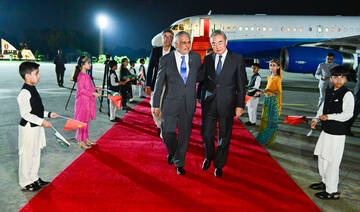
After a yearslong standoff between India and China over a deadly clash at their disputed border, Chinese Foreign Minister Wang Yi arrived in the Indian capital on Monday for a two-day visit and talks with Prime Minister Narendra Modi and Foreign Minister S. Jaishankar.

Modi hailed the improved relations with Beijing and said after the meeting that the “steady progress” they made was “guided by respect for each other’s interests and sensitivities.”


The two sides also agreed to resume direct flights between China and India to help boost trade and investment, facilitate business and cultural exchanges, and recommence the issuing of journalist and tourist visas.

The thaw in relations comes after Trump imposed 50 percent tariffs on Indian goods, 25 percent of which was a penalty for India buying Russian oil, which Washington said was helping fuel Moscow’s war in Ukraine.

The Indian government said the tariffs were “unjustified and unreasonable” and vowed to “take all necessary steps to protect its national interests.”

The progress in India-China relations was followed by Jaishankar’s three-day visit to Moscow, which ended on Thursday and resulted in the two sides agreeing to boost trade ties.

In a joint news conference with Russian Foreign Minister Sergei Lavrov, Jaishankar said that relations between the two countries had been “among the steadiest of the major relationships in the world” since World War II.

The sides reaffirmed their ambition to expand two-way trade, including an increase in Indian exports to Russia.

“This requires swiftly addressing non-tariff barriers and regulatory impediments,” Jaishankar said.

“Enhancing Indian exports to Russia in sectors like pharmaceuticals, agriculture and textiles will certainly help to correct the current imbalance.”

Harsh V. Pant, vice president at Delhi-based think tank Observer Research Foundation, said that while India’s engagements with Russia and China had started before Trump’s global tariff campaign, it had acted as a catalyst.

“What Trump seems to have done is to create a sentiment against America in India and to accelerate India’s ties with these countries,” he told Arab News.

International affairs expert Mohan Guruswamy said that Delhi’s efforts to strengthen ties with China and Russia would assure “India of its strategic independence.”

“By associating with America, it lost it. And associating with America has proved to be expensive,” he told Arab News.

Bharat Karnad, a political scientist and emeritus professor at the Center for Policy Research in Delhi, said India’s frayed ties with Washington were an opportunity for it “to rethink and repurpose (its) strategy.”

“America has always been an unreliable, untrustworthy partner to all its allies. It’s historically been the case that America helps only when its own interests are served and not when the allies’ interests are at stake,” he told Arab News.

This was an opportunity for Modi’s government to support de-dollarization efforts that had been pursued by the BRICS geopolitical forum, which includes India, Russia and China, he said.

“This is the time, and there are still some indications that we are working toward precisely the kinds of BRICS initiative to de-dollarize trade.

“Rather than become captive of the US or Western or any other … trading system, we should have the independence and the flexibility to switch to serve our national interests.”

Trump to preside over first meeting of Board of Peace with many Gaza questions unresolved

Updated 6 sec ago
Follow

Trump to preside over first meeting of Board of Peace with many Gaza questions unresolved

  • Trump’s Board of Peace excludes Palestinian representatives
  • $5 billion raised for Gaza reconstruction fund, ‌UAE and Kuwait contribute
WASHINGTON: US President Donald Trump will preside over the first meeting of his Board of Peace on Thursday with unresolved questions ​on the future of Gaza hanging over an event expected to include representatives from more than 45 nations. The disarmament of Hamas militants, the size of the reconstruction fund and the flow of humanitarian aid to the war-battered populace of Gaza are among the major questions likely to test the effectiveness of the board in the weeks and months ahead. Trump is to address the group at the Donald J. Trump US Institute of Peace — a building in Washington the president recently renamed for himself — and announce that participating nations have raised $5 billion for the reconstruction fund.
The money is expected to be a ‌down payment on ‌a fund that will likely need many more billions. Included in ​the $5 ‌billion is ⁠expected to ​be $1.2 ⁠billion each from two of Washington’s Gulf Arab allies, the United Arab Emirates and Kuwait, a US official told Reuters.
Trump’s Board of Peace has been controversial. It includes Israel but not Palestinian representatives and Trump’s suggestion that the Board could eventually address challenges beyond Gaza has stirred anxiety that it could undermine the UN’s role as the main platform for global diplomacy and conflict resolution.
Senior US officials said Trump will also announce that several nations are planning to send thousands of troops to participate in an International Stabilization Force that ⁠will help keep the peace in Gaza.
Disarming Hamas militants in order for the ‌peacekeepers to begin their mission remains a major sticking point, ‌and the force is not expected to deploy for weeks or ​months.
The Palestinian group Hamas, fearful of Israeli ‌reprisals, has been reluctant to hand over weaponry as part of Trump’s 20-point Gaza plan that brought ‌about a fragile ceasefire last October in the two-year Gaza war.
“We are under no illusions on the challenges regarding demilitarization, but we have been encouraged by what the mediators have reported back,” a senior administration official said.

MOST SECURITY COUNCIL MEMBERS NOT ATTENDING
Delegations from 47 countries plus the European Union are expected to attend the event, US officials ‌said. The list includes Israel and a wide array of countries from Albania to Vietnam.
It does not, however, include permanent United Nations Security Council members ⁠like France, Britain, Russia ⁠and China.
Speakers at the event are expected to include Trump, Secretary of State Marco Rubio, US envoys Steve Witkoff and Jared Kushner, former British Prime Minister Tony Blair, who is expected to have a senior role in the board, US ambassador to the UN Mike Waltz, and High Representative for Gaza Nickolay Mladenov, among other attendees.
A member of the peace board, who declined to be named, said the Gaza plan faces formidable obstacles. Establishing security in the enclave is a precondition for progress in other areas, but the police force is neither ready nor fully trained, said the official.
The official added that a key unresolved question is who would negotiate with Hamas. The peace board’s representatives could do so with countries that have influence over Hamas — notably Qatar and Turkiye — but Israel is deeply skeptical of both.
Another ​major issue is the flow of aid, ​which the official described as “disastrous” and in urgent need of scaling up. Even if aid surges in, it remains unclear who will distribute it, the official said.