
BERLIN: German rights groups took to the courts Friday on behalf of Afghans who were offered refuge by Berlin but are now caught between Chancellor Friedrich Merz's immigration crackdown and a wave of deportations from Pakistan.
Refugee support groups filed cases against Foreign Minister Johann Wadephul and Interior Minister Alexander Dobrindt, accusing them of "abandonment and failure to render assistance" to Afghans who were previously promised asylum in Germany.
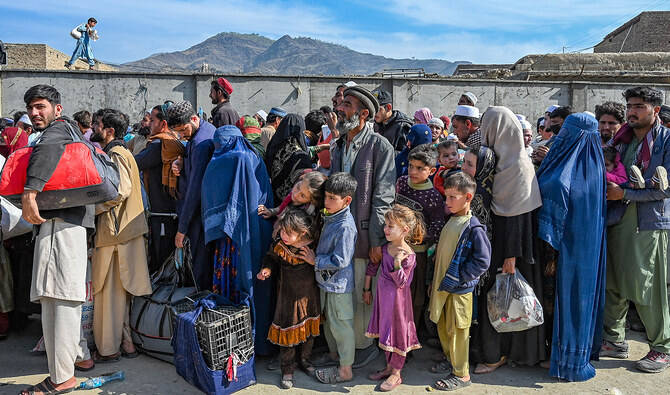
The group Pro Asyl said Pakistan had detained hundreds of Afghans this week in an escalating series of arrests and deported 34, placing them at risk of "arbitrary imprisonment, mistreatment or even execution" in Taliban-ruled Afghanistan.
"We came to Pakistan one year ago because of the promise of the German government," a 27-year-old Afghan women's rights activist told AFP, asking not to be named for security reasons.
"In the last few days that the police have been searching for us, my children and I have become sick," said the mother-of-two, who added that she was "terrified and anxious" after several friends were arrested.
She and her family are among thousands of Afghans whom Germany offered to take in under a scheme set up under former chancellor Olaf Scholz in the wake of the Taliban's 2021 takeover.
It offered asylum to Afghans who had worked with German institutions or who were particularly threatened by the Taliban, including journalists and human rights activists, as well as their families.
However, the program has been put on hold as part of a stricter immigration policy brought in under conservative Chancellor Friedrich Merz, who took office in May.
This has left around 2,000 Afghans stranded in Pakistan waiting for visas to travel to Germany.
"I am worried that if the police arrest us, they will hand us over straight away to the Taliban, and then my identity will be revealed to them and I couldn't imagine what they will do to me and my family," said the Afghan activist. "I am devastated."
The Kabul Airbridge initiative, which aims to help those stuck in Pakistan, said that another 270 Afghans who had been accepted under the German scheme faced being deported on Friday and that at least four more guesthouses had been raided.
The group said that while there had been previous cases of Afghans in the scheme being deported, the raids over the past few days were of a "different order of magnitude."
According to Kabul Airbridge, the German government and the GIZ development agency have previously managed to stop deportations but it was far from certain they could do so now given the numbers involved.
Pakistan first launched a deportation drive in 2023 and renewed it in April when it rescinded hundreds of thousands of residence permits for Afghans, threatening to arrest those who did not leave.
Many Afghans have braved the heat and monsoon rains in parks, terrified of being swept up in the arrests.
Wadephul, in a statement marking the fourth anniversary of the Taliban's return to power, voiced "deep concern" over the fate of those at risk of deportation and said Germany was making representations for them with Pakistani authorities "at the highest level."
However, Berlin has continued to keep the admissions program on ice, despite a court ruling last month which found that it had a "legally binding commitment" to give visas to those who had been accepted under the program.
Immigration has been a hot-button topic in Europe's biggest economy, pushed strongly by the far-right Alternative for Germany (AfD) party.
A string of violent attacks committed by foreign nationals, including Afghans, before February's election led Merz to tighten borders, promise to end the admissions scheme and to increase deportations of convicted criminals to Afghanistan and elsewhere.
Those in limbo in Pakistan do not understand why they have to pay the price, among them a 33-year-old man who worked with the Germans in Afghanistan for three years on humanitarian projects.
"We did not expect to be rewarded with this after working for Germany's goals," he told AFP, saying that he, his wife and their three children, after waiting in Pakistan for over a year, had been left in "panic and anxiety" by the police raids.
"We fled from darkness, violence, injustice and oppression, now we are treated this way."