

Saudi Arabia lifts global health standing with research milestones, WHO Healthy Cities 

1 / 4
Jeddah's designation by the WHO as a healthy city is a culmination of the Red Sea coast city's effort to improves health services and promote a healthy, active lifestyle. (SPA)
2 / 4
Jeddah's designation by the WHO as a healthy city is a culmination of the Red Sea coast city's effort to improves health services and promote a healthy, active lifestyle. (SPA)e
3 / 4
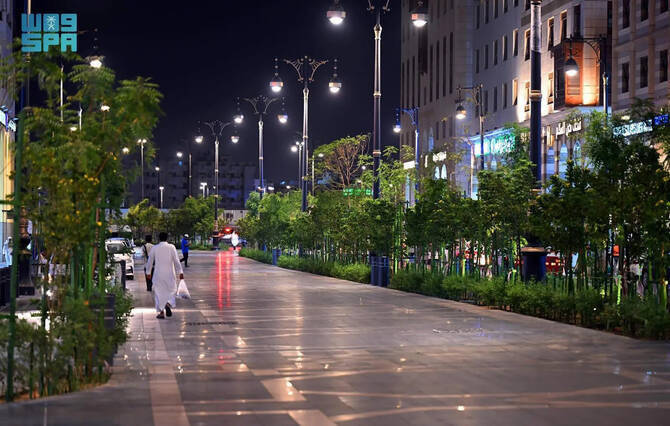
Madinah’s distinctive architectural style and human-centered urban initiatives have enhanced the holy city’s visual identity and improved pedestrian access to the Prophet’s Mosque.  (SPA)
4 / 4
Short Url
Updated 15 August 2025
Follow

Saudi Arabia lifts global health standing with research milestones, WHO Healthy Cities 

  • Jeddah and Madinah stand out as the first cities in the Middle East with populations of 2 million or more to receive the accreditation

Saudi Arabia’s national health system continues to strengthen its global standing through a series of significant achievements in scientific research and international recognition.

The Ministry of Health highlighted the designation of 16 locations as “Healthy Cities” under World Health Organization criteria.

Among these, Jeddah and Madinah stand out as the first cities in the Middle East with populations of 2 million or more to receive the accreditation, marking a milestone in the ministry’s “Healthy Cities Program” and its efforts to enhance quality of life.


Madinah’s distinctive architectural style and human-centered urban initiatives have enhanced the holy city’s visual identity and improved pedestrian access to the Prophet’s Mosque.  (SPA)

The accomplishment reflects successful collaboration among government and community stakeholders through the application of more than 80 international evaluation criteria across nine core domains spanning health, development, and sustainability.

Saudi Arabia has also made notable advances in medical research and innovation.

A study conducted by King Faisal Specialist Hospital and Research Center on robotic liver transplantation was named one of the 10 most influential research papers of 2024 by the American Society of Transplantation.

In addition, seven Saudi hospitals were included in Brand Finance’s Global Top 250 Hospitals 2025 report, highlighting the Kingdom’s strong healthcare infrastructure, international competitiveness, and commitment to high-quality patient care.


Jeddah's designation by the WHO as a healthy city is a culmination of the Red Sea coast city's effort to improves health services and promote a healthy, active lifestyle. (SPA)

These accomplishments are closely aligned with the objectives of Saudi Vision 2030, particularly the “A Vibrant Society” and “A Thriving Economy” pillars to enhance quality of life and support innovation and scientific advancement.

Together, the milestones reflect the integrated efforts of the national health system and various sectors, reinforcing the Kingdom’s position as a regional hub and global destination for advanced healthcare. 


Rebuilding lives: Saudi initiative gives fresh hope to amputees

Updated 08 December 2025
Follow

Rebuilding lives: Saudi initiative gives fresh hope to amputees

  • Baitureh Health Association has provided life-changing support to more than 1,000 people
  • Prosthetic limbs can cost up to $76,000

MAKKAH: The Baitureh Health Association for the Care of Amputees has quickly become one of Saudi Arabia’s most impactful humanitarian initiatives, transforming support for people with lost limbs.

Established in 2020, the association deals with people’s physical, psychological and social needs and fills a long-standing gap in the national health system.

CEO Badr bin Alyan told Arab News that the initiative was created in response to a growing need, driven by amputations linked to accidents, blood disorders, occupational injuries and other causes.

Its operations were “based on service integration rather than fragmentation, enabling beneficiaries to return to their lives with confidence, ability and independence,” he said.

This holistic process covers everything from initial evaluations to psychological and physical rehabilitation, family support, prosthetic fitting and ongoing maintenance.

Its psychological support programs include group sessions led by certified mentors who have undergone similar experiences, as well as field visits to support patients before and after amputation.

More than 1,000 people across the Kingdom have so far benefitted from the association’s work, about 10 percent of them children, whom Alyan said were “the most sensitive and the most in need of intensive psychological and family support.”

Its specialist programs for children — My First Step and Therapeutic Entertainment — help young people adapt to prosthetics, overcome trauma and build confidence in a safe and supportive setting.

The association has completed more than 300 prosthetic fittings, including silicone cosmetic limbs, mechanical, hydraulic, electronic and 3D-printed models. 

Alyan said the type of prosthetic selected depended on a number of factors, such as age, lifestyle, type of amputation, activity level and psychological readiness.

Children also have to undergo frequent adjustments to their new limbs to account for their growth.

Each prosthetic cost between SR20,000 ($5,300) and SR285,000, Alyan said.

The association funds its work through sponsorships, community contributions and strategic partnerships.

Despite its success, Alyan said there were still challenges to be faced, including the lack of a consolidated base for the provision of psychological support and therapy services and prosthetics development and maintenance.

There was also a shortage of local experts, he said.

In response, the association set up a rehabilitation center, which Alyan said would help to localize prosthetics manufacturing, reduce costs and accelerate fitting processes and create opportunities for local experts to develop their knowledge and experience.

But providing prosthetics was only part of the association’s work, he said.

“Rebuilding a human life is the deeper goal.”