
QUETTA, Pakistan: On the evening of Aug. 14 last year, Siraj Ahmed, a 40-year-old train supervisor in the southwestern city of Quetta, returned home from work and told his children how beautifully the local railway station had been decorated with colorful lights and a narrow-gauge steam locomotive for families to visit as part of Pakistan’s Independence Day festivities.
Out of excitement, his children — Ajwa, 11, Haris, 9, and Khizar, 6 — begged him to take them to see the lights and decor.
Ahmed agreed, but the family’s outing turned into tragedy as they were caught in a hand grenade attack that killed Ahmed and injured all three children.
“We were sitting and enjoying the atmosphere. My sister, Ajwa, and brother, Khizar, had gone ahead to see the lit up engine when the blast hit us,” Haris told Arab News this month ahead of the Pakistan’s 79th Independence Day on Aug. 14.
“We three siblings were injured, and we didn’t even know that our father had died. My father was lying down and he was bleeding heavily and I was bleeding too. My sister and younger brother received injuries on their legs.”
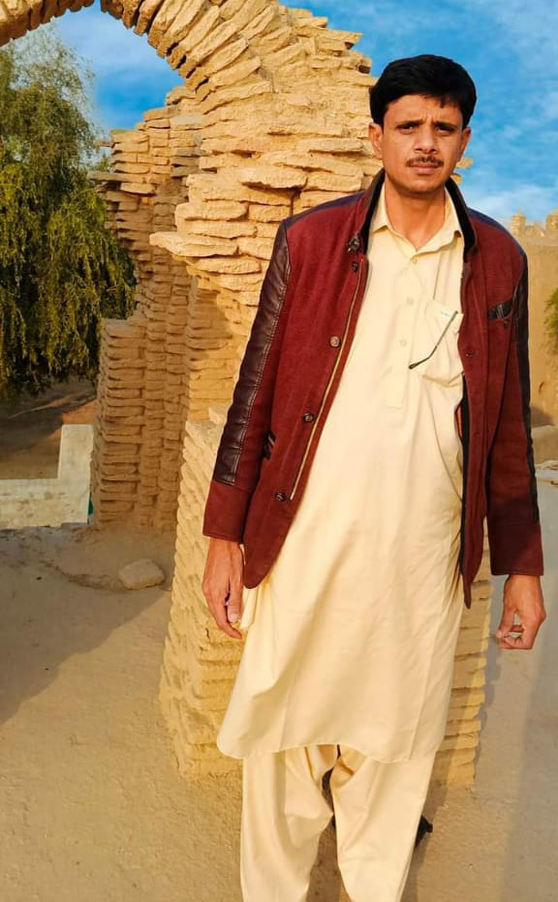
Siraj Ahmed’s file photo who killed in a blast in Quetta, Pakistan, on August 14, 2024. (Photo Courtesy: Siraj’s family)
The attack took place in Quetta, the capital of Balochistan, Pakistan’s largest but least developed province.
The mineral-rich region, bordering Iran and Afghanistan, has for decades been home to a separatist insurgency by Baloch armed groups who accuse the federal government of exploiting its resources to benefit other parts of the country, particularly Punjab. The Pakistani government denies this, saying it is investing heavily in the province, including through China’s Belt and Road Initiative, which has brought major infrastructure projects such as the deep-sea port at Gwadar.
Separatist militants in Balochistan frequently target security forces, Chinese interests, and national events such as Independence Day.
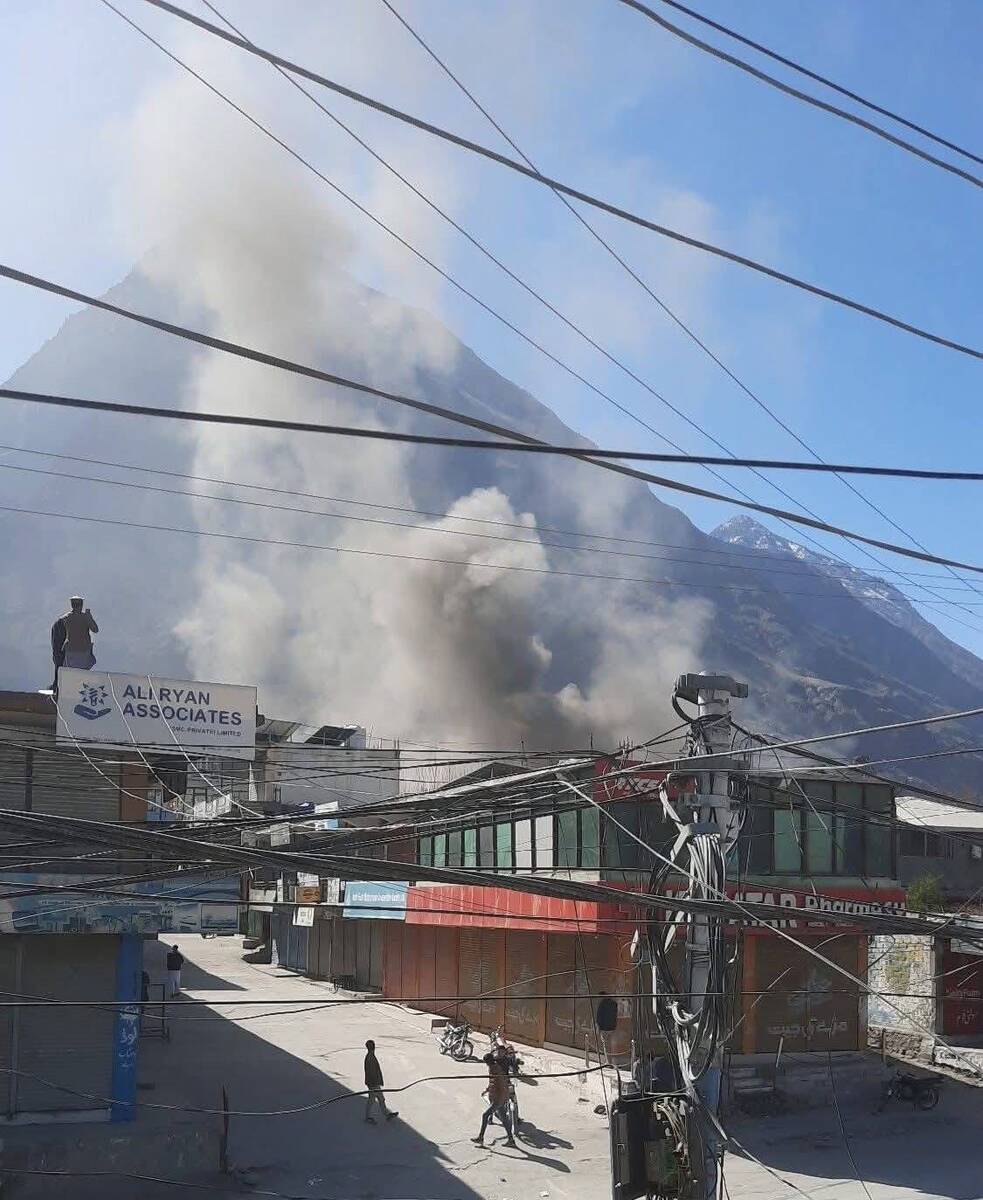
The Balochistan Liberation Army (BLA), the most prominent of these groups, claimed responsibility for a series of coordinated attacks in August 2024 that killed 125 people in the province, including 80 civilians, 22 security personnel, and 23 militants, according to the Islamabad-based Pakistan Institute for Conflict and Security Studies (PICSS). Nationwide, 254 people were killed that month, the deadliest in six years.
Last year, militants also attacked markets selling national flags and other merchandise ahead of Aug. 14.
One such attack in Quetta killed a man and injured several others, discouraging many vendors from ordering Independence Day stock this year.
“Shopkeepers with small and big stalls used to order stock for Independence Day merchandise worth Rs250,000 ($879) that would yield a profit of rupees 50,000 ($175),” said Abdul Waqib, a shopkeeper who witnessed an attack on Quetta’s Moti Ram Road where shops sell national day paraphernalia.
“But now, no one is even ordering merchandise for August 14.”

A motorcyclist passes by a flag selling market in Quetta, Pakistan, on August 06, 2025. (AN Photo)
SECURITY CLAMPDOWN
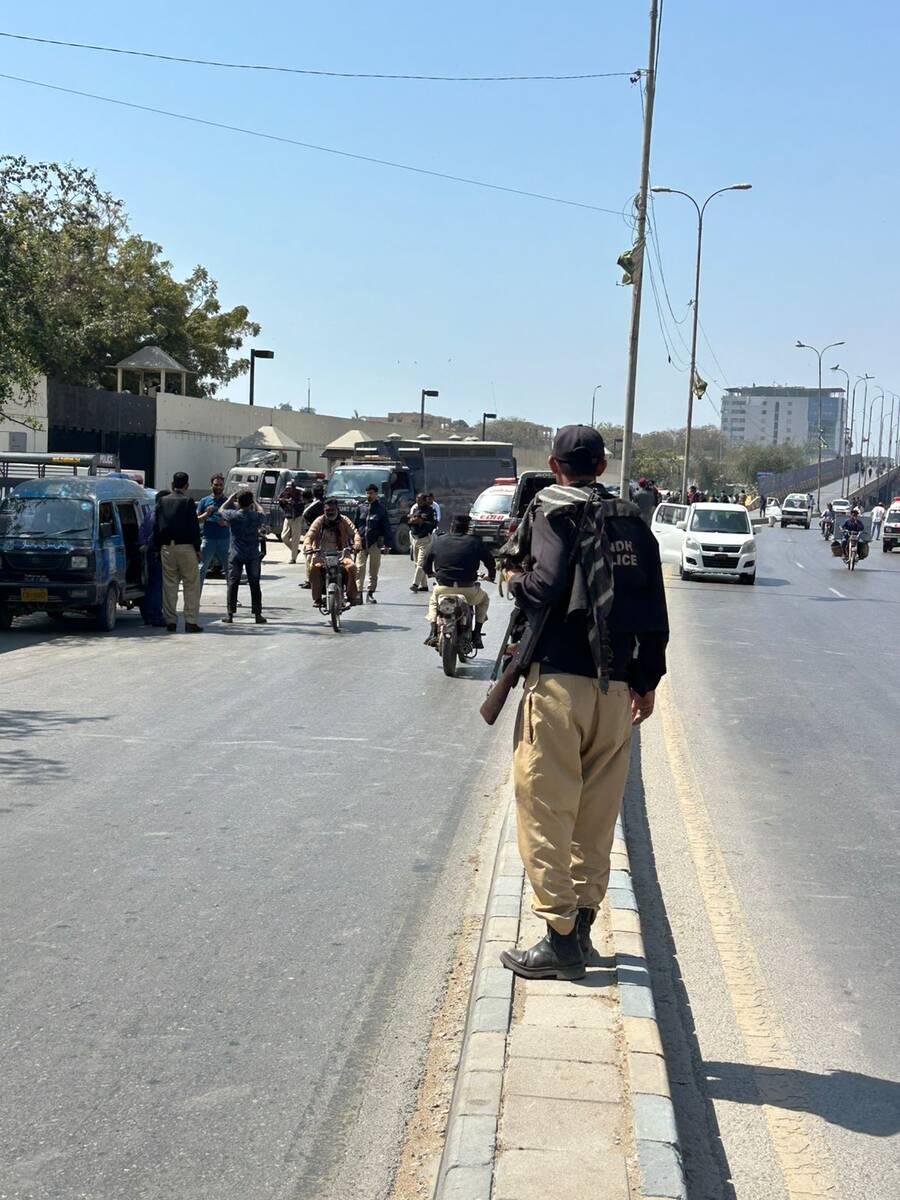
With the anniversary of last August’s attacks approaching, the Balochistan government has suspended mobile Internet services in all 36 districts until Aug. 31, saying 3G and 4G networks have been “facilitating terrorists.”
Shahid Rind, a provincial government spokesman, told Arab News “some bitter terrorism incidents from the last year are still fresh in our minds” and that a “multi-layer strategy” involving civilian and paramilitary forces had been put in place.
“The government will make every effort to ensure that the tragic incidents of last August are not repeated this year,” he said, adding that the security threat level remained “high” but that the government was “equally prepared.”
Adding to the tense atmosphere, Pakistan Railways has suspended Quetta’s train service for Aug. 11 and 14 after a targeted blast on the Quetta–Peshawar-bound Jaffar Express near Spezand railway station last week.
Muhammad Kashif, a personal relations officer for Pakistan Railways’ Quetta Division, said the suspension was due to a shortage of carriages caused by the attack.
“The Jaffar Express will not depart from Quetta on Aug. 11 and 14, similarly, the train will not run from Peshawar Railway Station on Aug. 13,” he said.
“We have to reschedule our train racks, because after Sunday’s blast two racks of passenger train carriages were canceled.”
When asked whether the decision was due to security concerns following recent attacks, Kashif denied it: “We just need to reschedule our train carriages.”
Meanwhile, the shadow of last year’s violence still looms large in Ahmed’s household.
“Now August 14 is coming again, we will not go to see the lights at the railway station because we fear there might be another blast,” Haris said.
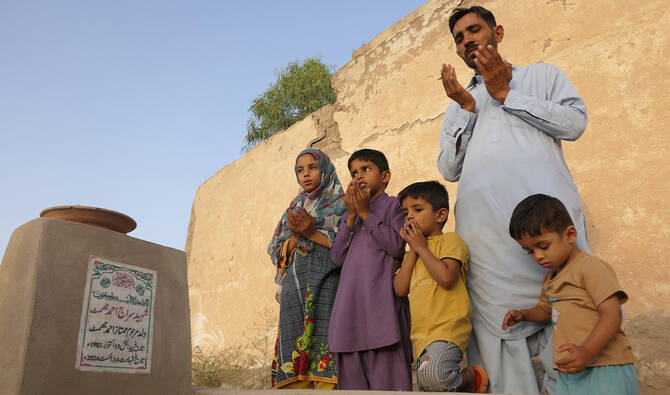
Since their father’s death, Haris and his two siblings live with their uncle Muhammad Saleem and their mother in a cramped railway housing quarter.

Muhammad Saleem (second left) stands with Siraj’s children in Quetta, Pakistan, on August 05, 2025. (AN Photo)
“At times, Siraj’s children ask, ‘Where is our father?’” Saleem, Ahmed’s brother-in-law, told Arab News.
“I take them to their father’s grave for a prayer, giving them courage that Allah will make it all better and telling them to be patient.”