

Pakistan finance adviser cites US tariff advantage, ‘keen investment interest’ in energy sector

Khurram Schehzad, Adviser to the Minister for Finance & Revenue, speaks at the National Incubation Center in Karachi on July 30, 2025. (Handout/Finance Ministry/File)
Short Url
Updated 07 August 2025
Follow

Pakistan finance adviser cites US tariff advantage, ‘keen investment interest’ in energy sector

  • Pakistan faces lowest US tariffs in South and Southeast Asia, adviser says
  • Top finance official also reports record company registrations in July 2025

KARACHI: An adviser to the Pakistani finance ministry said this week the United States had shown “keen investment interest” in Pakistan’s oil and gas sector and noted that the country enjoyed one of the most competitive US tariff rates in the region.

Last week, the US administration imposed a 19% reciprocal tariff on a wide range of Pakistani goods, significantly lower than the initially proposed 29%, under a sweeping new executive order signed by President Donald Trump. In long-drawn out trade talks, Islamabad had been aiming for a tariff less than regional trade rivals such as Vietnam, which had a 20% tariff imposed by Trump, and India, on whose goods an additional 25% tariff was imposed this week, with the US president citing New Delhi’s continued imports of Russian oil.

“Pakistan stands at 19 % [US tariffs], the lowest in South & Southeast Asia,” Khurram Schehzad, Adviser to the Finance Minister of Pakistan, wrote in a post on social media platform X.

“In addition, US showed its keen investment interest in Pakistan’s Oil & Gas sector to build massive reserves.”

Schehzad also cited figures showing higher tariffs recently imposed on India and other countries by the United States, saying:

“President Trump has imposed an additional 25% tariff on India, taking the total US tariff to 50 percent! With this penalty, India now faces the highest US tariff, matched only by Brazil.”

He listed the top five countries facing the highest US tariffs globally as: India – 50%, Brazil – 50%, Syria – 41%, Laos – 40% and Myanmar – 40%.

Last week, Trump had trumpeted a pact to help develop Pakistan’s oil reserves.

“We have just concluded a Deal with the Country of Pakistan, whereby Pakistan and the United States will work together on developing their massive Oil Reserves,” Trump wrote on social media. “We are in the process of choosing the Oil Company that will lead this Partnership.”

On August 1, the vice chairman of Pakistan’s largest refiner, Cnergyico, told Reuters the company would import one million barrels of oil from Vitol in October, the country’s first-ever purchase of US crude following a landmark trade deal. The West Texas Intermediate light crude cargo will be loaded from Houston this month and is expected to arrive in Karachi in the second half of October, Usama Qureshi said.

Oil is Pakistan’s biggest import item, and its shipments were valued at $11.3 billion in the year ended June 30, 2025, accounting for nearly a fifth of the country’s total import bill. The US import deal will help Pakistan diversify its crude sourcing and reduce reliance on Middle Eastern suppliers, which account for nearly all of its oil imports.

Cnergyico could consider buying at least 1 million barrels of US oil a month after it evaluates the first shipment, given its current monthly demand stands at 4.6 million barrels, the company’s vice chairman told Reuters.

“It aligns well with domestic market requirements. Demand typically strengthens in the October–November period,” Qureshi said.

Separately, Finance Adviser Schehzad said Pakistan had registered a record number of companies in July 2025.

“Highest-ever number of company registrations in a single month with SECP [Securities and Exchange Commission of Pakistan] – over 4,000 companies registered in July 2025, with IT & e-Commerce leading the way!” he wrote, referring to the Securities and Exchange Commission of Pakistan.

The adviser also cited broader positive macroeconomic indicators, saying the new fiscal year was “off to a solid start, from low inflation, to better-than-target tax collection, competitive tariff with US’s investment interest in Pakistan, double-digit exports growth, to equity market making new highs.”

The comments come amid Pakistan’s push to attract foreign investment and improve its economic outlook following the approval of a $7 billion IMF program in late 2024.


Pakistan says military operation concluded in Balochistan, 216 militants killed 

Updated 8 sec ago
Follow

Pakistan says military operation concluded in Balochistan, 216 militants killed 

  • Separatist BLA militant group claimed responsibility for coordinated attacks across Balochistan last week 
  • Military says 36 civilians, 22 law enforcement and security forces personnel have been killed in attacks 

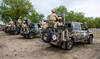
PESHAWAR: Pakistani forces have concluded a security operation in the southwestern Balochistan province and killed 216 militants after a series of coordinated attacks by separatist militants last week, the military’s media wing said on Thursday. 

Separatist militant group Baloch Liberation Army (BLA) claimed responsibility for a series of attacks in Balochistan last Friday and Saturday in multiple districts across the province, one of the deadliest flare-ups in the area in recent years. 

Pakistan military’s media wing, the Inter-Services Public Relations (ISPR), said security forces launched operations in Panjgur and Harnai district’s outskirts on Jan. 29 based on intelligence confirming the presence of “terrorist elements,” killing 41 militants. 

It said the military launched a broader series of intelligence-based operations in multiple areas of the province after that to dismantle “terrorist sleeper cells,” referring to it as “Operation Radd-ul-Fitna-1.”

“As a result of these well-coordinated engagements and subsequent clearance operations, 216 terrorists have been sent to hell, significantly degrading the leadership, command-and-control structures and operational capabilities of terrorist networks,” the ISPR said in a statement.

The military said 36 civilians, including women and children, were killed by militants while 22 security forces and law enforcement personnel also lost their lives. 

The ISPR said a substantial cache of foreign-origin weapons, ammunition, explosives and equipment were also recovered during the counteroffensive operations. 

“Preliminary analysis indicates systematic external facilitation and logistical support to these extremist proxies,” the statement said. 

The military said Pakistan’s armed forces remain steadfast in their resolve to combat “terrorism,” vowing that counterterror operations will continue until militants are completely eliminated. 

“Operation Radd-ul-Fitna-1 stands as a testament to Pakistan’s and particularly Balochistan’s proud peoples’ unwavering commitment to always prefer peace over violence, unity over division and development over violence,” the ISPR said. 

Pakistan’s government has accused India of being behind the militant attacks in Balochistan, charges that New Delhi has rejected as “baseless.”

Balochistan, Pakistan’s largest province by land area, has long faced a separatist insurgency that has intensified in recent years. Militants frequently target security forces, government officials, infrastructure projects, foreigners and non-local workers.

The province holds vast reserves of minerals and hydrocarbons and is central to the multibillion-dollar China-Pakistan Economic Corridor (CPEC), a flagship component of China’s Belt and Road Initiative.

Separatist groups such as the BLA accuse Islamabad of exploiting Balochistan’s natural resources while denying locals a fair share. Pakistan’s civilian and military leadership reject the claim and say they are investing in the province’s development.