BRUSSELS: The humanitarian situation in Gaza continues to be very severe, an EU official told Reuters after the EU’s foreign policy and humanitarian arms updated member countries late on Wednesday on the status of an agreement reached with Israel last month on boosting humanitarian access to Gaza.
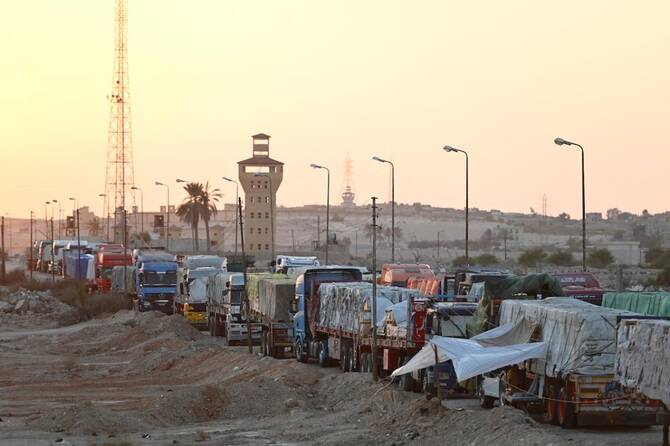
The official said on Thursday that there were some positive developments regarding fuel delivery, the reopening of some routes, and an upward trend in the number of daily trucks entering the enclave and the repair of some vital infrastructure.
However, the official added that “significant obstructive factors continue to undermine humanitarian operations and aid delivery to Gaza, notably the lack of a safe operating environment to allow the distribution of aid at scale.”

EU assessment finds significant obstructive factors undermine humanitarian operations in Gaza
https://arab.news/9cmef
EU assessment finds significant obstructive factors undermine humanitarian operations in Gaza
- The official said there were some positive developments regarding fuel delivery, the reopening of some routes, and an upward trend in the number of daily trucks entering the enclave
UN, aid groups warn Gaza operations at risk from Israel impediments
- Dozens of international aid groups face de-registration by December 31, which then means they have to close operations within 60 days
UNITED NATIONS: The United Nations and aid groups warned on Wednesday that humanitarian operations in the Palestinian territories, particularly Gaza, were at risk of collapse if Israel does not lift impediments that include a “vague, arbitrary, and highly politicized” registration process.
Dozens of international aid groups face de-registration by December 31, which then means they have to close operations within 60 days, said the UN and more than 200 local and international aid groups in a joint statement.
“The deregistration of INGOs (international aid groups) in Gaza will have a catastrophic impact on access to essential and basic services,” the statement read.
“INGOs run or support the majority of field hospitals, primary health care centers, emergency shelter responses, water and sanitation services, nutrition stabilization centers for children with acute malnutrition, and critical mine action activities,” it said.
SUPPLIES LEFT OUT OF REACH: GROUPS
While some international aid groups have been registered under the system that was introduced in March, “the ongoing re-registration process and other arbitrary hindrances to humanitarian operations have left millions of dollars’ worth of essential supplies — including food, medical items, hygiene materials, and shelter assistance — stuck outside of Gaza and unable to reach people in need,” the statement read.
Israel’s mission to the United Nations in New York did not immediately respond to a request for comment on the statement. Under the first phase of US President Donald Trump’s Gaza plan, a fragile ceasefire in the two-year-old war between Israel and Palestinian militants Hamas began on October 10. Hamas released hostages, Israel freed detained Palestinians and more aid began flowing into the enclave where a global hunger monitor said in August famine had taken hold.
However, Hamas says fewer aid trucks are entering Gaza than was agreed. Aid agencies say there is far less aid than required, and that Israel is blocking many necessary items from coming in. Israel denies that and says it is abiding by its obligations under the truce.
“The UN will not be able to compensate for the collapse of INGOs’ operations if they are de-registered, and the humanitarian response cannot be replaced by alternative actors operating outside established humanitarian principles,” the statement by the UN and aid groups said.
The statement stressed “humanitarian access is not optional, conditional or political,” adding: “Lifesaving assistance must be allowed to reach Palestinians without further delay.”


