

Middle East air cargo capacity rises 1.5% despite falling demand

Short Url
Updated 31 July 2025
Follow

Middle East air cargo capacity rises 1.5% despite falling demand

  • Performance reflects broader slowdown in global air cargo
  • Slowdown attributed to rising protectionism, including new US tariffs

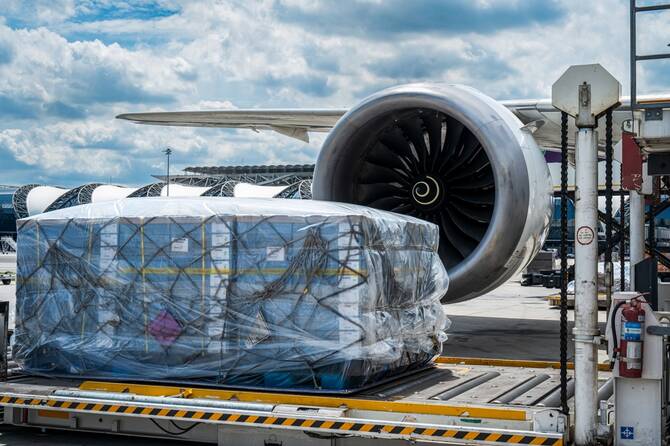
RIYADH: Middle Eastern air cargo capacity grew 1.5 percent year on year in June, even as regional demand contracted by 3.2 percent due to geopolitical tensions and airspace disruptions. 

The rise in available cargo space, measured in available cargo tonne-kilometers, came amid route disruptions over parts of Iran, Iraq, Israel, and Lebanon. These factors drove the region’s second consecutive monthly contraction in cargo volumes, according to the International Air Transport Association’s latest air cargo market report.

The performance reflects a broader slowdown in global air cargo, with IATA’s mid-year forecast projecting 0.7 percent volume growth, down from 11.3 percent in 2024. 

The slowdown is attributed to rising protectionism, including new US tariffs and the rollback of de minimis exemptions on low-value imports, which could dampen e-commerce-related air freight. 

“The June air cargo data made it very clear that stability and predictability are essential supports for trade,” said Willie Walsh, IATA’s director general. 

“Emerging clarity on US tariffs allows businesses greater confidence in planning. But we cannot overlook the fact that the ‘deals’ being struck are resulting in significantly higher tariffs on goods imported into the US than we had just a few months ago,” he added. 

While the full economic impact of these trade cost barriers remains to be seen, Walsh said governments must step up efforts to make trade simpler, faster, cheaper, and more secure through digitalization. 

The Asia-North America and Africa-Asia trade lanes each contracted by 4.8 percent, while Middle East-Europe declined by 4.5 percent. In contrast, trade between Europe and Asia expanded by 10.6 percent, maintaining 28 consecutive months of growth. 

“Overall, air cargo demand grew by a modest 0.8 percent year-on-year in June, but there are very differing stories behind that number for the industry’s major players,” Walsh said. 

Trade tensions dragged North American traffic down 8.3 percent and left European growth at 0.8 percent, but Asia-Pacific defied the trend with a 9 percent expansion. 

“Meanwhile, disruptions from military conflict in the Middle East saw the region’s cargo traffic fall by 3.2 percent,” added Walsh. 

When it came to passenger numbers, Middle Eastern carriers saw a 0.4 percent year-on-year decrease in demand. Capacity increased 1.1 percent year on year, and the load factor was 78.7 percent – a 1.2 percentage point drop compared to June 2024.

According to the IATA, military conflict particularly impacted traffic on routes to North America — down 7 percent year on year — and Europe, which saw an annual reduction of 4.4 percent.

“In June, (global) demand for air travel grew by 2.6 percent. That’s a slower pace than we have seen in previous months and reflects disruptions around military conflict in the Middle East,” said Walsh. 

Despite the challenging backdrop, some fundamentals remain supportive. Global industrial production rose 3.2 percent year on year in May, and goods trade increased by 3.5 percent. 

Jet fuel prices in June were 12 percent lower than a year ago, easing cost pressures for carriers. 

While the global Purchasing Managers’ Index recovered to 51.2, signaling expansion, new export orders remained in contraction at 49.3. 

Adding to the complexity of the regional dynamic, Middle East airlines are simultaneously expected to post the world’s highest net profit margin in 2025 at 8.7 percent, according to IATA’s June industry forecast presented at its 81st annual general meeting in New Delhi. 

The region is projected to generate a net profit of $6.2 billion, up from $6.1 billion in 2024, and is expected to earn $27.20 per passenger, outpacing all global peers despite demand volatility and regional instability. 


Saudi waste sector offers opportunities worth $112bn

Updated 6 sec ago
Follow

Saudi waste sector offers opportunities worth $112bn

JEDDAH: Saudi Arabia’s waste management sector is undergoing a structural transformation, positioning itself as a promising investment avenue.

The shift is driven by a modern regulatory framework, a national strategy aligned with Vision 2030, and environmental and economic targets.

The National Center for Waste Management, known as MWAN, told Al-Eqtisadiah that investment opportunities in the sector are estimated at about SR420 billion ($112 billion) by 2040, primarily targeting private sector participation.

According to MWAN’s licensing database, the number of licensed entities in the sector reached 1,348, with an additional 145 permits for recycling facilities, bringing the total number of investing companies to 1,493, underscoring the sector’s growing investment base and the diversity of activities.

Leap in treatment indicators, reduced landfilling

MWAN reported notable improvements in 2024, with the proportion of waste diverted from landfills reaching 18 percent, signaling progress in recycling and treatment initiatives.

The comprehensive national plan aims to increase this figure to 90 percent by 2040, with the private sector as the main driver.

The center oversees all waste types in the Kingdom, excluding radioactive and military waste, spanning seven main categories: municipal solid waste, industrial waste, and healthcare waste, as well as sludge, agricultural waste, construction and demolition debris, and special waste such as tires and electronic devices.

230 landfills … shifting from dumping to value

Saudi Arabia currently has more than 230 landfills, ranging from engineered sites that meet environmental standards to traditional facilities, with Riyadh’s Al-Sulay landfill among the largest.

However, strategic priorities have shifted from expanding landfill capacity to reducing it and turning waste into an economic resource through recycling, advanced treatment, and waste-to-energy initiatives.

Sustainability and circular economy

Saudi Arabia’s waste management model is based on circular economy principles, maximizing resource utilization, minimizing environmental impact, and promoting investment in advanced technologies and smart solutions.

MWAN is also developing an electronic waste transport document system, enabling tracking from source to final destination, enhancing oversight, preventing irregular practices, and providing a reliable database to support long-term investment planning.

Landfill scientifically selected

The Saudi Geological Survey confirmed that landfill locations are chosen based on rigorous technical criteria, including geological, environmental, and hydrological factors, ensuring urban needs are met for at least 25 years.

Waheed Baamer, director of the Applied Geology Center, said studies have been conducted for major cities, including Riyadh, Tabuk, and Taif, to protect natural resources and minimize environmental impact, supporting sustainable development.

Jeddah figures reflects market size 

Jeddah Municipality reported that its landfills received nearly 5 million tonnes of waste in the first half of 2025, including 3.9 million tonnes of construction and demolition debris and 693,000 tonnes of household and bulky waste collected through cleaning contracts.

The municipality added that the Corniche area alone recorded 4,237 tonnes, underlining the urgent need for advanced treatment and recycling investment solutions.

Promising market for the private sector by 2040

The sector is expected to offer SR420 billion in investment opportunities by 2040, reflecting its transformation from a service burden to a fully-fledged economic industry.

With a clear regulatory framework, rising demand, and adoption of sustainability and circular economy principles, the waste management sector is set to become a key long-term investment path in Saudi Arabia and a vital contributor to environmental and economic targets.