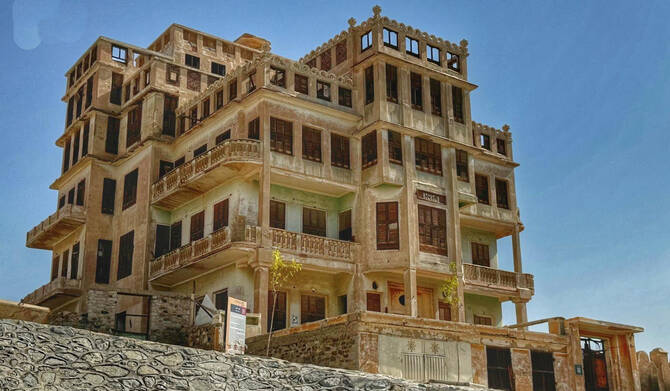

RIYADH: The city of Makkah features numerous historical landmarks that reflect its urban development and architectural uniqueness. Among these is Kawir Palace, also known as Biban Palace, one of the oldest and most notable historical palaces.
It embodies authentic architectural elements and symbolizes the social and cultural diversity of the early 20th century, serving as a model of local architecture connected to social changes in Makkah, the Saudi Press Agency reported.

Indian teak wood was used for some doors and windows, while the facades featured carved wooden windows (roshan) and geometric motifs. (SPA)
Owned by a local merchant nicknamed Kawir because of his trade in limestone quarrying, a prevalent building material, the palace’s architecture and strategic location in Makkah’s prominent Biban area highlight its significance.
The palace was built between 1910 and 1920 and is on a hill overlooking the historic Biban area, offering panoramic views, the SPA added.
FASTFACT
After restoration, the palace could serve as a museum of traditional Makkah architecture, a community cultural center, or a luxury heritage guesthouse for experiential tourism.
The construction used local materials and techniques, including local stone for the foundation, limestone for wall insulation, and clay, wood, and gypsum for interiors.
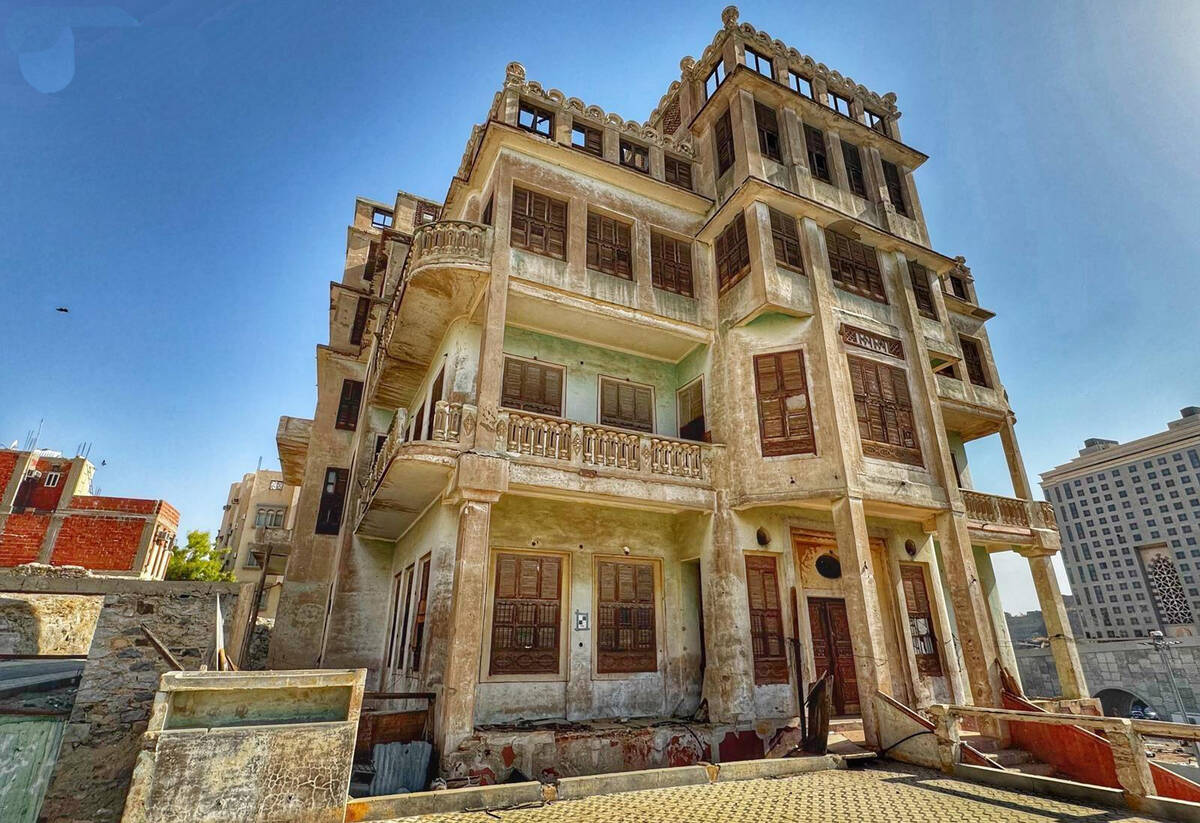
The palace comprises five floors, featuring spacious halls, reception areas, and internal courtyards for ventilation. (SPA)
Indian teak wood was used for some doors and windows, while the facades featured carved wooden windows (roshan) and geometric motifs. The ceilings feature handmade gypsum decorations, reflecting local craftsmanship.
The palace comprises five floors, featuring spacious halls, reception areas, and internal courtyards for ventilation, according to the report.

The palace comprises five floors, featuring spacious halls, reception areas, and internal courtyards for ventilation. (SPA)
The palace provides valuable architectural lessons, particularly in the integration of form and function. Traditional methods offer solutions for ventilation, privacy, and thermal insulation, emphasizing local identity over imported styles.
After restoration, the palace could serve as a museum of traditional Makkah architecture, a community cultural center, or a luxury heritage guesthouse for experiential tourism.