

Saudi-led initiative restores Yemen’s iconic Seiyun Palace

1 / 5
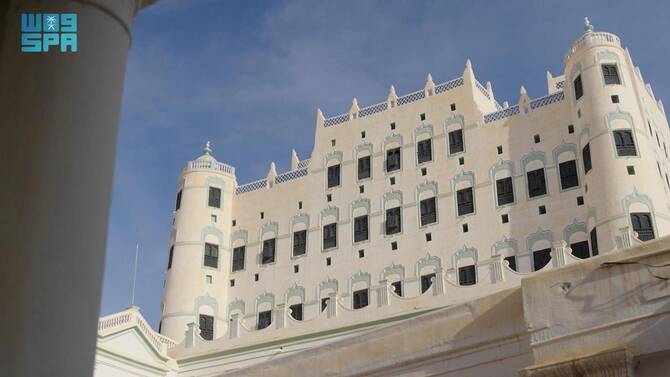
Seiyun Palace in Hadramout is regaining its original form through restoration led by the Saudi Development and Reconstruction Program for Yemen. (SPA)
2 / 5
Seiyun Palace in Hadramout is regaining its original form through restoration led by the Saudi Development and Reconstruction Program for Yemen. (SPA)
3 / 5
Seiyun Palace in Hadramout is regaining its original form through restoration led by the Saudi Development and Reconstruction Program for Yemen. (SPA)
4 / 5
Seiyun Palace in Hadramout is regaining its original form through restoration led by the Saudi Development and Reconstruction Program for Yemen. (SPA)
5 / 5
Seiyun Palace in Hadramout is regaining its original form through restoration led by the Saudi Development and Reconstruction Program for Yemen. (SPA)
Short Url
Updated 30 June 2025
Follow

Saudi-led initiative restores Yemen’s iconic Seiyun Palace

  • Kingdom’s program, UNESCO collaborate to preserve heritage, boost cultural tourism in Hadramout

RIYADH: After years of deterioration that threatened its survival as a historical and cultural symbol, Seiyun Palace in Hadramout, eastern Yemen, is regaining its original form through restoration led by the Saudi Development and Reconstruction Program for Yemen. 

Seiyun Palace was once featured on Yemen’s national currency due to its importance, the Saudi Press Agency reported.

Originally built as a fortified stronghold to protect Seiyun, the palace later became the residence of the sultans of the Kathiri state, who ruled Wadi Hadramout. 

Despite its significance, the palace suffered damage over time, reaching a critical point in 2022 when a large part of its outer wall collapsed, raising concerns about its future. This led to calls for restoration, according to the SPA. 

At the Yemeni government’s request, the Saudi development program launched a project to restore the palace. 

Funded by the program and implemented by UNESCO, the effort involved Saudi Arabia’s Ministry of Culture and Yemen’s General Organization of Antiquities and Museums, with support from Yemen’s Social Fund for Development.

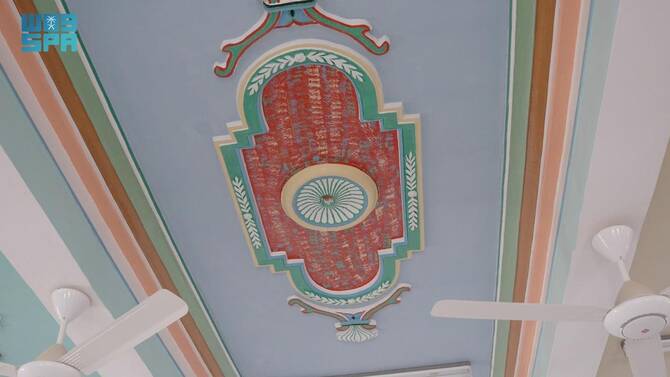
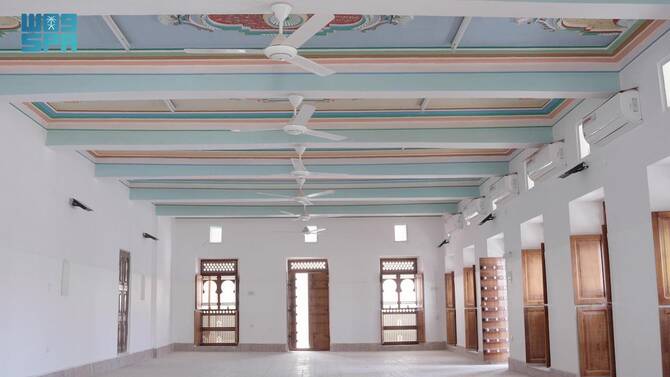
Restoration included repairing the outer wall and mudbrick structures. Attention was given to restoring wooden ceilings, carved doors, and windows that showcase Yemeni craftsmanship. 

The project also preserved the palace’s architectural features, including traditional decorations and wall inscriptions. Local engineers and technicians were trained in restoration techniques for ongoing maintenance. 

This project supports development in Hadramout and the preservation of Yemen’s heritage. The palace can now receive visitors and host events, enhancing its role as a cultural and tourism site, the SPA reported.

The Seiyun Palace restoration is one of 264 projects by the Saudi development program across Yemen, covering education, health, transportation, energy, water, agriculture, fisheries, and institutional capacity building.


Foreign ministers chair Saudi-Omani coordination council meeting in Muscat

Updated 23 December 2025
Follow

Foreign ministers chair Saudi-Omani coordination council meeting in Muscat

MUSCAT: Saudi Foreign Minister Prince Faisal bin Farhan met with Oman’s Foreign Minister Sayyid Badr bin Hamad Al-Busaidi on Monday.

They reviewed bilateral relations between their nations and ways to enhance and develop them across various fields. Additionally, they discussed regional and international developments.

The ministers co-chaired the third meeting of the Saudi-Omani Coordination Council in the Omani capital, Muscat, with the participation of the heads of the Council’s subsidiary committees and the two heads of the Council’s General Secretariat teams.

The meeting comes as an affirmation of the keenness of Saudi and Omani leaders to strengthen ties and advance them toward greater prosperity for both nations.

In his remarks during the meeting, Prince Faisal affirmed that gathering builds on the previous council meeting, held last year in AlUla, and on its positive and fruitful outcomes within the framework of the approved recommendations and initiatives. 

He stressed the importance of continuing the work of the council’s subsidiary committees to complete the necessary procedures to implement the remaining initiatives, and of the General Secretariat’s role in follow-up and in addressing any challenges that may hinder implementation.

He also underscored the importance of developing and enhancing trade relations, stimulating investment, and strengthening cooperation between the public and private sectors.

He also praised the ongoing work to establish and launch the Coordination Council’s electronic platform, which aims to connect all committee work and initiatives to facilitate follow-up on the Council’s progress. 

Al-Busaidi affirmed in his remarks the qualitative progress in relations between the two countries and the notable development witnessed across numerous sectors toward achieving economic integration and enhancing intra-trade and joint investments. 

The Omani foreign minister also highlighted deeper cooperation in the security and judicial fields, as well as the cultural and tourism sectors, noting the advanced and continuous political cooperation, consultation, and coordination on regional and international issues.