

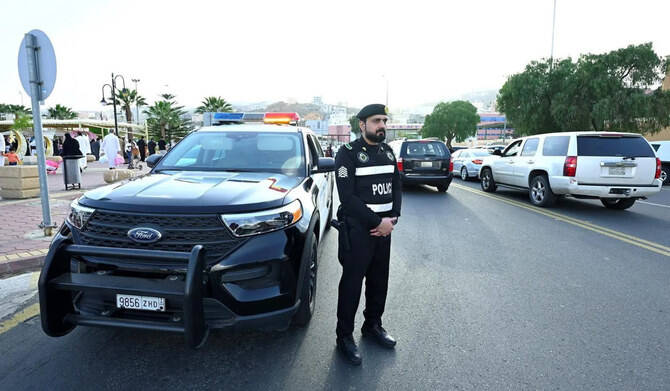
Kingdom arrests 22,497 illegals in one week

Saudi police have arrested hundreds of illegals breaching country’s law. (SPA)
Short Url
Updated 26 July 2025
Follow

Kingdom arrests 22,497 illegals in one week

Riyadh: Saudi authorities arrested 22,497 people in one week for breaching residency, work and border security regulations, the Saudi Press Agency reported on Saturday.

A total of 13,817 people were arrested for violations of residency laws, while 5,280 were held over illegal border crossing attempts, and a further 3,400 for labor-related issues.

The report showed that among the 1,687 people arrested for trying to enter the Kingdom illegally, 61 percent were Ethiopian, 38 percent Yemeni, and 1 percent were of other nationalities.

A further 40 people were caught trying to cross into neighboring countries, and 15 were held for involvement in transporting and harboring violators, the SPA reported.

The Ministry of Interior said that anyone found to be facilitating illegal entry to the Kingdom, including providing transportation and shelter, could face imprisonment for a maximum of 15 years, a fine of up to SR1 million ($267,000), as well as confiscation of vehicles and property.

Suspected violations can be reported on the toll-free number 911 in the Makkah and Riyadh regions, and 999 or 996 in other regions of the Kingdom.


King Abdulaziz Foundation reveals rare images from king’s 1916 Basra visit

Updated 5 sec ago
Follow

King Abdulaziz Foundation reveals rare images from king’s 1916 Basra visit

  • Photographs form part of a wider collection documented by British photographer Gertrude Bell

RIYADH: The King Abdulaziz Foundation has revealed archival photographs documenting King Abdulaziz’s tour of the outskirts of Basra in 1916, a visit that came at an early stage of his efforts to build regional relationships.

One of the photographs, taken by British photographer Gertrude Bell, shows King Abdulaziz standing with his men in the Basra desert, the Saudi Press Agency reported. 

The image reflects his early political and diplomatic engagement in the region, as he sought to strengthen ties with neighboring areas and engage with the wider Arab and international community, SPA added.

The photograph forms part of a wider collection documented by Bell, which records key developments and transformations across the Arabian Peninsula during the early 20th century.

The Basra visit holds particular significance in King Abdulaziz’s journey as a unifying leader. 

Rather than crossing borders in pursuit of power, the visit reflected an approach focused on stability, cooperation and long-term regional harmony, laying the groundwork for a leadership style defined by pragmatism and openness, SPA said.