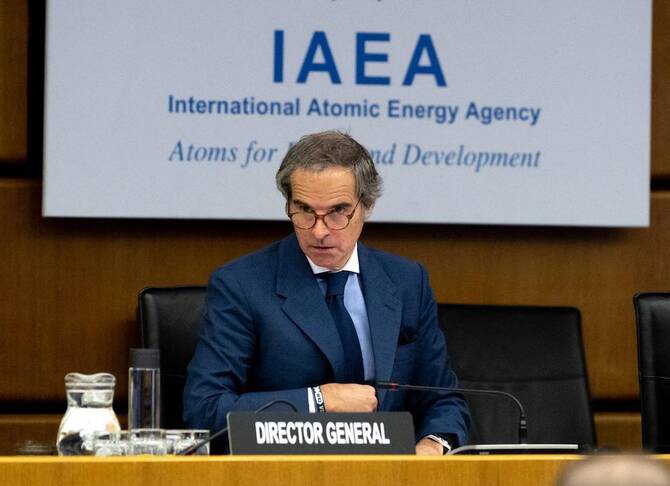

SINGAPORE: International Atomic Energy Agency (IAEA) chief Rafael Grossi said Friday he was “encouraged” that Iran had agreed for a delegation from the UN nuclear watchdog to visit the country “within weeks.”
Grossi said the visit by the technical team could pave the way for UN inspectors to return to Iran, potentially within this year.
“If we do not return soon, there would be a serious problem, because this is an international obligation of Iran,” Grossi told reporters during a visit to Singapore.
“I am encouraged by what I have been hearing from Tehran in the sense that they want to re-engage with us,” he added.
A date for the visit was yet to be determined, but Grossi confirmed it will be “within weeks.”
Iranian Deputy Foreign Minister Kazem Gharibabadi had told the United Nations in New York a day earlier that an IAEA delegation would visit Iran within two to three weeks.
The group will not have access to nuclear sites, Gharibabadi said, adding that the visit would focus on establishing new relations with the UN nuclear watchdog.
The Iranian official spoke ahead of negotiations on Friday in Istanbul with France, Britain and Germany, which are threatening to sanction Iran over its alleged failure to adhere to its nuclear commitments.
If the European countries impose sanctions, “we will respond, we will react,” Gharibabadi said.
Grossi said the team will not include nuclear inspectors yet.
“We need to listen to Iran in terms of what they consider should be the precautions to be taken. Some places... were destroyed. We should also check on this situation and then decide on a precise day to start the process of inspection, as we normally should.”
An IAEA team left Iran in early July to return to the organization’s headquarters in Vienna after Tehran suspended cooperation with the agency.
Iran has blamed the IAEA in part for attacks on its nuclear facilities in June, which Israel says it launched to prevent Iran from developing a nuclear weapon – an ambition Tehran has repeatedly denied.
The United States carried out its own strikes on June 22, targeting Iranian nuclear facilities at Fordo, Isfahan and Natanz.
Iranian Foreign Minister Abbas Araghchi said this week that Tehran has no plans to abandon its nuclear program, including uranium enrichment, despite the “severe” damage to its facilities.