

TV director accuses UK culture secretary of ‘bullying’ BBC over Gaza coverage

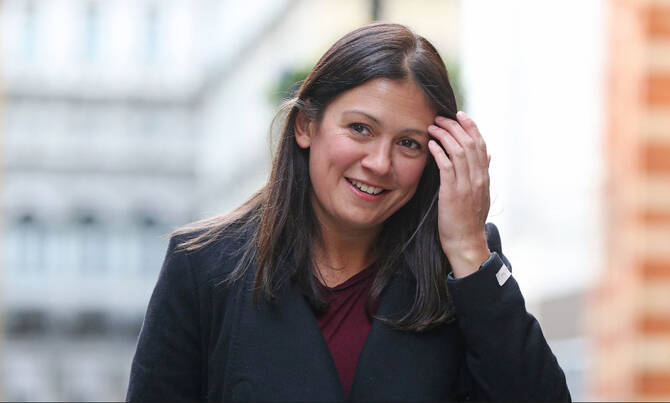
Nandy has been a vocal critic of the BBC, pressuring the broadcaster to withdraw its Gaza documentary after it emerged the young narrator was the son of a Hamas official. (File/PA)
Short Url
Updated 23 July 2025
Follow

TV director accuses UK culture secretary of ‘bullying’ BBC over Gaza coverage

  • Peter Kosminsky likened the government’s actions to those of a “tinpot dictatorship”

LONDON: Acclaimed TV director Peter Kosminsky has accused UK Culture Secretary Lisa Nandy of attempting to “bully” the BBC over its coverage of the Gaza conflict.

In a strongly worded letter, Kosminsky — known for the BBC historical drama “Wolf Hall” — likened the government’s actions to those of a “tinpot dictatorship” and warned against sustained pressure on BBC Director General Tim Davie.

“Could I respectfully suggest that you stop trying to bully the BBC, the nation’s primary public service broadcaster, over its coverage of the war in Gaza,” wrote Kosminsky in the letter, reported by The Guardian.

He argued that politicians should not “police the individual editorial decisions of the BBC,” stressing the broadcaster must, above all, maintain public trust. His letter echoed warnings from veteran BBC figure Richard Ayre, who described Nandy’s direct intervention as “outrageous.”

Nandy has been a vocal critic of the BBC, pressuring the broadcaster to withdraw its Gaza documentary “How To Survive a Warzone” after it emerged the young narrator was the son of a Hamas official. She also criticized the broadcasting of a Glastonbury Festival segment featuring the punk-rap duo Bob Vylan chanting anti-IDF slogans.

“For its part, the BBC must ensure that its output is balanced. But this means balanced across the totality of its output,” said Kosminsky, cautioning that past conflicts between government and BBC had ended tragically and citing the death of weapons expert Dr David Kelly in 2003.

Meanwhile, the Department for Culture, Media and Sport has acknowledged recent “serious failures” at the BBC but framed Nandy’s criticism as justified accountability on behalf of license-fee payers. A spokesperson reiterated that editorial independence remained paramount.

The controversy comes amid crucial discussions over the BBC’s future funding and charter renewal, adding further pressure on its leadership — particularly Davie, who faces mounting scrutiny and internal dissatisfaction over perceived lapses in impartiality and editorial oversight.


University of Hong Kong hosts the first Saudi Economic Forum to boost China–Saudi ties

Updated 17 December 2025
Follow

University of Hong Kong hosts the first Saudi Economic Forum to boost China–Saudi ties

  • The high-level event served as a new platform for bilateral dialogue and cross-sector collaboration

RIYADH: The University of Hong Kong (HKU) has hosted the first-ever Saudi Economic Forum in Riyadh, bringing together nearly 100 senior officials, academics, and business leaders to deepen cooperation between China and Saudi Arabia in education, innovation, and economic growth.

Held under the theme “Enhancing the Global Competitiveness of Chinese and Saudi Institutions,” the forum marked a significant milestone in advancing strategic alignment between China’s Belt and Road Initiative and Saudi Vision 2030.

The high-level event served as a new platform for bilateral dialogue and cross-sector collaboration, with participants exploring joint opportunities in investment, technology, renewable energy, and artificial intelligence.

Professor Hongbin Cai, dean of the faculty of business and economics at HKU, said the university aspires to become a “knowledge bridge” between the two nations, leveraging its global standing and extensive international networks. He noted that educational collaboration would be a cornerstone of the Saudi–Chinese partnership.

Saudi Arabia’s Assistant Deputy Minister of Investment, Fahad Al-Hashem, emphasized the depth of the China–Saudi partnership, noting that bilateral trade now exceeds $150 billion, with a growth rate of around 30 percent annually.

He reaffirmed the Kingdom’s openness to partnerships with China’s leading universities and technology companies, particularly in future-focused sectors aligned with Vision 2030, including education, digital transformation, AI, and clean energy.

The forum featured panel discussions on cross-border education, global city development, and technology transfer, with experts stressing the importance of joint ventures in the digital economy and smart infrastructure.

Participants said Saudi Arabia could benefit from China’s successful experiences in energy transition, infrastructure modernization, and innovation ecosystems as it builds globally competitive cities and institutions.

The Saudi Economic Forum concluded with calls for sustained academic and corporate partnerships to enhance institutional excellence and global competitiveness. Organizers said the initiative will continue to facilitate knowledge exchange and support national transformation goals in both countries, namely in the fields of technology and innovation.