


DAMASCUS: Syrian government officials and leaders in the Druze religious minority announced Wednesday a renewed ceasefire after days of clashes that have threatened to unravel the country’s postwar political transition and have drawn intervention by Syria’s powerful neighbor, Israel.
It was not immediately clear if the new agreement, announced by Syrian Interior Ministry and in a video message by a Druze religious leader, would hold. A previous ceasefire announced the day before quickly fell apart.
A prominent Druze leader, Sheikh Hikmat Al-Hijri, disavowed the new agreement entered into by other Druze officials.
The announcement came after Israel launched a series of rare airstrikes in the heart of Damascus, part of a campaign that it said is intended to defend the Druze and to push Islamic militants away from its border. The Druze form a substantial community in Israel as well as in Syria and are seen in Israel as a loyal minority, often serving in the military.
The latest escalation in Syria began with tit-for-tat kidnappings and attacks between local Sunni Bedouin tribes and Druze armed factions in the southern province. Government forces that intervened to restore order then clashed with the Druze.
The escalating violence has appeared to be the most serious threat yet to the ability of Syria’s new rulers to consolidate control of the country after a rebel offensive led by Islamist insurgent groups ousted longtime despotic leader, Bashar Assad, in December, bringing an end to a nearly 14-year civil war.
The primarily Sunni Muslim leaders have faced suspicion from religious and ethnic minorities, especially after clashes between government forces and pro-Assad armed groups in March spiraled into sectarian revenge attacks. Hundreds of civilians from the Alawite religious minority, to which Assad belongs, were killed.
Israel threatens further escalation after strikes
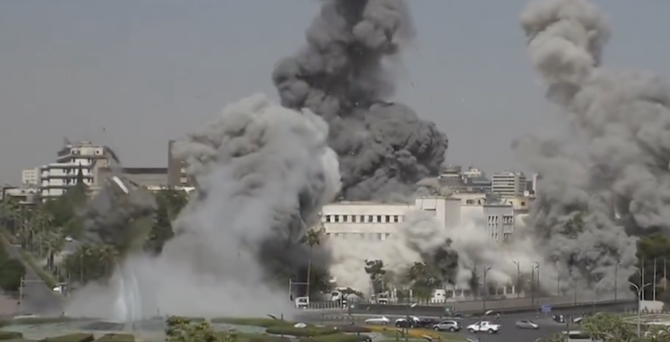
Israel has launched dozens of strikes targeting government troops and convoys heading into Sweida, and on Wednesday struck the Syrian Defense Ministry headquarters in the heart of Damascus.
That strike killed one person and injured 18, Syrian officials said. Another strike hit near the presidential palace in the hills outside of Damascus.
Israeli Defense Minister Israel Katz said after the airstrike in a post on X that the “painful blows have begun.” An Israeli military official who spoke on condition of anonymity in line with regulations said the army was preparing for a “multitude of scenarios” and that a brigade, normally comprising thousands of soldiers, was being pulled out of Gaza and sent to the Golan Heights.
Syria’s Defense Ministry had earlier blamed militias in the Druze-majority area of Sweida for violating a ceasefire agreement reached Tuesday.
Meanwhile, reports of attacks on civilians continued to surface, and Druze with family members in the conflict zone searched desperately for information about their fate amid communication blackouts.
Druze fear for the lives of their relatives in Sweida
In Jaramana near the Syrian capital, Evelyn Azzam, 20, said she fears that her husband, Robert Kiwan, 23, is dead. The newlyweds live in the Damascus suburb, but Kiwan would commute to Sweida for work each morning and got trapped there when the clashes erupted.
Azzam said she was on the phone with Kiwan when security forces questioned him and a colleague about whether they were affiliated with Druze militias. When her husband’s colleague raised his voice, she heard a gunshot. Kiwan was then shot while trying to appeal.
“They shot my husband in the hip from what I could gather,” she said, struggling to hold back tears. “The ambulance took him to the hospital. Since then, we have no idea what has happened.”
A Syrian Druze from Sweida living in the United Arab Emirates said her mother, father, and sister were hiding in a basement in their home near the hospital, where they could hear the sound of shelling and bullets from outside. She spoke on condition of anonymity out of fear her family might be targeted.
She had struggled to get hold of them, but when she reached them, she said, “I heard them cry. I have never heard them this way before.”
Another Druze woman living in the UAE with family members in Sweida, who also spoke on condition of anonymity, said a cousin told her that a house where their relatives lived had been burned down with everyone inside it.
It reminded her of when the Islamic State extremist group attacked Sweida in 2018, she said. Her uncle was among many civilians there who took arms to fight back while Assad’s forces stood aside. He was killed in the fighting.
“It’s the same right now,” she told The Associated Press. The Druze fighters, she said, are “just people who are protecting their province and their families.”
The Druze religious sect began as a 10th-century offshoot of Ismailism, a branch of Shiite Islam. More than half of the roughly 1 million Druze worldwide live in Syria. Most of the other Druze live in Lebanon and Israel, including in the Golan Heights, which Israel captured from Syria in the 1967 Mideast War and annexed in 1981.
Reports of killings and looting in Druze areas
Videos surfaced on social media of government-affiliated fighters forcibly shaving the mustaches of Druze sheikhs, and stepping on Druze flags and pictures of religious clerics. Other videos showed Druze fighters beating captured government forces and posing by their dead bodies. AP reporters in the area saw burned and looted houses.No official casualty figures have been released since Monday, when the Syrian
Interior Ministry said 30 people had been killed. The UK-based war monitor Syrian Observatory for Human Rights said more than 300 people had been killed as of Wednesday morning, including four children, eight women and 165 soldiers and security forces.
The observatory said at least 27 people were killed in “field executions.”
Interim President Ahmad Al-Sharaa issued a statement Wednesday condemning the violations.
“These criminal and illegal actions cannot be accepted under any circumstances, and completely contradicts the principles that the Syrian state is built on,” the statement read, vowing that perpetrators would be punished.
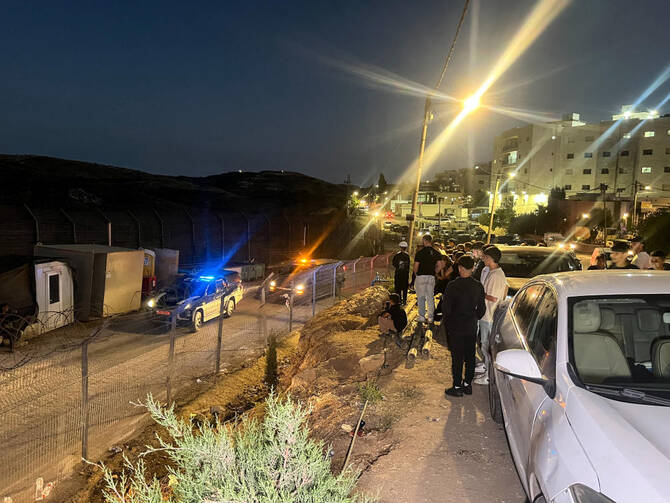
Druze in the Golan gathered along the border fence to protest the violence against Druze in Syria.
Israel threatens to scale up its intervention
On Wednesday, Israeli Defense Minister Israel Katz said in a statement that the Israeli army “will continue to attack regime forces until they withdraw from the area — and will also soon raise the bar of responses against the regime if the message is not understood.”
Prime Minister Benjamin Netanyahu said in a statement Tuesday night that Israel has “a commitment to preserve the southwestern region of Syria as a demilitarized area on Israel’s border” and has “an obligation to safeguard the Druze locals.”
Israel has taken an aggressive stance toward Syria’s new leaders since Assad’s fall, saying it doesn’t want Islamist militants near its borders. Israeli forces have seized a UN-patrolled buffer zone on Syrian territory along the border with the Golan Heights and launched hundreds of airstrikes on military sites in Syria.


