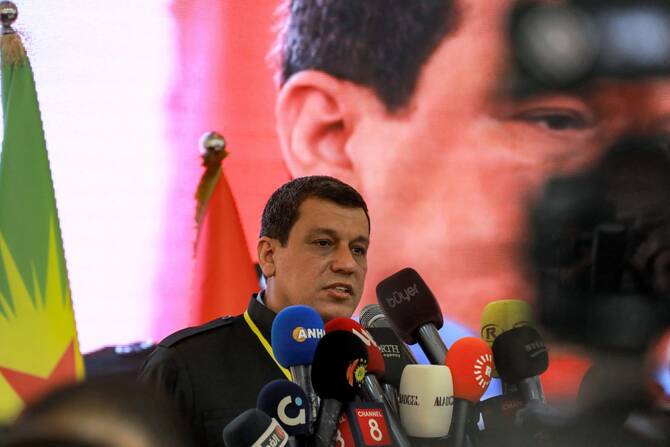
DAMASCUS: Syria’s Kurdish authorities called again on Sunday for a system of government that preserves a measure of their de facto autonomy, days after Damascus rejected “any form” of decentralization.
Mazloum Abdi of the Syrian Democratic Forces (SDF) — the Kurdish administration’s de facto army — and interim President Ahmed Al-Sharaa first struck an accord in March to integrate Kurdish institutions into the state, but its implementation has been held up by differences between the two parties.
The pair met again on Wednesday in the presence of a US envoy to discuss the stalled efforts, but Damascus afterwards reiterated its opposition to “any form of division or federalization,” and called for SDF fighters to be absorbed into the army.
In a statement Sunday, the Kurdish administration called “for a pluralistic democratic system, social justice, gender equality, and a constitution that guarantees the rights of all components” of society.
“Syrians have suffered for decades from a centralized system that monopolized power and wealth, suppressed local will, and dragged the country into successive crises,” it said.
“Today, we aspire to be effective partners in building a new Syria, a decentralized Syria that embraces all its people and guarantees their rights equally.”
The Kurds control vast swathes of territory in Syria’s north, including oil and gas fields.
Kurdish forces, with the support of a Washington-led coalition, played a vital role in the fight against the Daesh group in Syria, which ultimately led to the jihadist group’s territorial defeat.
In an interview with the channel Kurdistan 24 on Wednesday, US ambassador to Turkiye and special envoy to Syria Tom Barrack said that while he recognized the SDF’s role in the fight against the IS group, it had to accept the “reality” that “the only future path for them is Damascus.”


![]()

Syrian Kurdish authorities reiterate call for autonomy after Damascus meeting
Short Url
https://arab.news/68v9q
Syrian Kurdish authorities reiterate call for autonomy after Damascus meeting
- The Kurdish administration said Syrians ‘have suffered for decades from a centralized’ regime and called for a decentralized and democratic system
- The Kurds control vast swathes of territory in Syria’s north, including oil and gas fields


Latest updates


© 2026 SAUDI RESEARCH & PUBLISHING COMPANY, All Rights Reserved And subject to Terms of Use Agreement.