

Beat the heat with these cooling gadgets and wearables

Popular options include portable fans, cooling neck wraps and high-tech vests. Indoors, cooling pillows and chill pads offer relief, for pets too. (AP)
Short Url
Updated 12 July 2025
Follow

Beat the heat with these cooling gadgets and wearables

  • Popular options include portable fans, cooling neck wraps and high-tech vests. Indoors, cooling pillows and chill pads offer relief, for pets too

You can only sit in front of the fridge with the door open for so long.
As heat waves blast the world like a blow dryer on high, folks are reaching for anything that promises a little personal chill: portable mini fans, cooling neck wraps, high-tech vests and all kinds of heat-beating headwear.
Of course, cooling gear helps most when paired with basic and safe strategies against the heat: most importantly hydration, shade and rest. Stay out of extreme heat when possible, and know the signs of heat exhaustion or heat stroke.
Yet these wearable wonders and breezy gadgets can offer some relief. They might look quirky, but when the AC struggles and the sidewalk feels like a stovetop, they can start to seem like must-haves.
When you’re at home
Indoors, stay comfy with cool-feel sheets (like those with a silky finish or lightweight fibers), bed fans (where a nozzle inserted into the bed linens pumps a flow of air around you), or a cooling pillow or chill pad, which are filled with a gel that can stay cool for hours. Sleep-product brands include Serta, Sealy, Casper, Pluto and Threshold.
The chill pads can work for your own bed and the pets’ bed too. There are chillable full-size mattresses (Chilipad, 8Sleep and BedJet get good reviews from The Spruce) and smaller, simple pads (CoolCare and Sharper Image, among others).
Outdoor wearables

Clare Epstein, an employee safety expert with Vector Solutions in Tampa, Florida, works to reduce heat stress for at-risk employees in industries like construction, aviation and agriculture. She recommends wearables like cooling scarves and evaporative cooling vests.
“By soaking the fabric in cold water at the beginning of the day, the vest slowly cools, and keeps the wearer cool,” she says.
Clothes made of “phase change materials,” or PCMs, contain gel capsules or pads that can help moderate body temperatures. Uline.com advertises a vest that stays under 60 degrees for a few hours, and AlphaCool offers a neck tube that performs similarly. Another feature of the tube, which is made of a polymer material, is that it doesn’t get overly chilled, so it’s safe for kids to use.
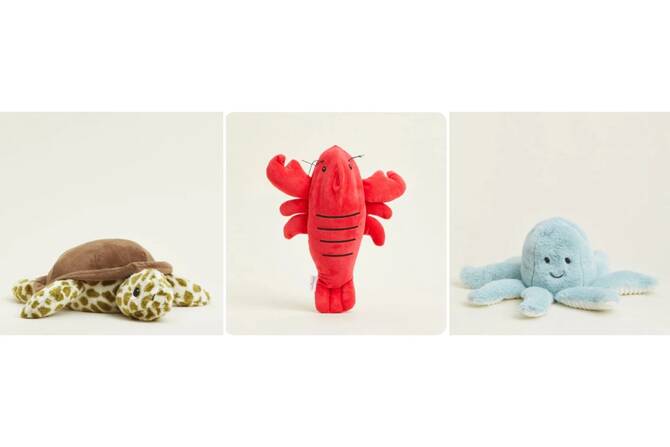
Also for kids, there’s a line of plush toys from Warmies that includes little critters of the farmyard, ocean, forest and safari that can be popped in the freezer before a trip to the park or playground.
Wearable items that incorporate small fans or thermoelectric coolers are also good, Epstein says. And there are vests with tubed reservoirs you can fill with water or electrolytes so you can sip as you go.
“These encourage people to take more water breaks, and stay hydrated,” says Epstein.
The wearables range is extensive. Along with cooling buffs, headbands, wristbands, socks and scarves, there are cooling brimmed hats and ball caps. Brands include Mission, Ergodyne, and Sunday Afternoon.
If you’d prefer a refreshing breeze, USB-chargeable handheld or wearable fans might do the job.
Chill advice
Lynn Campbell, co-founder of 10Adventures travel company in Calgary, Alberta, takes a lot of strenuous hiking and cycling trips with her husband, Richard. They’ve developed some easy hacks for hot days.
“We’ll wake up early, so we’re done by 10 or 11 a.m., or if we’re out on the trails, split the day in two, so we rest by water or in the shade over the hottest part” of the day, she says.
Wear light colors and thin, breathable fabrics.
And bring an umbrella. “This is a game-changer,” Campbell says. “Now we always pack ultralight, compact ones; they’re incredible.”
Also, pour cool water on your head and back. “We freeze a few bottles of water so we can pour ice water on us to cool down,” Campbell says. “Putting the bottles under the armpits, in the groin, or on the back of the neck can effectively cool a person down.”
And Annita Katee, a contributing writer for Apartment Therapy, has another way to prep your bed on hot nights:
“Pop your sheets into the freezer at least two hours before bedtime, then pull them out right before you hit the sack,” she wrote in a recent post. She folds hers into a zipped plastic bag, flattens it, then sets it on a freezer shelf between ice packs.
“The result? A delightfully cool bed that feels like a refreshing oasis against the heat.”


Italian cooking and its rituals get UN designation as world heritage

Updated 10 December 2025
Follow

Italian cooking and its rituals get UN designation as world heritage

  • UNESCO added the rituals surrounding Italian food preparation and consumption to its list of the world’s traditional practices and expressions

ROME: Italian food is known and loved around the world for its fresh ingredients and palate-pleasing tastes, but on Wednesday, the UN’s cultural agency gave foodies another reason to celebrate their pizza, pasta and tiramisu by listing Italian cooking as part of the world’s “intangible” cultural heritage.
UNESCO added the rituals surrounding Italian food preparation and consumption to its list of the world’s traditional practices and expressions. It’s a designation celebrated alongside the more well-known UNESCO list of world heritage sites, on which Italy is well represented with locations like the Rome’s Colosseum and the ancient city of Pompeii.
The citation didn’t mention specific dishes, recipes or regional specialties, but highlighted the cultural importance Italians place on the rituals of cooking and eating: the Sunday family lunch, the tradition of grandmothers teaching grandchildren how to fold tortellini dough just so, even the act of coming together to share a meal.
“Cooking is a gesture of love, a way in which we tell something about ourselves to others and how we take care of others,” said Pier Luigi Petrillo, a member of the Italian UNESCO campaign and professor of comparative law at Rome’s La Sapienza University.
“This tradition of being at the table, of stopping for a while at lunch, a bit longer at dinner, and even longer for big occasions, it’s not very common around the world,” he said.
Premier Giorgia Meloni celebrated the designation, which she said honored Italians and their national identity.
“Because for us Italians, cuisine is not just food or a collection of recipes. It is much more: it is culture, tradition, work, wealth,” she said in a statement.
It’s by no means the first time a country’s cuisine has been recognized as a cultural expression: In 2010, UNESCO listed the “gastrnomic meal of the French” as part of the world’s intangible heritage, highlighting the French custom of celebrating important moments with food.
Other national cuisines and cultural practices surrounding them have also been added in recent years: the “cider culture” of Spain’s Asturian region, the Ceebu Jen culinary tradition of Senegal, the traditional way of making cheese in Minas Gerais, Brazil.
UNESCO meets every year to consider adding new cultural practices or expressions onto its lists of so-called “intangible heritage.” There are three types: One is a representative list, another is a list of practices that are in “urgent” need of safeguarding and the third is a list of good safeguarding practices.
This year, the committee meeting in New Delhi considered 53 nominations for the representative list, which already had 788 items. Other nominees included the Swiss yodelling, the handloom weaving technique used to make Bangladesh’s Tangail sarees, and Chile’s family circuses.
In its submission, Italy emphasized the “sustainability and biocultural diversity” of its food. Its campaign noted how Italy’s simple cuisine valued seasonality, fresh produce and limiting waste, while its variety highlighted its regional culinary differences and influences from migrants and others.
“For me, Italian cuisine is the best, top of the range. Number one. Nothing comes close,” said Francesco Lenzi, a pasta maker at Rome’s Osteria da Fortunata restaurant, near the Piazza Navona. “There are people who say ‘No, spaghetti comes from China.’ Okay, fine, but here we have turned noodles into a global phenomenon. Today, wherever you go in the world, everyone knows the word spaghetti. Everyone knows pizza.”
Lenzi credited his passion to his grandmother, the “queen of this big house by the sea” in Camogli, a small village on the Ligurian coast where he grew up. “I remember that on Sundays she would make ravioli with a rolling pin.”
“This stayed with me for many years,” he said in the restaurant’s kitchen.
Mirella Pozzoli, a tourist visiting Rome’s Pantheon from the Lombardy region in northern Italy, said the mere act of dining together was special to Italians:
“Sitting at the table with family or friends is something that we Italians cherish and care about deeply. It’s a tradition of conviviality that you won’t find anywhere else in the world.”
Italy already has 13 other cultural items on the UNESCO intangible list, including Sicilian puppet theater, Cremona’s violin craftsmanship and the practice moving of livestock along seasonal migratory routes known as transhumance.
Italy appeared in two previous food-related listings: a 2013 citation for the “Mediterranean diet” that included Italy and half a dozen other countries, and the 2017 recognition of Naples’ pizza makers.
Petrillo, the Italian campaign member, said after 2017, the number of accredited schools to train Neapolitan pizza makers increased by more than 400 percent.
“After the UNESCO recognition, there were significant economic effects, both on tourism and and the sales of products and on education and training,” he said.