


RIYADH: Hungarian Defense Minister Kristóf Szalay-Bobrovniczky’s landmark visit to Saudi Arabia marks the first official defense dialogue between the two nations, signaling a pivotal moment in bilateral relations.
In an exclusive interview with Arab News, the minister emphasized Saudi Arabia’s growing influence as a regional stabilizer and commended its proactive approach to diplomacy.
His discussions with Minister of Defense Prince Khalid bin Salman centered on strengthening military ties, launching joint training initiatives, and exploring areas of technological cooperation.
Both sides expressed a shared commitment to advancing defense collaboration and formalizing their partnership through a strategic memorandum of understanding.
Visit Objective
This visit is historic — it marks the first official meeting between the defense ministers of Hungary and the Kingdom of Saudi Arabia. I was honored to accept the invitation of His Royal Highness at a time when the global security environment is undergoing profound and complex changes.
We are living in an era where stability can no longer be taken for granted. In such a climate, the world needs strong regional anchors — visionary governments capable of projecting stability both within and beyond their borders. Saudi Arabia clearly plays such a role.
We also recognize the Kingdom’s constructive role in international diplomacy, especially as a platform for dialogue in the context of the Russia-Ukraine conflict. Hungary has consistently advocated for a ceasefire and immediate peace negotiations. We firmly believe there is no military solution to this war — only a diplomatic one. Saudi Arabia’s responsible and forward-leaning neutrality closely aligns with our own long-standing call for meaningful dialogue and de-escalation.

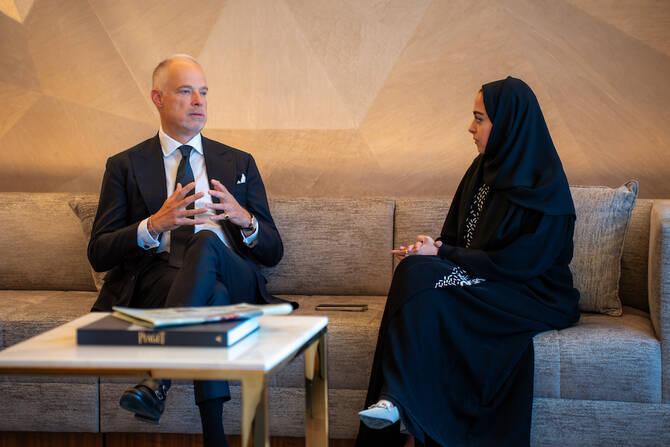
In an exclusive interview with Arab News, the minister emphasized Saudi Arabia’s growing influence as a regional stabilizer. (AN Photo/Jaafar Saleh)
Desired Outcome
Until now, defense cooperation between our two nations has been modest. This visit establishes a new foundation. We have initiated discussions on a memorandum of understanding between our defense ministries — a step that will provide a formal framework for structured and forward-looking collaboration.
Hungary is prepared to offer training opportunities within our military education system, which already welcomes numerous international participants. We also explored the potential for future joint exercises.
However, the most exciting prospects lie in the area of defense industry cooperation and innovation. Saudi Arabia, through organizations such as SAMI (Saudi Arabian Military Industries), has become a major force in modern defense manufacturing and technological development. Hungary shares this focus.
Our country has recently established the Hungarian Defence Innovation Research Institute (VIKI), which serves as the national hub for cutting-edge defense technologies, applied research, and dual-use innovation. VIKI brings together academia, industry, and operational users to ensure that innovation is both forward-thinking and mission-relevant.
In today’s rapidly evolving defense landscape — shaped by unmanned systems, AI-driven platforms, advanced sensors, and hybrid warfare — collaboration between like-minded and technologically ambitious nations is essential. Hungary and Saudi Arabia have both the intent and the institutional capacity to create a partnership based on joint development, co-investment, and innovation-driven defense solutions.

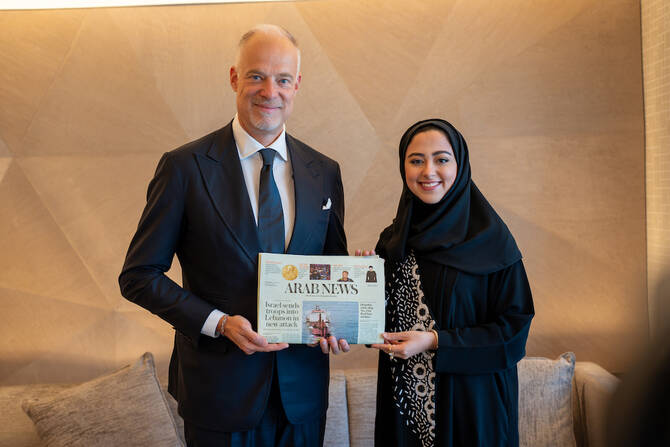
The visit of the minister is historic because it is the first time that the two countries’ defense ministers have met. (AN Photo/Jaafar Saleh)
Saudi-Hungarian Defense Cooperations
At present, our defense cooperation is at a formative stage — but there is strong political will on both sides to advance it. A Saudi expert delegation is expected to visit Hungary in the near future, where we will present our full range of capabilities, including in military training, force development, and defense technology.
This will be the first step in building a structured and strategic partnership — one rooted in mutual interests, trust, and long-term objectives.
Saudi Arabia Regional Stabilizer
Saudi Arabia is not only a regional powerhouse but an increasingly influential global actor. Vision 2030 is more than an ambitious blueprint — it is a program being implemented with clarity, commitment, and results.
In the diplomatic sphere, the Kingdom plays a unique stabilizing role. It engages constructively with a broad spectrum of actors — from Iran and Türkiye to the United States, Russia, and beyond. In a fragmented and polarized world, Saudi Arabia has emerged as a trusted interlocutor — capable of bringing conflicting parties to the negotiating table.
This leadership is especially evident in relation to the Russia-Ukraine conflict, which directly affects European security and economic stability. Hungary values the Kingdom’s active mediation efforts — not only as a neutral venue for dialogue, but as a country that offers credible leadership in the pursuit of peace.

Szalay-Bobrovniczky’s discussions with Minister of Defense Prince Khalid bin Salman centered on strengthening military ties. (SPA)
Visit to Saudi Arabia
This is my second visit to the Kingdom — the first was nearly a decade ago — and the transformation is remarkable.
What was already a developed country has undergone a striking evolution. From infrastructure and urban planning to innovation ecosystems and societal dynamism, the pace of progress is tangible. Vision 2030 is not just a slogan — it is visibly reshaping the future of the Kingdom.
Saudi Arabia, with its deep historical legacy, growing economic weight, and expanding international presence, is stepping decisively into a global leadership role. It has been a privilege to witness this transformation firsthand — and to explore ways in which Hungary and Saudi Arabia can grow together as strategic partners in defense, innovation, and security.


