

Pakistani Internet regulator, Meta join forces to tackle militancy in digital sphere

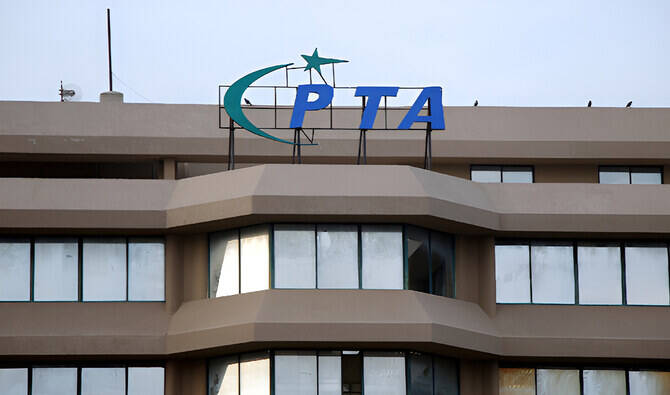
A logo of the Pakistan Telecommunication Authority (PTA) is seen on its headquarters building in Islamabad on January 22, 2020. (AN/File)
Short Url
Updated 08 July 2025
Follow

Pakistani Internet regulator, Meta join forces to tackle militancy in digital sphere

  • The two sides bring together experts from Facebook, Instagram and WhatsApp as well as Pakistani government and law enforcement officials for a workshop
  • The event focused on Meta’s evolving policies to tackle militancy-related content and enhance cooperation between digital platforms, LEAs and regulators

ISLAMABAD: The Pakistan Telecommunication Authority (PTA) and Meta have organized a high-level workshop, titled “Counter-Terrorism in the Digital Age,” the PTA said on Tuesday, aiming to ensure safe use on online spaces.

The event brought together experts from Facebook, Instagram and WhatsApp along with representatives from key Pakistani government institutions and law enforcement agencies (LEAs).

The workshop focused on Meta’s evolving policies for tackling militancy-related content and enhancing cooperation between digital platforms, LEAs and regulators, according to the PTA.

“Collaboration with global platforms like Meta is vital to prevent the misuse of online spaces by extremist elements,” PTA Chairman Hafeez-ur-Rehman said, reaffirming the PTA’s commitment to building a safer digital environment.

The development comes amid a surge in militancy in Pakistan’s western regions by religiously motivated groups like the Pakistani Taliban and Daesh as well as ethno-nationalist Baloch separatist groups.

Pakistani officials have in the past said that these militant groups also used social media platforms to “brainwash” and “recruit” people, including women, in their ranks to carry out attacks. Militant attacks in Pakistan more than doubled from 517 in 2023 to 1,099 in 2024.

Tuesday’s workshop was part of the PTA’s broader strategy to promote responsible online behavior and enhance national digital resilience, at which the participants discussed various mechanisms for complaint handling and content escalation, and engaged with Meta’s policy specialists on various topics.

“Joint efforts like this are key to creating safer digital spaces while upholding community standards and fundamental rights,” Meta’s Dangerous Organizations and Individuals (DOI) Policy lead Dr. Nawab Osman said.


Pakistan, ADB sign $730 loan agreements to boost SOE reforms, energy infrastructure

Updated 25 December 2025
Follow

Pakistan, ADB sign $730 loan agreements to boost SOE reforms, energy infrastructure

  • Both sign $330 million Power Transmission Strengthening Project and $400 million SOE Transformation Program loan agreements
  • Economic Affairs Division official says Transmission Project will secure Pakistan’s energy future by strengthening national grid’s backbone

KARACHI: Pakistan and the Asian Development Bank (ADB) on Thursday signed two loan agreements totaling $730 million to boost reforms in state-owned enterprises (SOEs) and energy infrastructure in the country, the bank said.

The first of the two agreements pertains to the SOE Transformation Program worth $400 million while the second loan, worth $330 million, is for a Power Transmission Strengthening Project, the lender said. 

The agreements were signed by ADB Country Director for Pakistan Emma Fan and Pakistan’s Secretary of Economic Affairs Division Humair Karim. 

“The agreements demonstrate ADB’s enduring commitment to supporting sustainable and inclusive economic growth in Pakistan,” the ADB said. 

Pakistan’s SOEs have incurred losses worth billions of dollars over the years due to financial mismanagement and corruption. These entities, including the country’s national airline Pakistan International Airlines, which was sold to a private group this week, have relied on subsequent government bailouts over the years to operate.

The ADB approved the $400 million loan for SOE reforms on Dec. 12. It said the program seeks to improve governance and optimize the performance of Pakistan’s commercial SOEs. 

Karim highlighted that the Power Transmission Strengthening Project will enable reliable evacuation of 2,300 MW from Pakistan’s upcoming hydropower projects, relieve overloading of existing transmission lines and enhance resilience under contingency conditions, the Press Information Department (PID) said. 

“The Secretary emphasized that both initiatives are transformative in nature as the Transmission Project will secure Pakistan’s energy future by strengthening the backbone of the national grid whereas the SOE Program will enhance transparency, efficiency and sustainability of state-owned enterprises nationwide,” the PID said. 

The ADB has supported reforms by Pakistan to strengthen its public finance and social protection systems. It has also undertaken programs in the country to help with post-flood reconstruction, improve food security and social and human capital. 

To date, ADB says it has committed 764 public sector loans, grants and technical assistance totaling $43.4 billion to Pakistan.