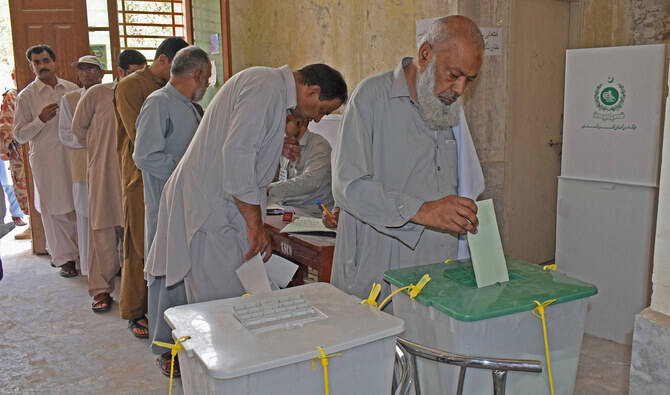

ISLAMABAD: Pakistan’s Prime Minister Shehbaz Sharif reviewed security preparations for the upcoming Gilgit-Baltistan elections in the first week of June in a meeting with Interior Minister Mohsin Naqvi, his office said on Sunday, as authorities seek to ensure a “safe environment” for voters.
Gilgit-Baltistan, a mountainous region in northern Pakistan, is set to hold elections on June 7 to elect members to its legislative assembly. More than 5,000 police personnel have reportedly been deployed for election duty.
Naqvi called on Sharif in Lahore to discuss the country’s overall law and order situation, including security arrangements ahead of the Gilgit-Baltistan election next weekend, according to the PM Office.
During the meeting, Naqvi briefed Sharif on the security preparations and arrangements undertaken by law enforcement agencies to ensure the “peaceful, transparent and orderly” conduct of the Gilgit-Baltistan elections.
“He [Naqvi] said a comprehensive security plan has been formulated to maintain law and order during the electoral process and provide a safe environment for voters,” the PM Office said in a statement.
Sharif appreciated Naqvi for the effective security arrangements for the Gilgit-Baltistan elections, reiterating that the government would take every step to support the democratic process.
The Gilgit-Baltistan Assembly, formerly known as the Gilgit-Baltistan Legislative Assembly, was established under the Gilgit-Baltistan Empowerment and Self-Governance Order in 2009. It has a total of 33 seats including 24 general seats, six reserved seats for women and three reserved seats for technocrats and professionals.