Days of monsoon rains kill 79 as Pakistan braces for more floods

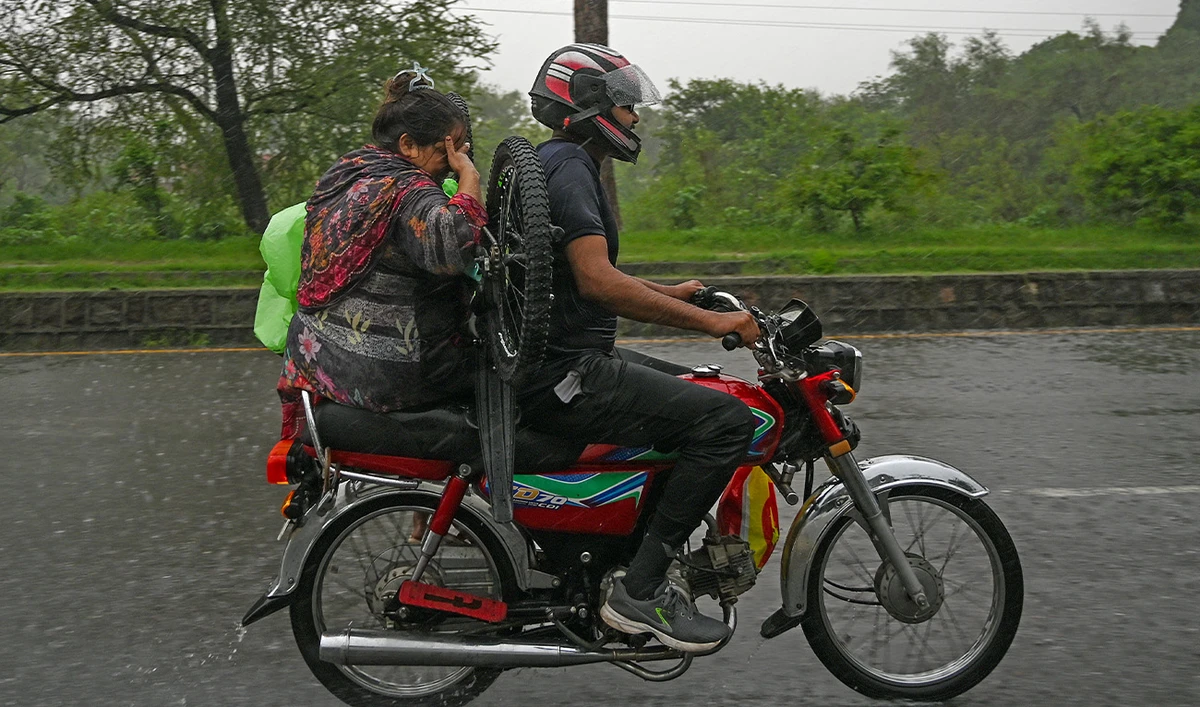
A motorcyclist rides along a street during rainfall in Islamabad on July 7, 2025. (AFP)
Short Url
Updated 08 July 2025
Follow

Days of monsoon rains kill 79 as Pakistan braces for more floods

  • Strong westerly wave to cause moderate to heavy rainfall till July 10, disaster management authority says
  • Khyber Pakhtunkhwa reports highest number of deaths, 29, from rain-related incidents since June 26

ISLAMABAD: The death toll from monsoon rains in Pakistan under two weeks has climbed to 79, the National Disaster Management Authority (NDMA) said in its latest report, as the country braces for more heavy downpours and floods till July 10. 

Monsoon rains have battered several parts of Pakistan, especially its eastern Punjab and northwestern Khyber Pakhtunkhwa (KP) provinces, since June 26. As per the NDMA’s latest situation report, KP has reported the highest number of deaths from rain-related incidents, 29, followed by Punjab with 24, Sindh with 15, and Balochistan with 11 deaths in thirteen days of rain. 

Seventy-two people were injured in Punjab, followed by 34 in Sindh, 27 in KP, four in Azad Kashmir and three in Balochistan since June 26, as per the report. The NDMA on Monday forecast heavy rains and floods in several parts of the country. It said a moisture inflow from the Bay of Bengal and Arabian Sea, combined with a strong westerly wave, is expected to result in moderate to heavy monsoon rainfall till July 10. 

“These weather conditions are likely to cause both riverine and flash flooding in various regions of Pakistan,” the authority said on Monday. 

As per the NDMA’s report, 189 houses in total have been damaged across the country while 100 livestock have perished due to rain-related incidents since June 26. KP reported the highest number of houses damaged since June 26, 94, while the largest number of livestock perished were reported from Sindh, 58. 

Pakistan, home to over 240 million people, is consistently ranked among the countries most vulnerable to climate change. In 2022, record-breaking monsoon rains and glacier melt caused catastrophic floods that affected 33 million people and killed more than 1,700. The South Asian country has been the victim of irregular weather patterns recently that have ranged from heatwaves to droughts and torrential rains.

Surging temperatures in the country’s mountainous north, especially in Gilgit-Baltistan, have accelerated glacier melt, compounding the risk of sudden floods and landslides in narrow valleys and near vulnerable glacial lakes.

The NDMA advises the public to stay indoors during thunderstorms, avoid unnecessary travel and keep children away from electricity poles and waterlogged areas.


Pakistan official vows to address trade challenges arising out of Afghan border closures

Updated 5 sec ago
Follow

Pakistan official vows to address trade challenges arising out of Afghan border closures

  • Pakistan closed key border crossings with Afghanistan in October following fierce clashes
  • Border crossings have led to financial losses, rising unemployment for traders on both sides

KARACHI: Prime Minister’s Coordinator on Commerce Rana Ihsaan Afzal on Wednesday reassured traders in the southwestern Chaman city that Islamabad would address issues arising out of the closure of Pakistan-Afghanistan border crossings since October. 

Pakistan closed its key border crossings with Afghanistan, including the one in Chaman, for trade and movement of people in October after fierce clashes between the two countries. Pakistan and Afghanistan both claimed to have killed scores of each other’s soldiers during the conflict. 

Traders on both sides have urged their governments to reopen the borders, saying that closures have caused financial losses and led to disruptions in perishable goods exports, rising unemployment and hardships for the local community dependent on cross-border trade. 

Afzal chaired a high-level consultative meeting with leaders, traders and community representatives from Chaman District and the Chaman Chamber of Commerce & Industry in Islamabad on Wednesday, the Pakistani commerce ministry said in a statement. 

“The coordinator reaffirmed the government’s commitment to addressing border trade challenges and ensuring that local communities continue to thrive,” the ministry said. 

The statement said Afzal noted the concerns raised by the stakeholders, stressing that resolving the issues of Chaman’s communities is a priority for the government.

Delegates spokes about the socio-econmic impact such as financial losses and rising unemployment due to the suspension of border trade between both sides. 

“The matters discussed will be escalated to relevant national and bilateral forums to seek sustainable solutions, with a focus on establishing predictable, transparent, and efficient border management protocols that balance security with legitimate trade,” the statement said. 

Ties between Islamabad and Kabul have remained strained since the Afghan Taliban seized power in Afghanistan in 2021. Pakistan has since then suffered a surge in militant attacks that it blames on militants based in Afghanistan, a charge Kabul denies. 

Tensions between the two sides have resulted in frequent border closures over the years, hampering trade and commerce. 

Islamabad has repeatedly accused the administration in Kabul of failing to take action against militant outfits such as the Tehreek-e-Taliban Pakistan (TTP) and the separatist Balochistan Liberation Army (BLA), which it alleges carry out attacks targeting Pakistan from Afghan soil. Kabul denies the allegations.

According to figures shared by the Pak-Afghan Joint Chamber of Commerce and Industry (PAJCCI) in October, the annual Pakistan-Afghan trade volume declined from $2.5 billion dollars to $10 million during the last two fiscal years.