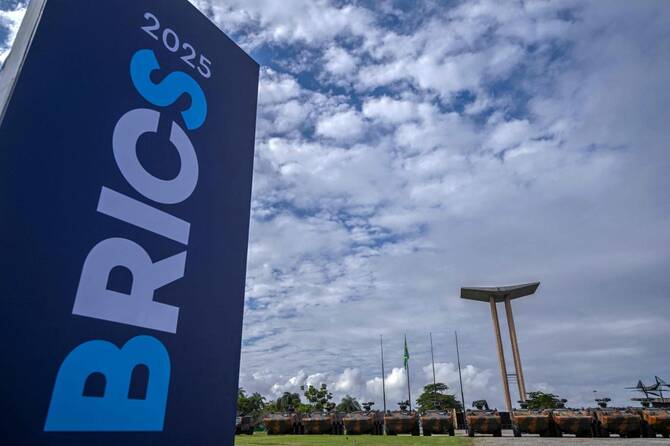

RIO DE JANEIRO: Leaders of the growing BRICS group of developing nations were set to gather in Rio de Janeiro on Sunday, calling for reform of traditional Western institutions while presenting the bloc as a defender of multilateralism in an increasingly fractured world.
With forums such as the G7 and G20 groups of major economies hamstrung by divisions and the disruptive “America First” approach of US President Donald Trump, expansion of the BRICS has opened new space for diplomatic coordination.
“In the face of the resurgence of protectionism, it is up to emerging nations to defend the multilateral trade regime and reform the international financial architecture,” Brazilian President Luiz Inacio Lula da Silva told a BRICS business forum on Saturday.
BRICS nations now represent over half the world’s population and 40 percent of its economic output, Lula noted.
The BRICS group gathered leaders from Brazil, Russia, India and China at its first summit in 2009. The bloc later added South Africa and last year included Egypt, Ethiopia, Indonesia, Iran and the United Arab Emirates as full members. This is the first leaders’ summit to include Indonesia.
“The vacuum left by others ends up being filled almost instantly by the BRICS,” said a Brazilian diplomat who asked not to be named. Although the G7 still concentrates vast power, the source added, “it doesn’t have the predominance it once did.”
However, there are questions about the shared goals of an increasingly heterogenous BRICS group, which has grown to include regional rivals along with major emerging economies.
Stealing some thunder from this year’s summit, Chinese President Xi Jinping chose to send his prime minister in his place. Russian President Vladimir Putin is attending online due to an arrest warrant from the International Criminal Court.
Still, many heads of state will gather for discussions at Rio’s Museum of Modern Art on Sunday and Monday, including Indian Prime Minister Narendra Modi and South African President Cyril Ramaphosa.
Over 30 nations have expressed interest in participating in the BRICS, either as full members or partners.
Growing clout, complexity
Brazil, which also hosts the United Nations climate summit in November, has seized on both gatherings to highlight how seriously developing nations are tackling climate change, while Trump has slammed the brakes on US climate initiatives.
Both China and the UAE signaled in meetings with Brazilian Finance Minister Fernando Haddad in Rio that they plan to invest in a proposed Tropical Forests Forever Facility, according to two sources with knowledge of the discussions about funding conservation of endangered forests around the world.
Expansion of the BRICS has added diplomatic weight to the gathering, which aspires to speak for developing nations across the Global South, strengthening calls for reforming global institutions such as the United Nations Security Council and the International Monetary Fund.
The growth of the bloc has also increased the challenges to reaching consensus on contentious geopolitical issues.
Ahead of the summit, negotiators struggled to find shared language for a joint statement about the bombardment of Gaza, the Israel-Iran conflict and a proposed reform of the Security Council, said two of the sources, who requested anonymity to speak openly.
To overcome differences among African nations regarding the continent’s proposed representative to a reformed Security Council, the group agreed to endorse seats for Brazil and India while leaving open which country should represent Africa’s interests, a person familiar with the talks said.
The BRICS will also continue their thinly veiled criticism of Trump’s US tariff policy. At an April ministerial meeting, the bloc expressed concern about “unjustified unilateral protectionist measures, including the indiscriminate increase of reciprocal tariffs.”