

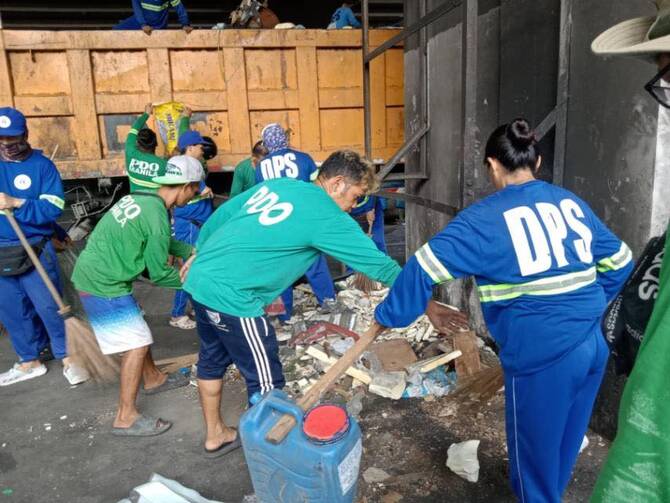

MANILA: Manila, one of the world’s most densely-populated cities, launched a weekly clean-up initiative on Saturday to address its worsening garbage problem, in the same week that a state of emergency was declared in the Philippine capital due to piles of uncollected rubbish.
For weeks, garbage has been causing problems in the city, with roads becoming impassable for cars in some areas and the stench of rotting waste inescapable for Manila’s two million residents.
The reason behind the crisis was revealed on Monday, when Manila Mayor Francisco Domagoso assumed office: the capital’s rubbish collection contractors had quit, claiming they were owed millions of dollars by the previous administration.
“Since the beginning of 2025, it was obvious that the garbage trucks weren’t coming in regularly — unlike the year before,” Manila resident Sophie Escudero told Arab News on Saturday. “Every time I (go out), the garbage is just way more than what I normally see.”
By Tuesday, Domagoso had declared a state of health emergency and issued an executive order mandating “every Saturday … as regular clean-up and de-clogging day throughout the city of Manila,” and highlighting the city’s “deteriorating sanitary conditions and worsening garbage collection problem” as a hazard to people’s health and safety.
Under the order, the city’s Department of Public Services and the Department of Engineering and Public Works are directed to take part in the weekly, citywide clean-up drive. Residents are also “strongly encouraged” to participate.
“I need everyone’s cooperation—because together, we can make Manila great again,” Domagoso said on Friday. “I humbly appeal to everyone: let’s work together to lift our city up and make it a cleaner, more livable, and more peaceful place for our fellow citizens here in the nation’s capital.”
He also claimed that he could “confidently say” the garbage crisis was “70 percent solved,” after joint efforts from city officials and having reached out to a former waste collection contractor for help. The emergency declaration also allowed his office to access “more resources and exercise broader authority,” he said.
Domagoso, a former teen idol also known by his screen name Isko Moreno, prioritized cleaning up the city’s streets during his first stint as mayor from 2019 to 2022. He won the election in May with a promise to “Make Manila Great Again.”
“The reason I voted for Isko was because, somehow, you could actually be proud that Manila was at least a bit clean (during his previous term in office). Because when (his successor, former Mayor Honey) Lacuna took over, I was so frustrated. In some streets, you couldn’t even pass through,” Manila resident Malu Rongalerios told Arab News. “Now, the improvement is huge. No joke.”
Prior to this week, Rongalerios said garbage trucks had only been coming to his neighborhood once or twice a week.
“That’s just not acceptable,” he said. “We even segregate our trash. We make sure to take it out properly. To step out of your house and see trash everywhere? That’s just too much.”
On Saturday, city authorities across Manila were flushing the streets with water, hauling piles of garbage away, and de-clogging drains to comply with the executive order.
The city’s garbage crisis would have been preventable if “waste reduction measures such as bans on single-use plastic and support for reusable packaging and refill systems were to be implemented,” claimed Marian Ledesma, a zero-waste campaigner with Greenpeace Philippines, who warned that Manila may face a similar crisis in the future if strict waste segregation from households and businesses is not enforced.
“Right now, collectors just dump everything into one truck,” Ledesma told Arab News. “This poor collection practice of mixing waste doesn’t (reward) the good habits of people who do segregate, and cities lose valuable resources because glass and other recyclables are thrown out, and food or organic waste that can be composted are mixed with other waste.”


